

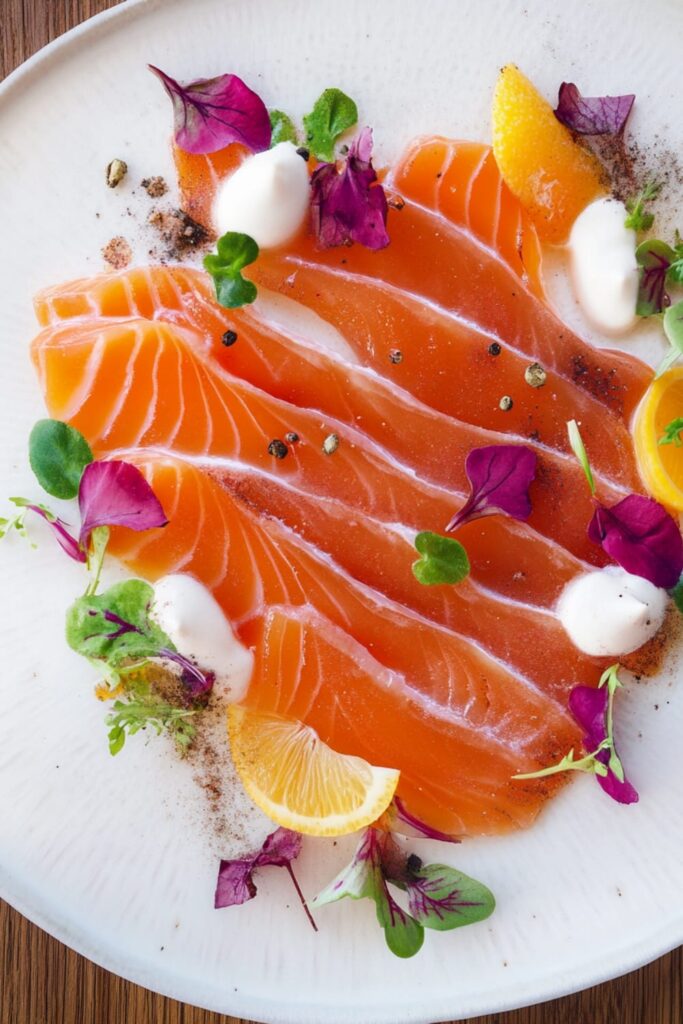
Firm, sliceable salmon with earthy beet, citrusy orange, and warm coriander. The cure isn’t just for color—it pulls moisture, sets texture, and layers subtle aromatics for sashimi-clean slices.
Why This Version Works
- Balanced cure: A 1:1 sugar–salt base draws moisture evenly so the fish firms without turning tough.
- Toasted aromatics: Lightly toasted coriander wakes up the beet and orange rather than masking the salmon.
- Gentle pressure: A light weight ensures tight contact, clean lines, and an even set.
Picking fish? Here’s a quick primer on choosing fresh vs. frozen salmon so the cure starts with a solid base.
What You’ll Need
- 600 g salmon fillet (deboned), ideally center-cut, skin on
- 30 g coriander seeds, lightly toasted and coarsely ground
- 100 g sugar
- 100 g salt
- Zest of 2 oranges
- 100 g raw beetroot, finely grated
- Freshly ground black pepper, to taste
Step-by-Step (Hands-Off, High Impact)
- Mix the cure: Coarsely grind toasted coriander. In a bowl, combine coriander, sugar, salt, orange zest, grated beet, and black pepper until evenly rosy and fragrant.
- Bed the fish: Lay salmon skin-side down in a non-reactive dish (glass/ceramic). Press the cure over the flesh in a uniform layer—no gaps.
- Weight & chill: Cover tightly with cling film. Set a flat tray on top and add a light weight. Refrigerate 8–12 hours, flipping once halfway for an even cure.
- Rinse & dry: Rinse the fish briefly under cold water to remove cure; pat completely dry. The surface should feel firmer and slightly tacky.
- Slice & serve: With a very sharp knife, slice thinly on a slight bias. Serve chilled on rye or crackers. A spoon of our 2-minute creamy dill sauce is a classic pairing.
Pro Tips
- Use a fish with even thickness for consistent curing.
- Flip once during curing for a uniform color edge to edge.
- No grinder handy? Here’s how to crack spices without a grinder—works for pepper and coriander.
Make-Ahead & Storage
Wrap tightly (or vacuum seal) and refrigerate up to 4–5 days, or freeze up to 1 month and thaw in the fridge. For broader safety tips on chilling fish, skim best way to store salmon.
People Also Ask
Can I cure steelhead trout the same way?
Yes—slightly leaner but it takes the cure beautifully.
My salmon is soft after curing—why?
Usually too little salt/sugar, not enough time, or no weight. Stick to the listed ratios and duration.
Do I need to use orange?
Zest adds aroma without extra moisture. Avoid juice—it dilutes the cure.
More to Try
- Salmon Ceviche (acid-cured, bright and zesty)
- Salmon Wellington (showpiece pastry)
- Quick Dill Sauce (perfect with cured slices)
Gordon Ramsay Beetroot Cured Salmon Recipe
Course: AppetizersCuisine: BritishDifficulty: Easy6
servings10
8
hours150
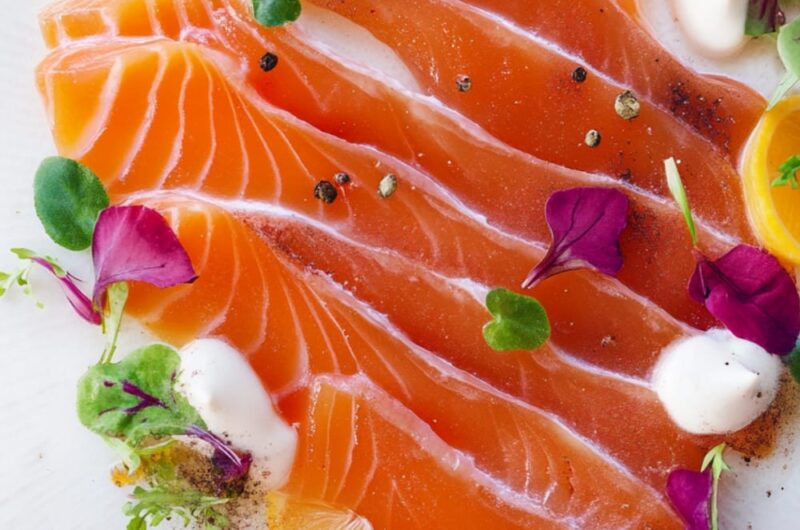
Beetroot-cured salmon with toasted coriander, orange zest, and a balanced sugar–salt cure. Firm, sliceable, jewel-bright—minimal work, serious payoff.
Ingredients
600 g salmon fillet (deboned), ideally center-cut, skin on
30 g coriander seeds, lightly toasted and coarsely ground
100 g sugar
100 g salt
Zest of 2 oranges
100 g raw beetroot, finely grated
Freshly ground black pepper, to taste
Directions
- Mix the cure: Coarsely grind toasted coriander; combine with sugar, salt, orange zest, grated beet, and black pepper until evenly mixed.
- Bed the fish: Lay salmon skin-side down in a glass or ceramic dish; press cure over the flesh in an even layer.
- Weight & chill: Cover tightly; set a tray and light weight on top; refrigerate 8–12 hours, flipping once halfway.
- Rinse & dry: Rinse briefly under cold water to remove cure; pat completely dry; surface should feel firm and slightly tacky.
- Slice & serve: Slice thinly on a bias with a sharp knife; serve chilled (great with a quick dill sauce or on rye).
- Storage: Wrap tightly and refrigerate up to 4–5 days, or freeze up to 1 month; thaw in the fridge.
Notes
- Toast the coriander seeds. 90 seconds in a dry pan changes everything.
- Skin-on salmon works better. It holds the shape and is easier to slice.
- Flip halfway. Not essential, but gives a more even cure if you’ve got time.
- Use a non-reactive dish. No aluminum. Glass or ceramic is safest.

I’m Ava Taylor. I’m A Self-taught Home Cook Who Loves Gordon Ramsay Recipes. I Try Every Dish In My Small Apartment Kitchen And Tweak It Until It Works. I Write Clear Steps With Simple Words So Anyone Can Follow. I Share Honest Wins, Mistakes, And Quick Tips To Help You Cook With Confidence.