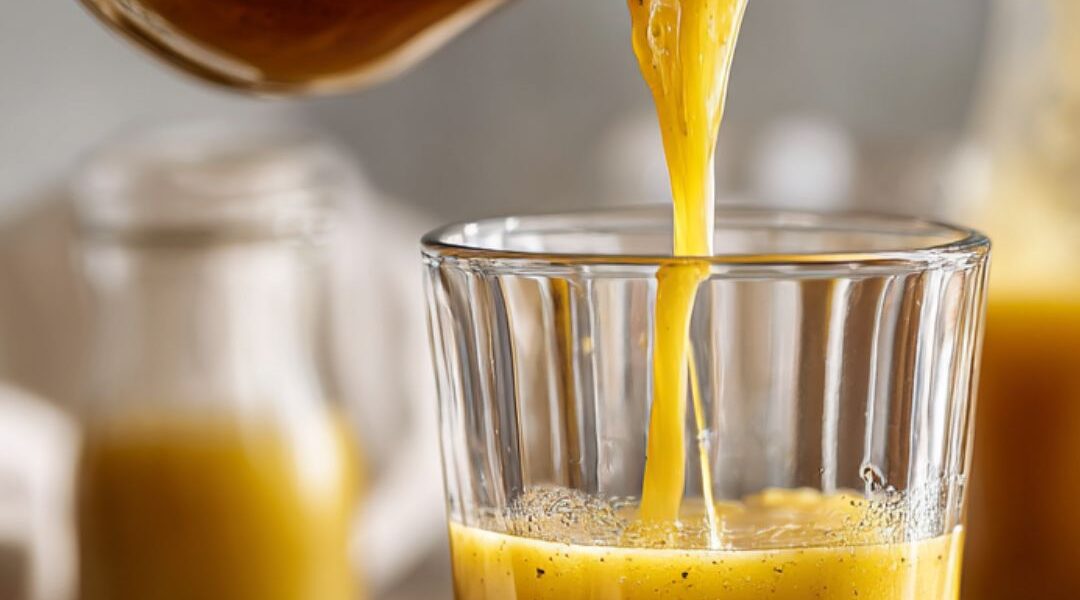

Gordon Ramsay’s Dijon salad dressing recipe is a classic vinaigrette made with extra virgin olive oil, peanut oil, white wine vinegar, Dijon mustard, and lemon juice. It takes under 5 minutes and keeps in the fridge for a week.
This recipe appears as “Classic vinaigrette” in Gordon Ramsay’s Sunday Lunch. He files it alongside mayo and pesto as a basic every kitchen should have ready to go. An earlier version in his Fast Food cookbook skips the lemon juice entirely, making this his more refined take.
What sets his version apart is the 50/50 oil split: half extra virgin olive oil, half peanut oil (groundnut oil). Pure olive oil can taste heavy and bitter in a cold dressing, so cutting it with a neutral oil keeps the flavour without overwhelming the salad.
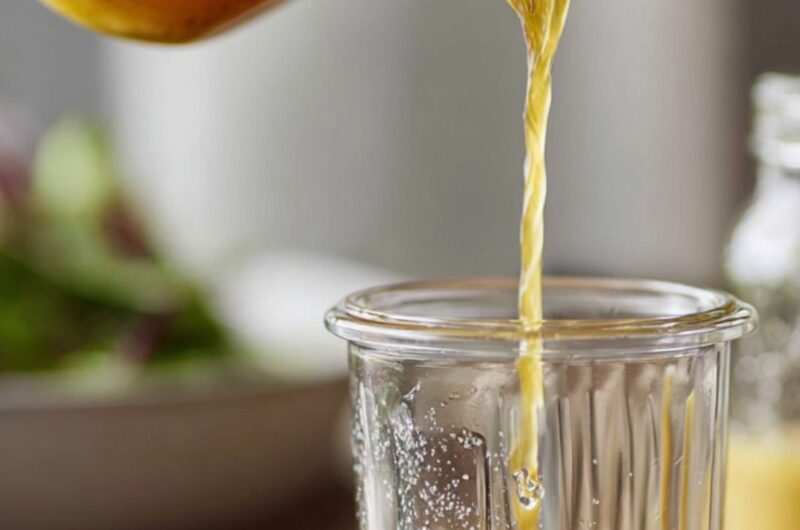
Gordon Ramsay Dijon Salad Dressing Recipe
Course: DressingCuisine: AmericanDifficulty: Easy1
5
minutes130
5
minutesA five-ingredient vinaigrette from Gordon Ramsay’s Sunday Lunch, whisked in a measuring jug and bottled for the week. His Fast Food version uses less mustard and no lemon, so this later recipe is brighter and more balanced.
Ingredients
1/3 cup + 1 tbsp (100ml) extra virgin olive oil
1/3 cup + 1 tbsp (100ml) peanut oil (groundnut oil)
1 scant tsp Dijon mustard
1 tbsp lemon juice
2 tbsp white wine vinegar
Sea salt and black pepper to taste
Directions
- Combine everything: Put the extra virgin olive oil, peanut oil, Dijon mustard, lemon juice, white wine vinegar, and some sea salt and pepper in a measuring jug.
- Whisk until emulsified: Whisk together until fully combined and slightly thickened. A stick blender works too if you want a more stable emulsion.
- Bottle and store: Pour into a clean squeezy bottle or screw-topped jar and seal. Refrigerate for up to a week. Shake well before each use because the oil and vinegar will naturally separate.
FAQs
Why does Ramsay use half peanut oil instead of all olive oil?
Extra virgin olive oil has a strong, peppery flavour that can turn aggressive when it’s the only oil in a dressing. Peanut oil (groundnut oil) is nearly tasteless, so blending the two gives you olive fruitiness without bitterness.
This 50/50 ratio appears in both his Fast Food and Sunday Lunch versions, so it’s a deliberate choice. The result coats leaves lightly instead of sitting heavy on the plate.
Why does the Sunday Lunch version add lemon juice?
His 2007 Fast Food recipe uses 3 tbsp of white wine vinegar alone. By Sunday Lunch in 2010, he cuts vinegar to 2 tbsp and adds 1 tbsp lemon juice instead.
Lemon brings a fresher acidity than vinegar on its own. You get two layers of sharpness: clean lemon tang up front, then the deeper bite of vinegar underneath.
Why so little mustard compared to most vinaigrettes?
Most recipes call for a full tablespoon of Dijon per cup of oil. Ramsay uses just 1 scant teaspoon.
Mustard emulsifies oil and vinegar, but too much turns a vinaigrette thick and cloudy. His lighter hand lets you taste the olive oil and vinegar clearly while still holding the emulsion long enough to dress a salad.
Can you swap the peanut oil for something else?
Ramsay specifies peanut oil in both books, but any neutral oil works because the point is not competing with the olive oil. Sunflower, grapeseed, or vegetable oil all behave identically here.
For nut allergies, sunflower or grapeseed are the safest swaps. The texture stays the same.
Why does he recommend a squeezy bottle?
A squeezy bottle controls how much dressing hits the salad. Over-dressing is the most common mistake people make, and pouring from a jar dumps too much at once.
It also makes dressing individual portions at the table easy, so you get an even coating on every leaf. If you’re building a collection of Ramsay basics, his pesto from the same chapter is worth bottling alongside it.
Zaytouna Studio Team is the kitchen team behind Chef Ramsay Recipes. We cook Gordon Ramsay’s recipes from his cookbooks and videos in a home kitchen and write them up for yours, with US and metric measurements.