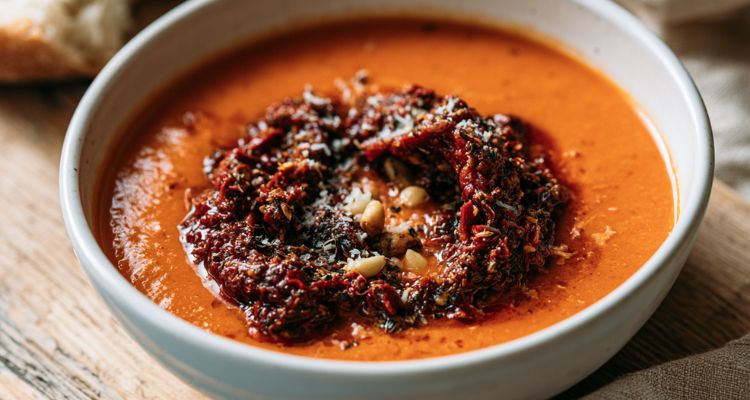
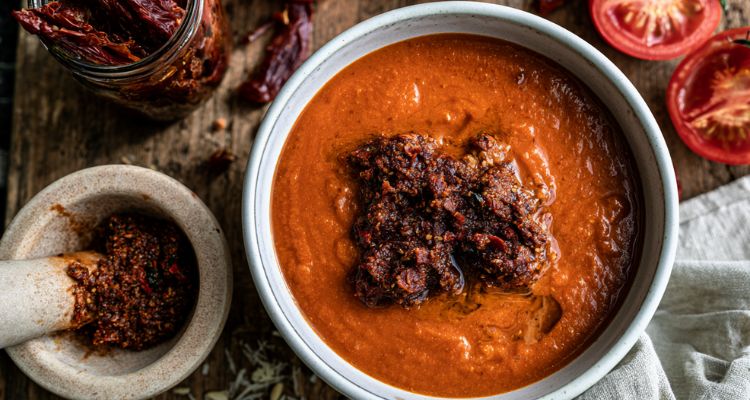
Gordon Ramsay’s tomato soup pesto combines oven-roasted tomatoes with a handmade sundried tomato pesto, finished with double cream and blended until just chunky. The whole thing takes about 40 minutes, and most of that is hands-off oven time.
This recipe comes from Gordon Ramsay’s Ultimate Home Cooking, where he writes that “few things are as nostalgic as a warming bowl of cream of tomato soup, but, like most foods from childhood, it can be easily improved by employing a few cheffy tricks.” He suggests serving it with crusty bread or Welsh rarebit.
The trick that separates this from every other tomato soup: he makes the pesto in a mortar, pounding sundried tomatoes until completely broken down before adding toasted pine nuts and Parmesan. The mortar releases oils and flavour that a food processor chops right past, and the reserved oil from the sundried tomato jar loosens it into a rich, spooning consistency.
Gordon Ramsay Tomato Soup Pesto Recipe
Course: SoupsCuisine: BritishDifficulty: Easy4
15
minutes30
322
kcal45
From Gordon Ramsay’s Ultimate Home Cooking. Roasted fresh tomatoes form the soup base while a separate sundried tomato pesto gets dolloped on top at serving, so you get two layers of tomato flavour in every bowl.
Ingredients
- For the soup:
3 1/3 lbs (1.5kg) ripe tomatoes, cored and halved
2 red onions, peeled and sliced
2 garlic cloves, peeled and finely sliced
1/2 to 1 teaspoon cayenne pepper, to taste
1 teaspoon caster sugar (superfine sugar)
1 teaspoon aged balsamic vinegar
4 1/4 cups (1 litre) vegetable or chicken stock
1/3 cup plus 1 tablespoon (100ml) heavy cream (double cream)
Olive oil, for drizzling
Sea salt and freshly ground black pepper
- For the sundried tomato pesto:
2 to 3 tablespoons pine nuts
2 2/3 oz (75g) sundried tomatoes, drained, oil reserved, finely chopped
1 3/4 oz (50g) Parmesan cheese, grated
Olive oil
Directions
- Preheat the oven: Set it to 350°F (180°C).
- Start on the hob: Place a roasting tray directly on the burner over medium-high heat. Add the red onions, garlic, and cayenne pepper, drizzle with enough olive oil to coat, and cook for 3 to 4 minutes. The cayenne blooms in the hot oil here, so it spreads evenly through the soup rather than hitting you in one sharp bite.
- Roast the tomatoes: Add the tomatoes cut-side down, season with a pinch of salt, pepper, and the sugar, then drizzle over the balsamic vinegar. Cook over high heat for 3 to 4 minutes until the tomatoes begin to caramelise on the bottom. Stir well, then transfer the tray to the oven for 20 to 25 minutes. The charred edges give the finished soup a smoky quality you can’t get from just simmering.
- Make the pesto: While the tomatoes roast, toast the pine nuts in a dry frying pan until golden. Watch them closely because they go from golden to burnt in seconds. Put the sundried tomatoes into a mortar and pound with a pestle until completely broken down. Season with a touch of salt, add the pine nuts, and continue pounding until you reach a pesto consistency. Stir in the Parmesan, then add olive oil and enough of the reserved sundried tomato oil to bring the pesto to a spooning consistency. You should end up with about 3 to 4 tablespoons.
- Build the soup: Place the tray of roasted tomatoes back on the hob over medium heat and pour in the stock. Bring to the boil, then simmer for 4 to 5 minutes. Add the cream, stir well, and continue to simmer for 2 to 3 minutes.
- Blend and serve: Using a stick blender, blend the soup until almost smooth but still with a couple of chunky bits. For a more rustic texture, Ramsay suggests using a potato masher instead. Ladle into warm bowls and dollop the pesto on top. Serve immediately.
FAQs
Why does Ramsay make the pesto in a mortar instead of a food processor?
A food processor chops ingredients into small pieces but doesn’t crush them. A mortar and pestle ruptures the cell walls of the sundried tomatoes and bruises the pine nuts, which releases their oils directly into the pesto.
The result is a richer, more cohesive paste where the flavours are blended together rather than sitting side by side. You can taste the difference: a processed pesto is grainy, a pounded one is smooth and slick with oil.
Why does he use the reserved oil from the sundried tomato jar?
That oil has been sitting with the sundried tomatoes for weeks or months, absorbing their concentrated flavour. Throwing it away and using plain olive oil instead means losing the most intensely flavoured ingredient you already have in front of you.
Ramsay uses it to loosen the pesto to a spooning consistency, so the oil does double duty: it thins the texture and deepens the tomato flavour at the same time. If your jar doesn’t have much oil left, top up with regular olive oil.
Why caramelise the tomatoes on the hob before roasting?
Most roasted tomato soup recipes put everything straight into the oven. Ramsay starts on the burner first, cooking the tomatoes cut-side down over high heat for 3 to 4 minutes. This gives them a head start on caramelisation that the oven alone would take much longer to achieve.
Those charred spots on the cut surfaces create the smoky quality he mentions in the headnote. The oven time that follows concentrates the juices and softens everything through, but the real flavour comes from that initial sear.
How is this different from his other roasted tomato soup?
His roasted tomato soup from In the Heat of the Kitchen takes a different approach. That version roasts tomatoes with thyme and garlic, then finishes with basil, giving it a more classic Italian direction. You can find it on the roasted tomato soup page.
This Ultimate Home Cooking version goes bolder with cayenne pepper and balsamic vinegar in the roasting tray, then adds a whole separate pesto component on top. It’s a more layered soup with two distinct tomato elements working together.
Why add sugar to the tomatoes before roasting?
Ramsay includes a “How to Enhance the Flavour of Tomatoes” tip alongside this recipe. He explains that a pinch of sugar brings out the natural sweetness of tomatoes, especially when they’re not as ripe as they could be.
It’s not enough sugar to taste sweet. One teaspoon across 3 1/3 lbs of tomatoes just balances the acidity and rounds out the flavour. Supermarket tomatoes in winter benefit the most from this trick, while peak-season summer tomatoes might not need it at all.
Can the soup and pesto be made ahead separately?
The soup base reheats well because the roasted tomatoes and cream hold their flavour overnight. Cool it fully, refrigerate, and reheat gently the next day. Don’t boil it hard or the cream can split.
Make the pesto fresh if you can, but it keeps for a couple of days in a small jar with a film of olive oil over the surface to stop it drying out. Spoon it onto the hot soup just before serving so it stays vibrant against the warm orange base. The pesto also works as a spread on the crusty bread Ramsay suggests alongside, or on toasted ciabatta with his chicken broth on the side.
Zaytouna Studio Team is the kitchen team behind Chef Ramsay Recipes. We cook Gordon Ramsay’s recipes from his cookbooks and videos in a home kitchen and write them up for yours, with US and metric measurements.