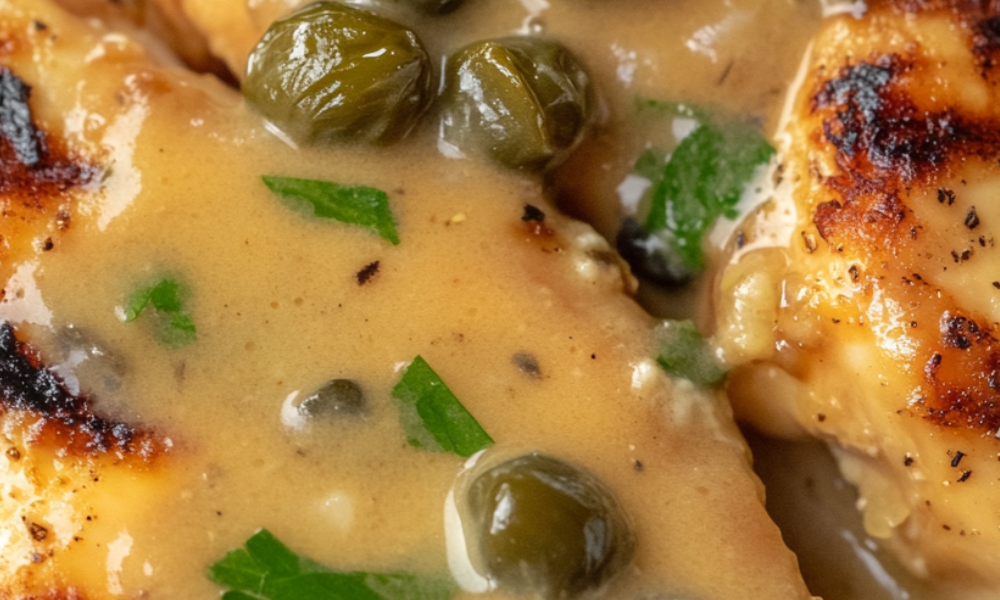

The First Time I Screwed This Up…
I thought chicken piccata was one of those “fancy-sounding, actually simple” dishes. Pound some chicken, hit it with lemon, butter, capers—boom, right? Wrong.
The first time I tried it, the chicken was soggy, the sauce broke, and everything tasted like a salty lemon bath. I didn’t understand why the sauce either turned greasy or got too sharp, or why the chicken would lose its crisp before it hit the plate.
Then I watched how Gordon Ramsay builds this dish: pan control, acid-fat balance, and finish timing. That’s where everything changed.
If your piccata has ever come out bland, greasy, or soggy—this’ll fix it. Here’s the version that actually delivers what Ramsay teaches: clean acidity, buttery emulsion, crisp chicken that stays crisp.
Why This Works (And Where Most Go Wrong)
Most people ruin chicken piccata in two places:
- The pan is too cold or overcrowded. You don’t get that golden crust, just pale, steamed chicken.
- They break the sauce. Too much lemon too fast, or butter added before reducing.
Here’s what Ramsay’s approach fixes:
- Hot pan = proper Maillard = flavor
- Deglaze with wine/broth combo = flavor layers
- Lemon after reduction = acid control
- Butter at the end = silky emulsion, not oil slick
You’re not just making a sauce—you’re staging heat and acid.
Ingredients That Actually Matter
- Chicken breasts (4, boneless & skinless): Pound to even thickness if needed. Don’t skip this or you’ll get uneven cooking.
- Flour (120g): Light dredge = light crust. Too thick and it won’t crisp properly.
- Olive oil (60ml total): Used in two stages. First to crisp chicken, then to deglaze.
- Chicken broth (240ml): Use low-sodium so you control salt. Full-sodium plus capers = disaster.
- White wine (120ml): Dry and crisp. Avoid sweet wines like Riesling. Sauvignon Blanc or Pinot Grigio works.
- Lemon juice (30ml): Fresh only. Bottled will ruin the sauce.
- Capers (30g): Briny punch. Rinse if overly salty.
- Butter (30g): Finish with it—don’t cook it.
- Parsley: Clean, bright garnish. Optional, but it helps.
I once used salted butter and forgot to rinse the capers. The result tasted like a briny punch to the throat. Stick to unsalted and taste before finishing.
How To Make Gordon Ramsay Chicken Piccata
Preheat the oven to 95°C / 200°F. You’ll use it to hold the chicken—don’t skip this or you’ll serve lukewarm protein.
Season and dredge the chicken. Salt and pepper both sides, then lightly coat with flour. Shake off excess. You want a thin crust, not a dredge blanket.
Sear in hot oil. Heat 30ml olive oil over medium-high in a stainless or cast-iron pan. When shimmering, lay down the chicken. Don’t move it. Flip after 2–3 min when golden. Cook both sides, then move to a tray and keep warm in the oven.
Build the sauce. Same pan—don’t clean it. Add remaining oil, then wine, broth, lemon juice, and capers. Scrape the bottom. Bring to a fast boil and reduce for 5–7 minutes until slightly thickened. Sauce should coat a spoon.
Mount with butter. Kill the heat. Stir in butter until glossy. You should have a smooth, tangy, lightly creamy sauce.
Plate and serve. Pour sauce over the chicken. Add parsley. Serve with pasta, polenta, or crusty bread.

What Gordon Ramsay Says About This Dish
- “Don’t boil the butter.” He finishes sauces off-heat so the emulsion stays stable. I’ve seen this in MasterClass—changed how I build pan sauces forever.
- “Let the acidity hit the pan, not the fat.” That means lemon juice goes in after you deglaze, not with the butter.
- “Color equals flavor.” If your chicken isn’t golden before the oven, you’ve already lost.
- “Capers are seasoning.” They replace salt. Don’t double down without tasting.
What I Got Wrong (And How I Fixed It)
- Used cold pan: Chicken steamed, didn’t sear. Fixed by letting pan fully preheat—oil must shimmer.
- Sauce split: I used butter while the pan was still too hot. Now I kill the heat first.
- Over-floured: First time, I packed flour like I was breading. That kills crispness and creates gumminess in sauce.
Smart Swaps for Different Goals
- Gluten-free: Use rice flour or cornstarch. Don’t skip the dredge—it matters for crust.
- No wine? Sub extra broth + 1 tsp white wine vinegar.
- More buttery? Add another knob at the end and reduce lemon slightly.
- Brinier? Add minced olives or anchovy fillets in the sauce step.
Do not use cream. It flattens the acidity and dulls the dish. Piccata isn’t alfredo.
Pro Tips That Change the Game
- Use a meat mallet. Even thickness = even sear. Uneven = dry edges, raw centers.
- Rest the chicken. Even just 2 minutes on a warm tray while you finish sauce makes it juicier.
- Deglaze with wine first. It lifts fond more aggressively than broth.
- Finish with butter off heat. Repeat because it matters.
- Taste before plating. Sauce should be tart, not sour. Add a pinch of sugar if it bites.
Storage + Leftover Move
- Fridge: Up to 2 days, airtight.
- Freezer: Yes, 1 month. Cool fully before freezing.
- Reheat: Skillet on low with splash of broth. Avoid microwave—it ruins the crust.
- Leftover move: Dice chicken and toss into warm pasta with fresh arugula and Parmesan.
FAQs
Q: Can I use chicken thighs instead?
Yes, but go boneless and skinless. They’ll be juicier but may need a longer sear.
Q: Why did my sauce break?
Too much heat when adding butter. Kill the heat before swirling it in.
Q: What wine should I use?
Dry white like Pinot Grigio or Sauvignon Blanc. No sweet wines.
Q: Can I skip the oven?
You can, but your chicken will cool while you make the sauce. Ramsay holds it warm to keep timing clean.
Q: What pasta works best?
Angel hair or spaghetti. Something light that won’t overpower the sauce.
Try More Recipes:
- Gordon Ramsay Chicken And Leek Pie Recipe
- Gordon Ramsay Cheese And Onion Pie Recipe
- Gordon Ramsay Salmon Steak Recipe
- Gordon Ramsay Salmon Smashed Potatoes Recipe

Gordon Ramsay Chicken Piccata Recipe
Course: DinnerCuisine: AmericanDifficulty: Easy4
servings15
minutes15
minutes270
kcalCrispy chicken in a zesty lemon-caper sauce—quick, bold, and perfect for weeknight dinners or date-night pasta.
Ingredients
4 boneless, skinless chicken breasts
Salt and pepper, to taste
120g all-purpose flour
60ml olive oil
240ml chicken broth
120ml white wine
30ml fresh lemon juice
30g capers, drained
30g unsalted butter
Fresh parsley, chopped
Pasta (for serving)
Directions
- Preheat oven to 95°C (200°F).
- Season chicken with salt and pepper, dredge lightly in flour.
- Heat 30ml olive oil in skillet on medium-high. Sear chicken 2–3 min per side until golden. Transfer to oven to keep warm.
- In same pan, add remaining olive oil, wine, broth, lemon juice, and capers. Boil and reduce 5–7 minutes.
- Remove from heat, stir in butter until sauce is smooth.
- Plate chicken, pour sauce over, garnish with parsley. Serve hot with pasta.
Notes
- Use a meat mallet. Even thickness = even sear. Uneven = dry edges, raw centers.
- Rest the chicken. Even just 2 minutes on a warm tray while you finish sauce makes it juicier.
- Deglaze with wine first. It lifts fond more aggressively than broth.
- Finish with butter off heat. Repeat because it matters.
- Taste before plating. Sauce should be tart, not sour. Add a pinch of sugar if it bites.
Zaytouna Studio Team is the kitchen team behind Chef Ramsay Recipes. We cook Gordon Ramsay’s recipes from his cookbooks and videos in a home kitchen and write them up for yours, with US and metric measurements.