The First Time I Screwed This Up…
I thought fondant potatoes were just fancy roasties. Slice, sear, baste, done. Right? Wrong. My first try? Undercooked centers, oily crust, bland in the middle. I’d rushed the shape, underestimated the stock, and didn’t let the butter do its job.
Then I watched Gordon break it down. It wasn’t just about ingredients—it was about control: shape, sear, butter-basting, and a braise that finishes everything to that melting, velvet-soft core.
This is the system I tested until it clicked. Let’s fix your fondants—for good.
Why This Works (And Where Most Go Wrong)
What Makes Gordon’s Version Different
Most people skip the shaping. Don’t. The barrel cut gives you even thickness, so both sides brown at the same rate and the interior cooks evenly.
The real game changer? Butter baste before the braise. You’re not just adding flavor—you’re emulsifying fat with the crust and locking in that golden armor before it simmers.
Also: it’s not a fry. Don’t overload the pan with oil. Just enough to kiss the surface. You want a golden sear, not a confit.
Ingredients That Actually Matter
- 4 large Maris Piper or Russet potatoes – You need a high-starch potato. Waxy ones won’t absorb the butter or go creamy inside.
- 4 tbsp unsalted butter – Salted butter will overpower the dish. Add salt later, with precision.
- 1 cup chicken or vegetable stock – This isn’t just moisture—it’s the final flavor bath. Use homemade or good quality stock.
- 2 garlic cloves, lightly crushed – No mincing. You want aroma, not burnt bits.
- Fresh thyme sprigs – Avoid dried thyme. It gets bitter and doesn’t infuse like fresh.
- Olive oil (just enough to coat the pan) – Neutral oil is fine, but a light olive oil adds nice background richness.
- Salt + freshly ground black pepper – Season after the sear, before the oven.
How To Make Gordon Ramsay Fondant Potatoes
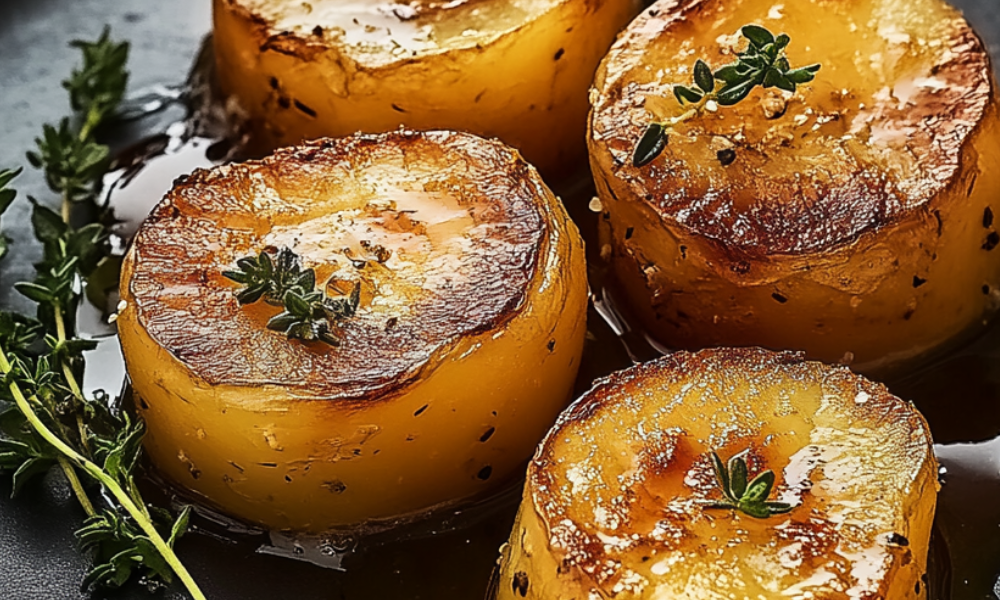
Peel your potatoes and shape them into uniform cylinders. I use a cookie cutter and paring knife for clean sides—consistency is key for even cooking.
Heat a heavy oven-safe skillet (cast iron is best) over medium-high heat. Add just enough olive oil to coat the surface. When it shimmers, place the potatoes flat side down. Don’t move them. Let them brown for 5–6 minutes until deeply golden.
Flip them carefully—tongs work better than spatulas here. Brown the other side for another 5–6 minutes.
Reduce the heat to medium-low. Add the butter, crushed garlic, and thyme. Let the butter foam, then start basting. Spoon the butter over each potato repeatedly for a full minute. This locks in flavor and adds a crispy edge.
Now pour in your stock—just until it comes halfway up the sides. Not submerged. Season lightly with salt and pepper.
Transfer the skillet to a 200°C (390°F) oven. Cook for 30 minutes, or until a knife slides through the potato with zero resistance.

What Gordon Ramsay Says About This Dish
“It’s about texture—crisp on the outside, like a roast, but melting inside.”
That contrast is why the butter sear comes first.
“Don’t rush it. Let the butter do the talking.”
He’s right. Skipping the basted butter stage leaves the crust pale and dull.
“Use the right potato. Not new potatoes. You need that starchy fluff inside.”
Tested that—waxy potatoes stay firm no matter how long you cook them.
What I Got Wrong (And How I Fixed It)
- Undercooked centers – I used Yukon Golds once. They looked pretty, but never softened inside. Switched to Russets—problem solved.
- Greasy finish – I was using too much oil upfront. Now I just film the pan.
- Dry final texture – Forgot to cover the pan halfway with stock. Without the braise, it’s just a pan-fried potato.
Variations That Actually Hold Up
- Beef stock instead of chicken – Works well with red meat mains. Adds depth.
- Rosemary instead of thyme – Also aromatic, but don’t overdo it. A little goes far.
- Clarified butter – If you want less browning in the oven and a silkier finish.
Avoid: lemon juice, truffle oil, or anything acidic—it fights the buttery base.
Pro Tips That Change the Game
- Rest after roasting. Just 5 minutes. It lets the butter settle into the spud instead of bleeding out when cut.
- Sear time depends on the pan. Stainless needs more patience. Cast iron = faster crust.
- Don’t overcrowd. You need space between each potato for even browning and basting.
Storage + Leftover Moves
- Fridge: Store in an airtight container up to 3 days.
- Freezer: Yes, but reheat slowly to preserve texture.
- Reheat: Pan-fry with a touch of butter until warm and crisp—don’t microwave.
- Second use: Smash into a hot pan for buttered fondant hash. Incredible.
FAQs – Covering Search Intent
Q: Can I use Yukon Gold potatoes instead?
You can, but don’t. They’re too waxy—stick to Russet or Maris Piper for that creamy center.
Q: Why are my fondant potatoes greasy?
You used too much oil. Just a slick for the sear. Let the butter do the richness.
Q: What herbs does Ramsay use in fondant potatoes?
Fresh thyme is his go-to. Rosemary also works but use less—it’s stronger.
Q: Can I make this without an oven?
Yes, but you’ll need a lid. Simmer gently on the stovetop after basting and stock—add 10–15 extra minutes.
Q: Do I have to shape them into cylinders?
Technically no, but uniform shape = even cook. You’ll lose that signature texture mix without it.
Try More Recipes:
- Gordon Ramsay Vegan Bacon Recipe
- Gordon Ramsay Aubergine Caviar Recipe
- Gordon Ramsay’S Gazpacho Was The Cool, Quiet Reset I Needed
- Gordon Ramsay KFC Sauce Was My Little Moment of Joy

Gordon Ramsay Fondant Potato Recipe
Course: Side DishesCuisine: BritishDifficulty: Easy4
servings10
minutes35
minutes308
kcalCrispy, buttery fondant potatoes with a soft, creamy center—perfect side dish for any roast or elegant dinner.
Ingredients
4 large Maris Piper or Russet potatoes, peeled
4 tbsp unsalted butter
1 cup chicken or vegetable stock
2 garlic cloves, lightly crushed
Fresh thyme sprigs
Salt and black pepper
Olive oil for frying
Directions
- Preheat oven to 200°C (390°F).
- Peel and shape potatoes into cylinders.
- Heat oil in oven-safe skillet. Sear potatoes flat side down for 5–6 minutes until golden.
- Flip and brown other side for 5–6 minutes.
- Add butter, garlic, and thyme. Baste potatoes for 1 minute.
- Pour in stock halfway up the potatoes. Season with salt and pepper.
- Transfer skillet to oven and roast 30 minutes, or until tender.
- Rest 5 minutes before serving.
Notes
- Rest after roasting. Just 5 minutes. It lets the butter settle into the spud instead of bleeding out when cut.
- Sear time depends on the pan. Stainless needs more patience. Cast iron = faster crust.
- Don’t overcrowd. You need space between each potato for even browning and basting.
Zaytouna Studio Team is the kitchen team behind Chef Ramsay Recipes. We cook Gordon Ramsay’s recipes from his cookbooks and videos in a home kitchen and write them up for yours, with US and metric measurements.