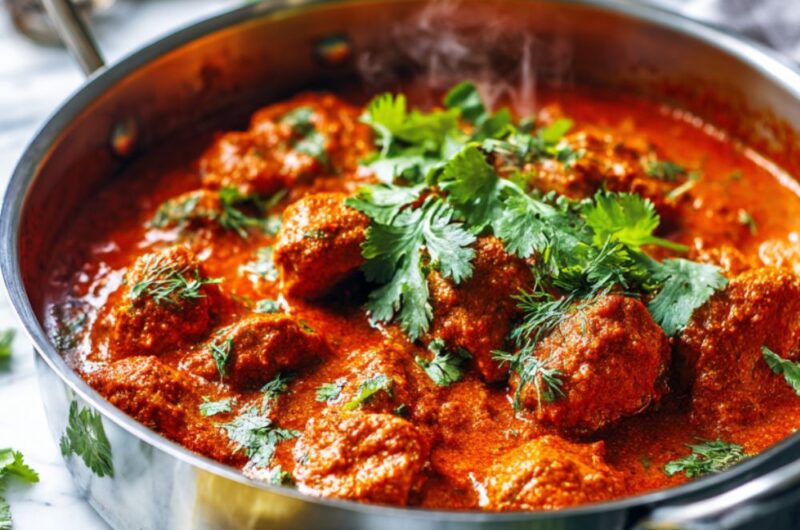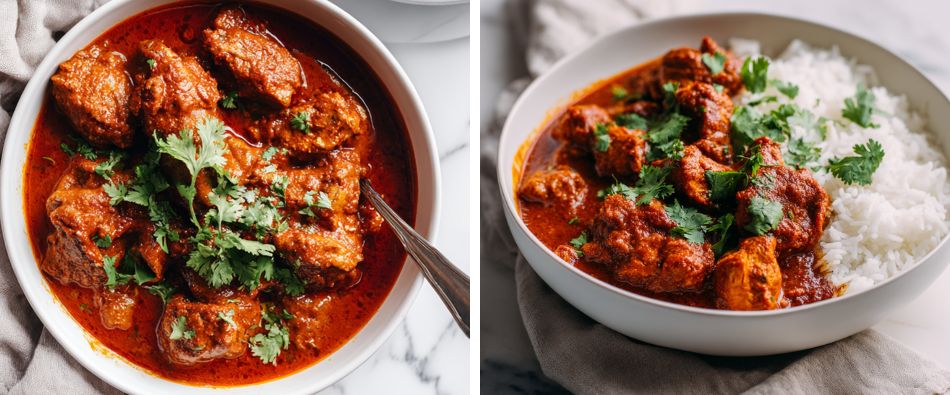

The First Time I Screwed This Up…
I’ll be real with you — my first Chicken Madras was a complete train wreck.
I dumped raw spices into watery tomatoes, boiled the chicken until it was rubbery, and ended up with something that looked (and tasted) like spicy sludge.
It was a humbling moment. I thought making a curry was just about chucking everything into a pan.
Turns out, Gordon’s method showed me it’s about building flavor in stages — not rushing, not guessing.
Once I actually cooked the onions right, bloomed the spices in hot oil, and gave the chicken a real sear before the sauce, everything changed.
The sauce clung, the chicken stayed juicy, and the heat actually made sense, not just burned your face off.
Here’s exactly how to do it — properly, no guesswork.
Why This Works (And Where Most Go Wrong)
Here’s the brutal truth: most people make chicken curry like they’re making soup.
And it shows.
The most common screwups are:
- Throwing dry spices into wet sauce — you get raw, bitter flavors.
- Skipping the sear on the chicken — so it just poaches, flavorless.
- Boiling the sauce — which splits it and toughens the meat.
Gordon’s approach fixes all of it:
- Sweat the onions slowly to sweeten them naturally.
- Fry the spices fast in hot oil so they unlock flavor, not stay dusty.
- Brown the chicken hard before any liquid hits the pan.
- Simmer slow and steady, letting everything thicken naturally.
This is why when you taste it, it actually tastes built, not dumped.
Ingredients That Actually Matter
- 4 chicken breasts, diced or sliced
- 3 tbsp vegetable oil — no strong flavors here
- 2 onions, finely chopped
- 1-inch piece fresh ginger, peeled and finely grated
- 2 garlic cloves, chopped fine
- Sea salt and black pepper, to season
- 450g ripe tomatoes, chopped (or canned)
- 300ml water
- 1 tsp garam masala
- Fresh coriander leaves, for garnish
- 2–4 red chilies, chopped (de-seed if you fear the heat)
- 2 tsp ground cumin
- 1 tsp ground coriander
- 1 tsp turmeric
- 3 tsp hot chili powder (adjust to your pain tolerance)
- 6 curry leaves
- Juice of half a lime or lemon
Real Talk Mistakes to Avoid:
- Don’t toss in dry spices with cold onions — they’ll just taste raw.
- Don’t overcook chicken early — it’ll end up tougher than leather.
- Don’t rush the simmer — 30 minutes low and slow changes everything.
How To Make Gordon Ramsay Chicken Madras
First up:
Season your chicken pieces with salt and pepper. Not a dusting — season like you mean it. Set aside.
Get your pan hot, then add the oil.
Drop the heat slightly and add the onions.
Now — patience. Stir them every so often but let them slowly go soft and golden for about 5–7 minutes.
You’re building sweetness here, not rushing to burnt bits.
Next, add the garlic, ginger, and chilies. Stir and cook for 2–3 minutes. You should smell them kicking up — that’s when you know they’re working.
Now, the spice bomb:
Toss in the curry leaves, chili powder, turmeric, cumin, and coriander.
Keep stirring for about a minute. Move fast — you’re waking them up, not letting them burn.
Bring back the heat a little.
Slide the chicken into the pan and brown it off.
Don’t just turn it white — actually get some color on the meat. This is flavor insurance.
Once the chicken’s browned nicely, add the chopped tomatoes and water.
Stir well and let it come to a gentle boil.
Now cover it, drop the heat to low, and let it simmer gently for 20–30 minutes.
If it dries out too fast, just splash a little extra water in. No big deal.
Toward the end, stir in the garam masala. Let it cook a final 5 minutes, uncovered if you want the sauce a little thicker.
Before serving, squeeze over the lime juice and scatter coriander leaves all over.
Plate it up with some rice or naan, and you’re laughing.

What Gordon Ramsay Says About This Dish
“Build flavor, don’t throw flavor.”
You can’t just stack ingredients and hope they get along.
Cooking them right makes them blend naturally.
“Color means flavor.”
A pale chicken curry is a sad curry. Brown it properly before you flood the pan.
“Spices are dead until you fry them.”
Raw spices taste like the back of a dusty cupboard. Fry them alive.
“Freshness last.”
Lime juice and coriander wake the whole dish up at the end. Don’t add them early.
What I Got Wrong (And How I Fixed It)
- Cooked spices wrong: Now I fry them fast in hot oil before liquids.
- Skipped chicken browning: Now I sear properly before saucing.
- Simmered too hard: Now I barely bubble it — thickens flavor, keeps chicken tender.
Variations That Actually Work
- Use chicken thighs instead of breasts — juicier, more forgiving if you overcook slightly.
- Add coconut milk at the end — turns it into a slightly creamier Madras.
- Toss in spinach during last 5 minutes — extra color, bonus nutrients.
⚠️ Don’t swap curry leaves for bay leaves. Totally different flavor. Skip if you can’t find them — don’t replace.
Pro Tips That Change The Game
- Grate your ginger fine, not chunky. You want it to melt into the sauce, not chew on it.
- Use a wide pan so your chicken browns instead of steaming.
- Taste three times — after browning, mid-simmer, and final before serving.
- Simmer covered first, then uncover if you want the sauce tighter.
Storage + Leftover Moves
- Fridge: Let it cool, then seal tight — lasts 3 days easy.
- Freezer: Curry freezes like a dream — up to 3 months.
- Reheat: Medium-low heat, splash a little water in if it’s too thick.
Bonus: Leftover Chicken Madras stuffed into warm naan wraps? Outrageous.
FAQs
Q: Can I make it mild?
A: Totally. Use fewer chilies and half the chili powder.
Q: Why is my chicken tough?
A: You probably boiled it or didn’t rest it long enough during simmering.
Q: Do I need curry leaves?
A: Optional, but they do lift the dish. No good substitute though.
Q: Can I make this ahead?
A: Yes — in fact, it’s even better after resting overnight.
Q: What rice goes best?
A: Basmati — always. Light and fluffy so it soaks up the sauce.
Try More Recipes:
- Gordon Ramsay Holiday Lemon-Herb Chicken Thighs With A Crispy Bacon Gravy
- Gordon Ramsay Chicken Gravy Recipe
- Gordon Ramsay Chicken Biryani Recipe
Gordon Ramsay Chicken Madras Recipe
Course: DinnerCuisine: IndianDifficulty: Easy4
servings10
minutes40
minutes427
kcalDeep, bold, and rich with spice — this Chicken Madras is fast to make but layered like it simmered for hours. Fry the spices properly, brown the chicken right, and finish fresh for a curry that actually hits.
Ingredients
4 chicken breasts, cubed
3 tbsp vegetable oil
2 onions, finely chopped
1-inch piece fresh ginger, grated
2 garlic cloves, finely chopped
Sea salt and black pepper, to taste
450g ripe tomatoes, chopped (or 1 tin)
300ml water
1 tsp garam masala
A handful of fresh coriander leaves, chopped
2–4 red chilies, finely chopped (de-seeded if needed)
2 tsp ground cumin
1 tsp ground coriander
1 tsp ground turmeric
3 tsp hot chili powder
6 curry leaves
Juice of half a lime or lemon
Directions
- Prep the Chicken: Season chicken with salt and pepper. Cut into cubes or strips.
- Cook the Onions: Heat oil over medium-low, sauté onions 5–7 minutes until softened and golden.
- Add Garlic, Ginger, Chilies: Stir in and cook for another 2–3 minutes.
- Bloom the Spices: Add curry leaves, chili powder, turmeric, cumin, and coriander. Stir 1 minute to release aroma.
- Brown the Chicken: Add seasoned chicken to the pan. Cook 5–7 minutes until golden on all sides.
- Build the Sauce: Add chopped tomatoes and water. Stir, bring to a boil.
- Simmer: Cover, reduce heat to low, and simmer 20–30 minutes, stirring occasionally. Add water if sauce thickens too much.
- Finish Strong: Stir in garam masala, simmer 5 minutes more. Squeeze over lime juice. Garnish with coriander.
Notes
- Fry spices in oil before liquids — no shortcuts.
- Brown chicken well before saucing — it locks in flavor.
- Simmer gently, don’t boil hard — protects the chicken’s tenderness.
- Fresh lime and coriander at the end lift the whole dish.

I’m Ava Taylor. I’m A Self-taught Home Cook Who Loves Gordon Ramsay Recipes. I Try Every Dish In My Small Apartment Kitchen And Tweak It Until It Works. I Write Clear Steps With Simple Words So Anyone Can Follow. I Share Honest Wins, Mistakes, And Quick Tips To Help You Cook With Confidence.