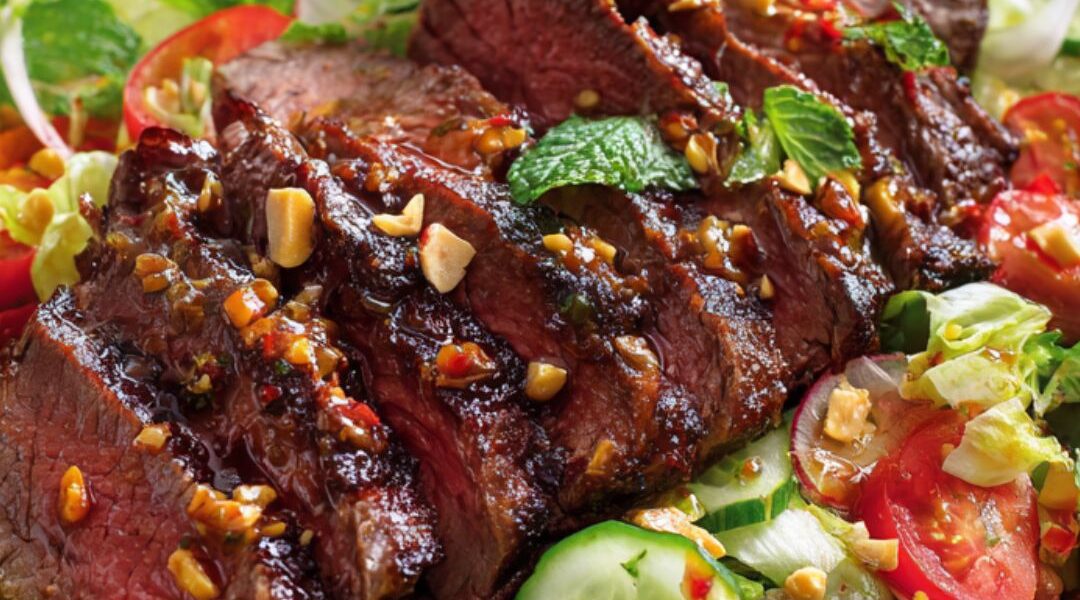

Gordon Ramsay’s spicy beef salad is seared sirloin on a bed of carrot ribbons, radishes, cherry tomatoes, cucumber and baby gem, dressed in a pounded Thai dressing of garlic, chilli, fish sauce, palm sugar and lime. It takes 20 minutes and serves 4.
This recipe appears as “Spicy Beef Salad” in Gordon Ramsay’s Ultimate Cookery Course, where he writes: “I fell in love with this simple dressing of garlic, chilli, fish sauce, sugar and lime in Vietnam and Cambodia.” He calls it “the perfect blend of sweet, sour, salty and bitter” and says it “works with most seafood and meat, but is particularly good with steak.”
The technique that separates this from every other beef salad: he pounds the dressing by hand in a mortar instead of whisking it. Grinding the garlic and chilli into a rough paste releases their oils unevenly, so the heat and sharpness shift from bite to bite rather than tasting the same throughout.
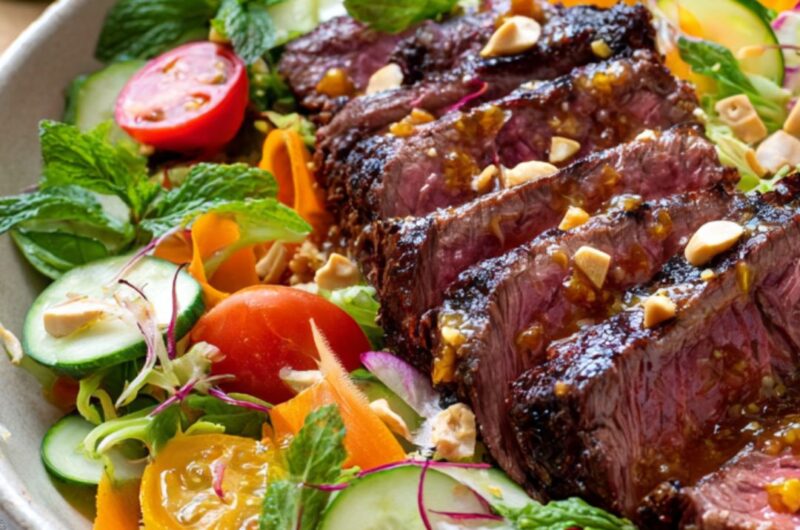
Gordon Ramsay Spicy Beef Salad Recipe
Course: SaladsCuisine: AmericanDifficulty: Easy4
10
minutes10
256
kcal20
A Thai-inspired seared sirloin salad from Gordon Ramsay’s Ultimate Cookery Course, built around a mortar-pounded dressing he picked up travelling through Vietnam and Cambodia. His Sunday Lunch book has a completely different beef salad using fillet cubes with a honey mustard dressing, proving he treats the same protein in opposite directions depending on the cuisine.
Ingredients
- Steak:
2 beef sirloin steaks (strips), 7-9 oz (200-250g) each
Olive oil, for frying
Sea salt and freshly ground black pepper
- Salad:
2 carrots, trimmed and peeled
6 radishes, trimmed and finely sliced
7 oz (200g) cherry tomatoes, sliced in half
Bunch of mint, leaves only, shredded
1 small banana shallot, peeled and finely sliced
3 spring onions (scallions), trimmed and shredded
1/2 large cucumber, trimmed, peeled, deseeded and sliced
2 baby gem lettuces, shredded
4 tbsp skinned peanuts, to garnish
- Thai-style dressing:
1 garlic clove, peeled and roughly chopped
1 red chilli (chile), deseeded and chopped
2 tsp grated palm sugar or palm sugar paste (golden caster sugar if unavailable)
2-3 tbsp fish sauce, or to taste
Juice of 1-2 limes
Directions
- Sear the steaks: Season the steaks generously on both sides, pushing the seasoning into the meat. Add a dash of oil to a hot pan and fry over a high heat for 2 to 3 minutes on each side for medium rare. Hold the fat side of the steaks against the pan to render the fat, because that rendered fat bastes the meat and adds flavour to the pan. Remove from the heat and leave to rest, pouring any cooking juices back on top.
- Pound the dressing: Put the garlic and chilli in a mortar with a pinch of salt and grind to a paste. Add the palm sugar, fish sauce and lime juice and stir with a spoon. Taste and add a little more lime juice if needed. Don’t use a blender because the mortar keeps the texture rough and the chilli heat uneven, which is what gives this dressing its character.
- Build the salad: Using a vegetable peeler, cut the carrots into long ribbons. Place in a large bowl with the radishes, cherry tomatoes, shredded mint, banana shallot, spring onions, cucumber and baby gem lettuce. Add about 4 to 6 tablespoons of the dressing and mix well to combine. Don’t use all the dressing yet because you want some left for the steak.
- Slice and serve: Thickly slice the rested steak at an angle. Toast the peanuts with a pinch of salt for a few minutes in a clean dry pan and roughly chop them. Place the sliced steak on top of the dressed salad, scatter over the chopped peanuts and drizzle over the remaining dressing. Serve immediately.
FAQs
Why does Ramsay pound the dressing in a mortar instead of whisking it?
A whisk or blender breaks everything down to a uniform paste where every spoonful tastes identical. A mortar crushes the garlic and chilli unevenly, so some bites hit harder than others and the texture stays rough with small pieces still intact.
This is how street vendors in Vietnam and Cambodia make it. Ramsay picked up the technique travelling through both countries and kept it exactly as he found it. The tool matters as much as the ingredients here.
Why does he render the fat on the side of the steak?
Most recipes say to sear both flat sides and call it done. Ramsay adds a third step: holding the steak upright with tongs so the fat strip presses against the hot pan.
This melts the fat cap down, crisps it instead of leaving it rubbery, and releases beef dripping into the pan that bastes the meat as it cooks. Skipping this step means you’re eating a chewy white strip of fat alongside an otherwise perfectly cooked steak.
Why banana shallot instead of red onion?
Ramsay includes a “How To Choose Salad Onions” tip directly below this recipe in Ultimate Cookery Course. He writes that banana shallots “are sweet and flavoursome and have none of the acridness of Spanish onions.”
Raw red onion would fight with the chilli and fish sauce for attention. Banana shallot sits underneath both and adds a mild sweetness that rounds out the dressing. This is the same shallot he uses in his radish salad and his potato salad for the same reason.
How is this different from his Sunday Lunch beef salad?
Completely different dish. The “Seared Beef Salad with Sweet Mustard Dressing” in Gordon Ramsay’s Sunday Lunch uses fillet of beef cut into large chunks, seared on all sides then cooled and diced into small cubes. The dressing is European: Dijon mustard, cider vinegar, honey and soy sauce. It’s served on chicory leaves with chopped mint and parsley.
The Cookery Course version is Southeast Asian. The Sunday Lunch version is French-leaning. Same protein, opposite directions. Ramsay even warns in Sunday Lunch not to dress the beef in advance because “the vinegar in the dressing will ‘cook’ the beef and discolour the herbs.”
Why does he slice the steak thick instead of thin?
Thin slices cool down fast and lose that contrast between the warm, pink centre and the cold crunchy vegetables underneath. Thick slices at an angle keep their heat longer and give you enough surface area to catch the dressing without falling apart.
This is a salad you eat within minutes of plating. Ramsay says to serve immediately because the lime juice in the dressing will turn the beef grey and the lettuce will wilt if it sits. Everything about this dish, from the thick slices to the last-minute dressing, is built around eating it right now.
Can I use a different cut of beef?
Ramsay specifies sirloin (strip steak) because it has enough fat to stay juicy after a hard sear but isn’t so tender that it falls apart when sliced thick. Fillet would work but costs twice as much and has less beefy flavour. Ribeye has more marbling but can turn greasy against the light dressing.
If you want a cheaper option, flank steak sliced thin against the grain works well in Thai beef salads. Just adjust the cooking time because flank is leaner and toughens quickly past medium rare. Ramsay uses fillet in his Sunday Lunch version where the smaller cubes suit the richer mustard dressing.

I’m Ava Taylor. I’m A Self-taught Home Cook Who Loves Gordon Ramsay Recipes. I Try Every Dish In My Small Apartment Kitchen And Tweak It Until It Works. I Write Clear Steps With Simple Words So Anyone Can Follow. I Share Honest Wins, Mistakes, And Quick Tips To Help You Cook With Confidence.