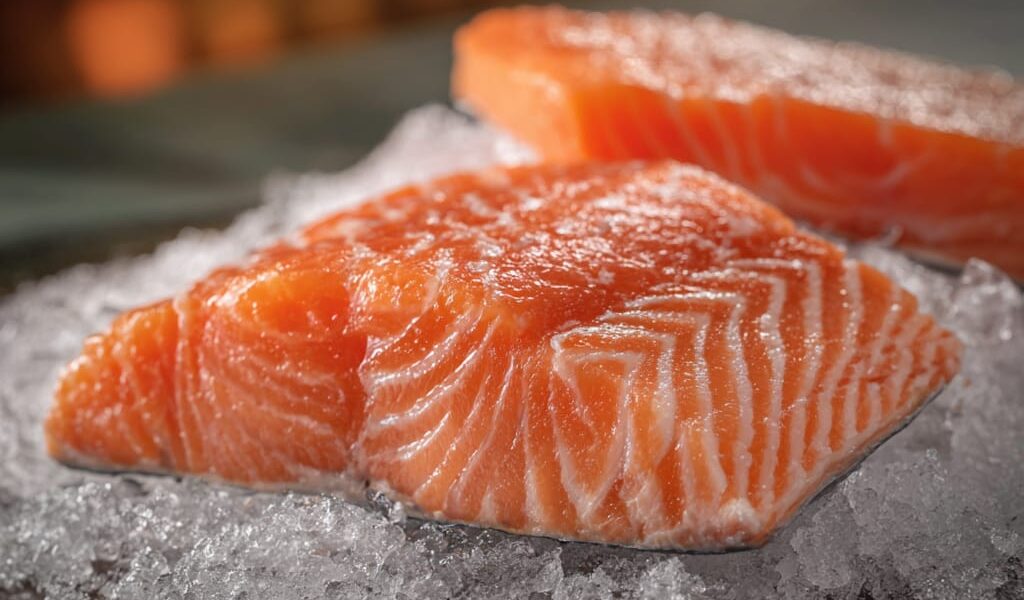

Gordon Ramsay buys “fresh-off-the-boat” when he can, but he’s blunt: “Great frozen beats tired ‘fresh’ every time.” If you’ve ever paid extra for a limp fillet that smelled like low tide, you know why this guide exists. Below you’ll learn how freezing affects texture, which cuts survive icy storage, and how to choose the best option in a supermarket aisle.
How Freezing Changes Fish
- Ice crystals form inside the flesh. Slow, home-freezer temps (≈ −18 °C) create large crystals that puncture cell walls; rapid commercial blast-freezing (−40 °C) keeps crystals tiny and damage minimal.
- Moisture migration during thaw. Damaged cells release water; that’s the puddle you see. Quick freeze → small drip-loss → juicier fillet.
- Fat protection. Oily fish (salmon, trout) freeze better because intramuscular fat coats muscle fibres and slows ice growth.
When “Fresh” Isn’t Fresher
Seafood labelled “fresh” may have travelled five days on ice. By day 3 ATP has broken down into inosine—flavour drops fast. A blast-frozen at sea fillet often retains sweet, briny notes that rivals a day-boat catch.
| Buying scenario | Choose fresh when… | Choose frozen when… |
|---|---|---|
| Supermarket mid-week | Counter turnover < 24 h, flesh springs back, zero whiff of ammonia. | Truck deliveries are twice weekly—blast-frozen fillets likely beat “fresh”. |
| Farmers’ market coastal town | Seller shows catch date today. | Vendor admits it’s from two days ago. |
| Bulk buying for meal prep | Rare—unless you sous-vide & serve same day. | IQF* skin-on portions save money and waste. |
*IQF = Individually Quick Frozen

Best Fish to Buy Frozen
- Salmon, cod, haddock – high-fat or firm muscle withstands freeze-thaw.
- Shrimp & scallops – nearly all are frozen on the boat anyway.
- Tuna steaks – sashimi-grade is flash-frozen by law.
Fish That Should Be Truly Fresh
- Delicate white fish (sole, flounder) – paper-thin fillets turn mushy after thawing.
- Mussels, clams, live shellfish – texture and safety degrade rapidly once frozen.
Smart Thawing to Save Texture
- Fridge method (best): keep fillet in original pack on a rack overnight; slow thaw = minimal drip.
- Cold-water quick thaw: sealed bag submerged in 4 °C water; change water every 30 minutes.
- Avoid room-temp or microwave thaw – uneven warming = rubbery spots and bacterial risk.
Flavour Boost After Thawing
- Pat fish bone-dry, then leave 10 minutes uncovered to air-dry for a better sear.
- Season with salt 15 minutes before cooking – draws surface moisture, intensifies taste.
- Finish with a bright sauce: try lemon-butter or creamy dill.
FAQ
Is frozen salmon as healthy as fresh? Yes—nutrients are locked in at −40 °C; omega-3 levels remain stable for months.
How long can I keep fish in the freezer? 3 months for fatty fish like salmon, up to 6 months for lean white fillets if vacuum-sealed.
Can I cook fish from frozen? Absolutely. For baked salmon, add 5–7 minutes to cooking time and glaze with honey-garlic sauce halfway.
Try These Recipes Next

I’m Ava Taylor. I’m A Self-taught Home Cook Who Loves Gordon Ramsay Recipes. I Try Every Dish In My Small Apartment Kitchen And Tweak It Until It Works. I Write Clear Steps With Simple Words So Anyone Can Follow. I Share Honest Wins, Mistakes, And Quick Tips To Help You Cook With Confidence.