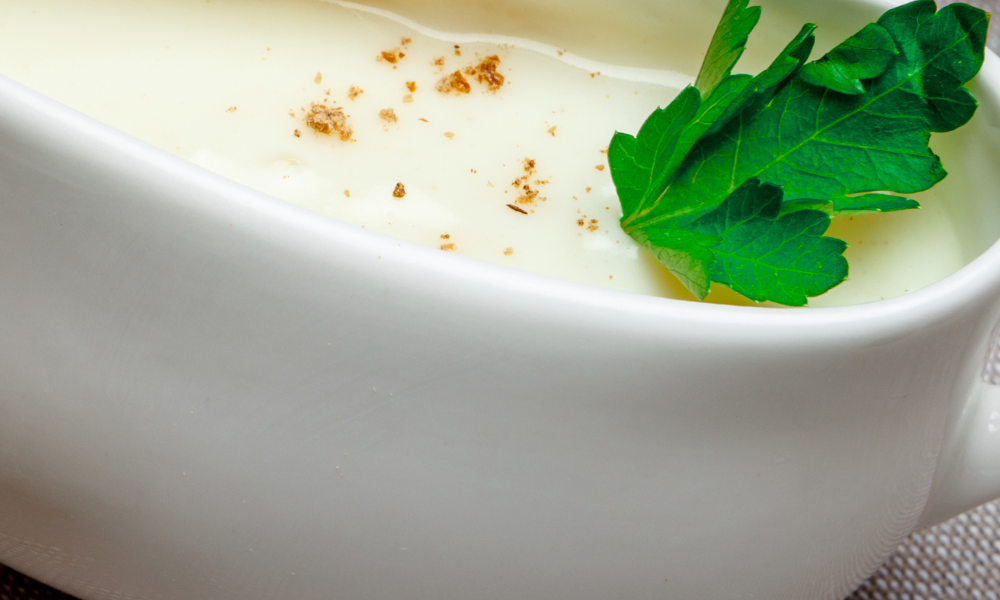

The First Time I Screwed This Up…
I’ll be straight with you: the first time I tried making béchamel, I was way too cocky.
I thought, “Butter, flour, milk — how hard could it be?”
Five minutes later, I had a pot full of gluey, flour-flavored horror. No smoothness. No silk. Just sadness.
The problem?
I didn’t respect the pace of it.
Gordon’s method taught me: béchamel isn’t fast food. It’s layered. Built. Coaxed into being.
And when you do it right, you unlock one of the most important sauces in real cooking.
Why This Works (And Where Most Go Wrong)
You know what wrecks béchamel faster than anything? Rushing it.
Gordon’s version works because he stacks every step with purpose:
- Proper roux: You have to cook the flour until it smells like toasted nuts, not raw dough.
- Warm milk: Warm milk slips into the roux without shocking it. Cold milk slams the brakes and creates lumps.
- Constant whisking: You’re not babysitting it — you’re raising it.
Where most people mess it up:
- Dumping cold milk into hot flour and wondering why it looks like cottage cheese.
- Quitting on the roux too early because it “looks fine.” (It’s not fine.)
- Forgetting to taste and season before it’s too late.
Ingredients That Actually Matter
- 5 tablespoons butter: Real butter. Don’t get clever with fake stuff.
- ¼ cup all-purpose flour: Your thickener. Your base.
- 1 quart (4 cups) whole milk, warmed: The body and soul of the sauce.
- 1 teaspoon salt: Salt makes béchamel bloom.
- ¼ teaspoon freshly grated nutmeg: Tiny dose, massive difference.
Tweaks that actually work:
- Swap in half-and-half for a richer sauce (especially if you’re doing mac and cheese).
- Infuse the milk first with bay leaf, a garlic clove, or onion for deeper flavor.
How To Make Gordon Ramsay Béchamel Sauce
Start by melting the butter gently in a heavy-bottomed saucepan.
Medium heat. No rushing. If it browns, you’ve gone too far.
When the butter’s melted and just starting to foam, throw in the flour.
Grab your whisk. Stir hard.
You’re looking for a smooth, sandy paste — not oily, not sludgy.
Now cook it.
Six to seven minutes, steady stirring.
It’ll smell raw at first. Then it’ll start to smell nutty. That’s your signal.
Meanwhile, warm up your milk.
You want it about as warm as a good bath. No boiling. No fridge-cold shocks.
Once the roux smells right, start adding the milk very slowly at first.
Splash in a little, whisk like hell, let it loosen up. Then another splash. Then another.
You build it. You don’t drown it.
After all the milk is in, bring it to a low, lazy simmer.
Not a raging boil — just a few gentle bubbles.
Let it cook for about 10–20 minutes, stirring now and then.
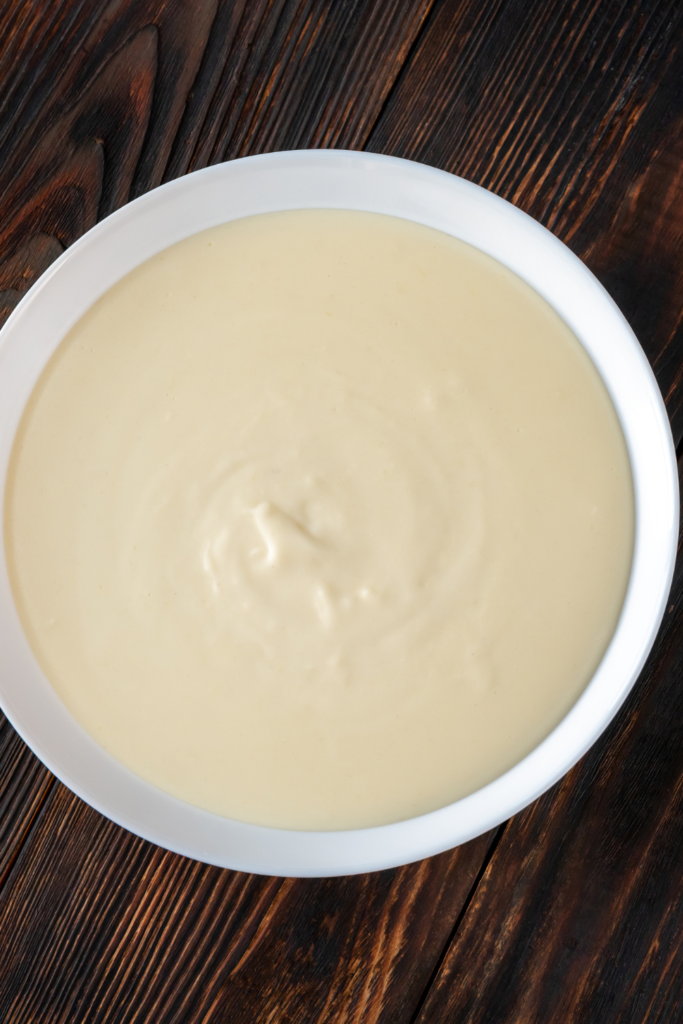
When it coats the back of a spoon — that’s when you know you’ve nailed it.
Season with salt and a whisper of nutmeg. Taste it. Trust it. Adjust if you need to.
What Gordon Ramsay Says About This Dish
“It’s the simplest sauces that show the cracks in your cooking.”
I didn’t get that until I made béchamel wrong five different ways.
“Warm ingredients are non-negotiable.”
I tried cold milk once. Only once.
“You can’t rush silk.”
Every good béchamel comes from heat, timing, and muscle memory.
“Taste earlier than you think.”
Because if you season too late, the sauce’s already set in its ways.
What I Got Wrong (And How I Fixed It)
- Dumped in cold milk: Sauce seized like wet Play-Doh. Now I warm it every single time.
- Didn’t cook the roux long enough: Left a nasty, floury taste.
Now I listen with my nose — if it smells nutty, it’s ready. - Forgot to whisk properly: Ended up with lump city. Constant whisking = smoothness.
Variations That Actually Hold Up
- Cheese sauce: Stir in grated Gruyère, Parmesan, or aged cheddar for next-level mac and cheese.
- Mornay sauce: Officially fancy name for béchamel with cheese.
- Herb twist: Infuse the milk with bay leaf, thyme, or rosemary, then strain.
Pro Tips That Change The Game
- Use a flat whisk if you can: Hits all the edges of the pot better.
- Warm milk to just above body temp: No need for a thermometer. If it feels hot but not scalding, it’s right.
- Strain the sauce if you need: Even a great cook gets an occasional lump. Fine mesh sieve fixes everything.
- If sauce thickens too much: Whisk in a tablespoon of warm milk at a time until it loosens up.
Storage + Leftover Moves
- Fridge: Store cooled sauce in an airtight container up to 3 days.
- Freezer: Works surprisingly well. Freeze in small batches for up to 3 months.
- Reheat: Gentle heat, lots of stirring, and a splash of milk if it tightens too much.
Leftover flex:
- Pour over roasted vegetables.
- Stir into mashed potatoes.
- Turn boring rice into creamy heaven.
FAQs
Q: Can I make béchamel ahead of time?
A: Yes — just press plastic wrap directly onto the surface before chilling to prevent a skin.
Q: Why is my béchamel grainy?
A: Probably cooked the milk too fast or didn’t whisk hard enough early on.
Q: Can I use skim milk?
A: You can, but it’ll taste like a sad version of the real thing.
Q: What if my sauce is too thin?
A: Simmer it longer. Evaporation is your friend here.
Q: Can I add cheese straight to béchamel?
A: Absolutely — that’s how you make a killer Mornay sauce.
Try More Recipes:
- Gordon Ramsay Pepper Sauce Recipe
- Gordon Ramsay Pizza Sauce Recipe
- Gordon Ramsay Duck Orange Sauce Recipe

Gordon Ramsay Bechamel Sauce Recipe
Course: Side DishesCuisine: FrenchDifficulty: Easy4
servings10
minutes25
minutes105
kcalSmooth, silky, and built from scratch — this béchamel sauce is the secret weapon behind a hundred comfort food classics.
Ingredients
5 tablespoons butter
¼ cup all-purpose flour
1 quart (4 cups) whole milk, warmed
1 teaspoon salt, or to taste
¼ teaspoon freshly grated nutmeg, or to taste
Directions
- Melt butter over medium heat.
- Whisk in flour, stirring until a sandy paste forms.
- Cook the roux for 6–7 minutes until nutty and pale golden.
- Slowly add warm milk, whisking like mad to avoid lumps.
- Bring to a low simmer.
- Cook for 10–20 minutes, stirring now and then, until thick enough to coat a spoon.
- Season with salt and nutmeg. Taste and adjust if needed.
Notes
- Warm Your Milk: Prevents lumps and keeps the sauce silky.
- Whisk Like You Mean It: No lazy stirring — constant whisking makes or breaks it.
- Cook Out the Flour Taste: Golden roux = no gritty, raw flavor.
- Adjust Consistency: Too thick? Add a splash of warm milk. Too thin? Simmer it a bit longer.

I’m Ava Taylor. I’m A Self-taught Home Cook Who Loves Gordon Ramsay Recipes. I Try Every Dish In My Small Apartment Kitchen And Tweak It Until It Works. I Write Clear Steps With Simple Words So Anyone Can Follow. I Share Honest Wins, Mistakes, And Quick Tips To Help You Cook With Confidence.