
The First Time I Screwed This Up…
I blitzed raw squash in a blender with a splash of water and wondered why it tasted like baby food gone wrong. I thought purée just meant “soft.” But this isn’t about softness—it’s about depth. Ramsay’s method taught me that purée isn’t a texture. It’s a technique. The caramelization, the heat control, the slow build of broth… that’s what makes it a dish, not just a side.
Here’s how to do it properly, the way that actually transforms butternut squash into something restaurant-worthy.
Why This Works (And Where Most Go Wrong)
Most people treat purée like mashed potatoes—boil and blend. That’s where you lose. Boiled squash tastes flat, bland, and watery.
Gordon roasts it. High heat, flesh-side up. That browning? That’s Maillard gold. It concentrates the natural sugars and gives it that deep, nutty sweetness. You’re not just softening the squash—you’re layering flavor before it even hits the blender.
Add broth after blending starts. Control the consistency like a sauce, not a soup.
And most importantly: season last. If you salt before roasting, you draw moisture out of the squash and dull the roast.
Ingredients That Actually Matter
- 1 large butternut squash, halved and seeded
→ Go for deep orange flesh, no green streaks. That means ripe and sweet. Underripe squash will taste like paste, no matter what you do. - 480ml (2 cups) chicken or vegetable broth
→ Use low-sodium, ideally homemade or clarified store-bought. Weak stock will mute the squash. Don’t use water—you’ll kill the flavor. - Salt, to taste
→ Add in small amounts after puréeing. Taste, adjust, stop. Trust the squash. - Freshly ground black pepper
→ Not optional. The tiniest bite cuts the sweetness just enough to round it out.
How To Make Gordon Ramsay Butternut Squash Purée
Preheat your oven to 200°C (400°F). Line a baking tray with parchment for easier cleanup.
Cut the butternut squash in half lengthwise. Scoop out the seeds and stringy bits (use a spoon, not a knife—you’ll just tear the flesh). Place the squash flesh-side up on the tray. No oil, no seasoning. Just raw heat.
Roast for 45 minutes to 1 hour. You want browning at the edges, a soft center, and caramelized bits on top. If you poke it and your finger sinks in easily, it’s done.
Let it cool just enough to handle—don’t refrigerate it. Scoop the flesh straight into a food processor while it’s still warm. That’s when it blends best.
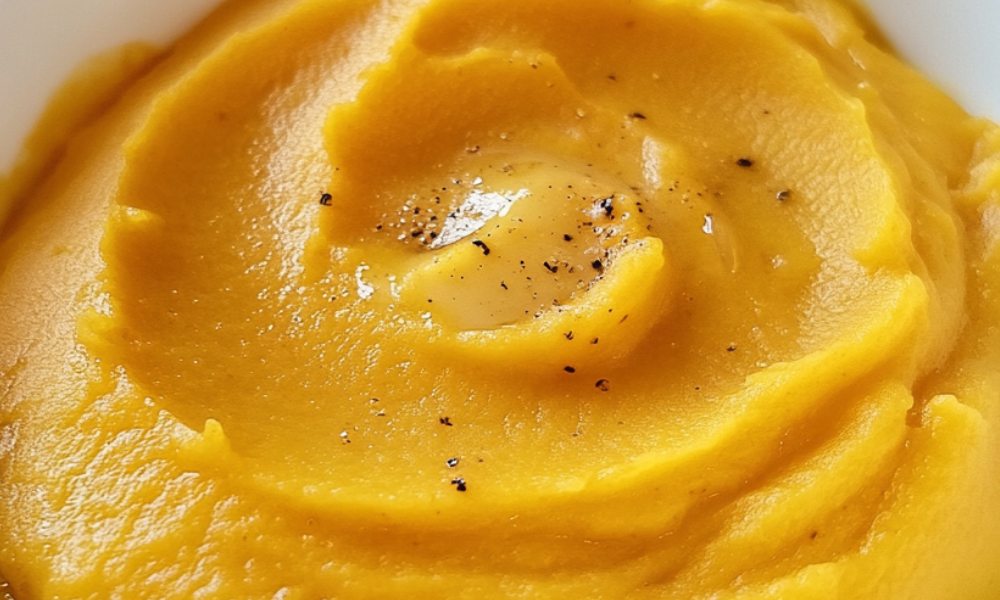
Start pulsing. As it begins to smooth out, drizzle in warm broth 60ml (1/4 cup) at a time. Stop when it hits your perfect texture—thick enough to hold its shape on a spoon, but silky when spread.
Season with salt and pepper. Pulse a few more seconds. Done.
Optional: Pass it through a fine mesh sieve if you want restaurant-level smoothness. Takes time, but worth it.

What Gordon Ramsay Says About This Dish
“Roasting unlocks the sweetness. Boiling kills it.”
When I roasted instead of boiling, the flavor tripled. He’s right—water leaches everything.
“You season after tasting. Don’t hide the squash.”
The first time I salted early, it got briny and flat. Now I always blend first, then adjust.
“Texture is everything—smooth, not sloppy.”
He’s militant about consistency. Sloppy purée ruins the plate. Take your time blending.
What I Got Wrong (And How I Fixed It)
- I used a watery boxed broth. It made the purée taste like soup. Switched to reduced homemade stock—night and day difference.
- I used a blender on cold squash. Lumpy mess. Warm squash = smoother results.
- I salted before roasting. Lost caramelization and it came out soggy. Never again.
- I didn’t strain the purée the first time. Looked fine, but mouthfeel was off. Now I strain for special dinners.
Variations That Actually Hold Up
- Brown butter + sage: Add 1 tbsp brown butter and a few crisped sage leaves during blending. It’s next level.
- Spicy squash purée: Add a pinch of cayenne or a roasted garlic clove for heat and depth.
- Vegan twist: Use homemade veggie broth and add 1 tsp miso paste for umami.
- Nutty finish: Stir in 1 tsp tahini or almond butter for body and subtle richness.
❌ Do not add cream. It muddies the flavor. The squash has enough natural body when roasted properly.
Pro Tips That Change the Game
- Rest the squash post-roast: 10 minutes of resting brings the internal sugars forward.
- Strain it if plating with protein: Smooth purée is the foundation of fine-dining plating. No lumps allowed.
- Control your blender speed: Start low to avoid air bubbles. Finish high for silkiness.
- Warm the broth before blending: Cold stock shocks the squash and dulls flavor.
Storage + Leftover Moves
- Fridge: Store in an airtight container for up to 3 days. Press plastic wrap on the surface to avoid skin.
- Freeze: Yes. Portion into freezer bags or silicone molds. Holds for 3 months.
- Reheat: Gently warm in a saucepan over low heat. Add a splash of broth to loosen.
- Leftover Moves:
→ Swirl into risotto
→ Use as a base for soup
→ Spread under roasted meats or spoon into tacos
FAQs – Covering Search Intent
Q: Can I use pre-cut squash?
Yes, but you’ll lose flavor. Whole squash roasts better and holds moisture. Pre-cut dries out faster.
Q: Can I make this in advance?
Absolutely. Roast and purée a day ahead, reheat gently with a splash of broth before serving.
Q: Why does my purée taste bland?
Likely causes: weak broth, under-roasting, or early salting. Fix those and the flavor pops.
Q: Can I use this for babies?
Yes, but skip the seasoning and use veggie broth or water. Make sure it’s smooth.
Q: How do I make it smoky?
Roast with a tiny bit of smoked paprika or char the squash edges more aggressively.
Try More Recipes:
- Gordon Ramsay Hummus Recipe
- Gordon Ramsay Puff Pastry Recipe
- Gordon Ramsay Hot Wings Recipe
- Gordon Ramsay Tuna Tartare Recipe

Gordon Ramsay Butternut Squash Puree Recipe
Course: Side DishesCuisine: BritishDifficulty: Easy4
servings10
minutes1
hour82
kcalSilky, roasted butternut squash purée with deep flavor—perfect as a side, base, or elegant plating element.
Ingredients
1 large butternut squash, halved and seeded
480ml (2 cups) chicken or vegetable broth, warmed
Salt, to taste
Freshly ground black pepper, to taste
Directions
- Preheat the oven to 200°C (400°F).
- Place squash halves flesh-side up on a baking sheet.
- Roast for 45–60 minutes, until deeply browned and tender.
- Let cool slightly, then scoop flesh into food processor.
- Blend, slowly adding broth 60ml (1/4 cup) at a time until silky.
- Season with salt and pepper. Blend again briefly.
- Optional: Strain for extra smoothness. Serve warm.
Notes
- Rest the squash post-roast: 10 minutes of resting brings the internal sugars forward.
- Strain it if plating with protein: Smooth purée is the foundation of fine-dining plating. No lumps allowed.
- Blend for smoothness: Use a food processor or blender to achieve a velvety-smooth consistency. For an extra creamy texture, strain the purée through a fine mesh sieve.
- Warm the broth before blending: Cold stock shocks the squash and dulls flavor.

I’m Ava Taylor. I’m A Self-taught Home Cook Who Loves Gordon Ramsay Recipes. I Try Every Dish In My Small Apartment Kitchen And Tweak It Until It Works. I Write Clear Steps With Simple Words So Anyone Can Follow. I Share Honest Wins, Mistakes, And Quick Tips To Help You Cook With Confidence.