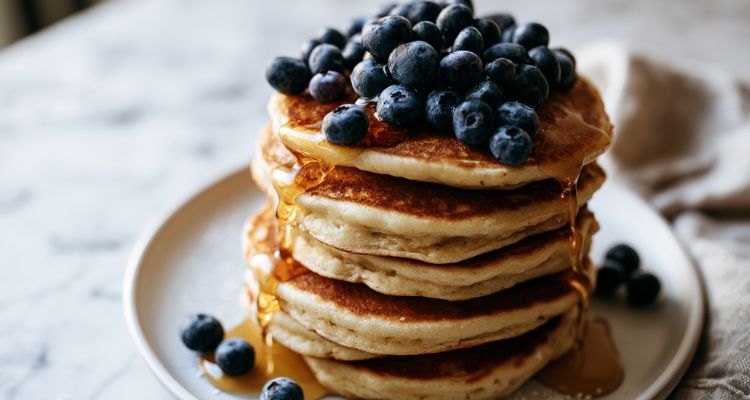

Gordon Ramsay’s scotch pancakes are thick, fluffy griddle pancakes made with buttermilk, vanilla, and whipped egg whites, served with fresh blueberries and maple syrup. They come together in about 20 minutes and make 12 small pancakes.
Ramsay doesn’t publish a recipe called “scotch pancakes” by name, but his buttermilk pancakes from Bread Street Kitchen (2015) follow the same small, thick format. He describes them as “light and fluffy American-style pancakes” that are “moreish and filling without being too sweet,” and suggests topping them with seasonal fruit or crispy smoked bacon.
The technique that sets his version apart: he separates the eggs and whisks the whites to soft peaks before folding them into the batter. Most scotch pancake recipes just mix everything together, which gives you a denser result. Folding in whipped whites traps air through the batter so each pancake puffs up lighter on the griddle.
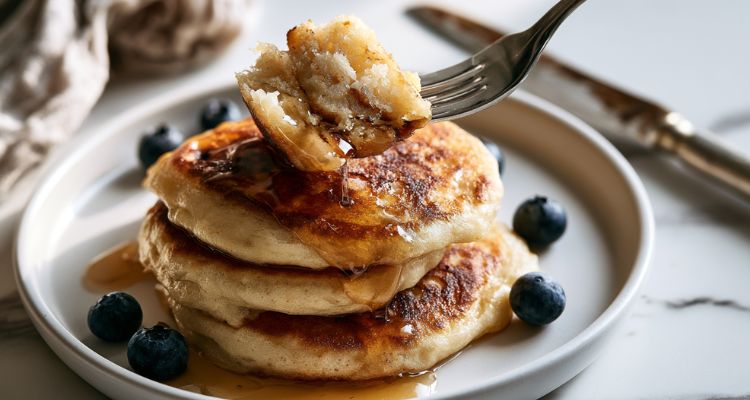
Gordon Ramsay Scotch Pancakes Recipe
Course: BreakfastCuisine: BritishDifficulty: Easy4-6
10
minutes1
50
minutes510
Adapted from Gordon Ramsay’s buttermilk pancakes in Bread Street Kitchen (2015). The original recipe uses separated eggs with whipped whites folded into buttermilk batter, giving these the same thick, fluffy character as traditional scotch pancakes. Shaped into small rounds using one heaped tablespoon of batter each.
Ingredients
1 1/3 cups (160g) plain flour (all-purpose flour)
2 tsp baking powder
Pinch of sea salt
1 tbsp caster sugar (superfine sugar)
2 large eggs, separated
1 1/4 cups (300ml) buttermilk
4 tbsp vegetable oil, plus extra for frying
1 tsp vanilla extract
3 1/2 tbsp (50g) butter, for frying
1 cup (150g) blueberries
Maple syrup, to serve
Directions
- Sift the dry ingredients. Sift the flour, baking powder and salt into a large bowl, add the sugar and mix together. Make a well in the middle and tip in the egg yolks. Gradually add the buttermilk and whisk slowly, bringing the flour in from the edges until it is all combined. Whisk in the oil and vanilla extract until combined.
- Whip the egg whites. In a separate grease-free bowl, whisk the egg whites until they form soft peaks, then fold them evenly into the batter. Don’t stir or beat them in because that knocks out the air you just whipped into them.
- Cook in batches. Heat a wide, non-stick frying pan over a medium heat. Add a dash of oil and a knob or two of the butter. Once the butter has melted, cook the pancakes in batches of four at a time, using 1 heaped tablespoon of batter per pancake. Shape each pancake into a round disc in the pan. Cook over a medium heat for 2-3 minutes, turning once, until golden brown on each side. Keep warm in a low oven while you repeat with the remaining batter, adding a little extra oil and a knob or two of butter for each batch.
- Serve with toppings. Divide the pancakes among serving plates, then sprinkle generously with the blueberries and top with a drizzle of maple syrup.
FAQs
Why does Ramsay separate the eggs instead of adding them whole?
Whole eggs mixed straight into batter give you a flat, dense pancake. Separating the eggs lets you whisk the whites into soft peaks, which creates thousands of tiny air pockets.
When you fold those whites into the batter gently, the air stays trapped. On the griddle, those pockets expand with heat, so the pancakes rise thicker and lighter than they would with a standard mixed batter.
How is this different from his ricotta hotcakes?
The Bread Street Kitchen ricotta hotcakes take a completely different approach to getting fluffiness. Instead of buttermilk, they use ricotta cheese and whole milk as the liquid base, which gives a richer, slightly denser texture.
The hotcakes also whisk the whites to stiff peaks rather than soft peaks, and use less flour (75g versus 160g), so they hold together differently. They’re served with stem ginger butter and bananas rather than blueberries, pushing them toward dessert territory.
Why buttermilk instead of regular milk?
Buttermilk is slightly acidic, which reacts with the baking powder to create extra lift. Regular milk doesn’t trigger that same reaction, so you’d get flatter pancakes with less rise.
The acidity also tenderises the gluten in the flour, which keeps the pancakes soft inside rather than chewy. That tangy flavour balances the sweetness of the maple syrup on top, so the whole thing doesn’t taste one-note. If you’re looking for another way Ramsay uses buttermilk to add tang and tenderness, his buttermilk fried chicken uses the same principle.
Can these be made without buttermilk?
Ramsay doesn’t offer a substitute in the recipe, but the standard swap is regular milk with a squeeze of lemon juice. Add 1 tablespoon of lemon juice to 1 1/4 cups (300ml) of whole milk and let it sit for 5 minutes until it curdles slightly.
It won’t taste identical because real buttermilk is thicker and tangier from fermentation. The lemon version works in a pinch, though, and still reacts with the baking powder for lift.
Why does he cook them in butter and oil together?
Butter alone burns quickly over medium heat because of its milk solids. Oil alone gives you no flavour. Combining the two solves both problems.
The oil raises the smoke point so the butter doesn’t scorch during the 2-3 minutes each batch needs. The butter gives each pancake those golden, slightly caramelised edges that taste better than what oil alone produces. Ramsay uses this same butter-and-oil technique across his scrambled eggs and many pan-fried dishes.
What toppings work besides blueberries?
Ramsay suggests “any seasonal fresh fruit” and specifically calls out “crispy smoked bacon and maple syrup for that classic salty/sweet combination.” So he clearly sees these as flexible.
His Ultimate Cookery Course version of a similar recipe pairs ricotta pancakes with Greek yoghurt and honey instead of maple syrup. That’s a lighter finish if you find maple syrup too sweet. Stone fruit like peaches or plums work well in summer, while sliced bananas with a squeeze of lemon are a solid year-round option.

I’m Ava Taylor. I’m A Self-taught Home Cook Who Loves Gordon Ramsay Recipes. I Try Every Dish In My Small Apartment Kitchen And Tweak It Until It Works. I Write Clear Steps With Simple Words So Anyone Can Follow. I Share Honest Wins, Mistakes, And Quick Tips To Help You Cook With Confidence.