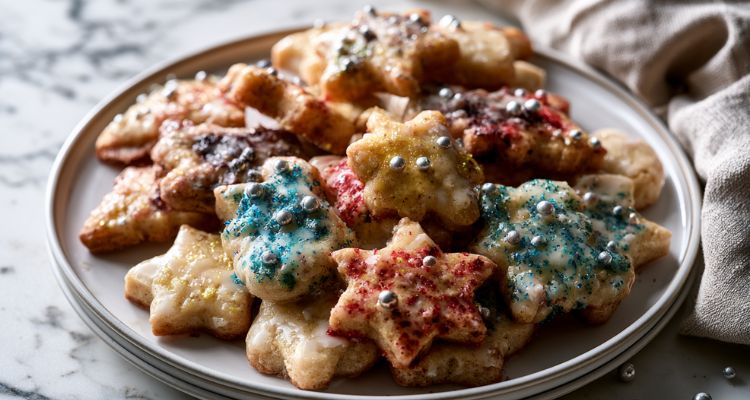

Gordon Ramsay’s sugar cookies are a five-ingredient rolled-and-cut recipe made with butter, caster sugar, egg, flour, and a pinch of mixed spice. They bake in 10 to 15 minutes at 350F (180C) and make 20 to 24 cookies, depending on your cutter size.
This recipe appears as “Party Biscuits” in Gordon Ramsay: Make It Easy (2005), inside his “Just for Kids” chapter. He writes nearby: “Cooking with children is pure magic. I love to see the joy on their faces as they see the product of their work.” The recipe is designed for parents baking with kids, so the method is intentionally simple.
What sets his version apart is the half teaspoon of mixed spice folded into the dough. Most sugar cookies rely on vanilla alone, but the warm blend of cinnamon, nutmeg, and allspice gives these a deeper background flavour without changing the texture or colour.
Gordon Ramsay Sugar Cookie Recipe
Course: DessertsCuisine: BritishDifficulty: Easy20-24
15
minutes15
90
kcalA simple rolled-and-cut cookie from Gordon Ramsay’s Make It Easy cookbook, designed for baking with kids. The dough comes together quickly, chills briefly, and bakes into pale golden biscuits that hold their shape and take well to decorating.
Ingredients
- Cookie dough
½ cup + 1 tbsp (125g) unsalted butter, at room temperature
⅔ cup (125g) superfine sugar (caster sugar)
1 large egg, beaten
2 cups (250g) all-purpose flour (plain flour)
⅔ cup (125g) superfine sugar (caster sugar)
- Icing glaze
1¼ cups (150g) powdered sugar (icing sugar)
Water (just enough for a smooth, thin glaze)
Coloured sugar, for sprinkling
Silver balls, optional
Directions
- Cream the butter and sugar: Beat the butter and sugar together in a bowl until creamy and soft. You want a smooth paste, not a fluffy whip. This takes about a minute by hand or with an electric mixer.
- Build the dough: Gradually beat in the egg. Sift the flour and mixed spice together, then work into the mixture using a metal spoon to begin with, then your hands. Gather the mixture together and knead for 1 to 2 minutes to make a smooth dough. The metal spoon first prevents overworking before the flour is evenly distributed.
- Chill the dough: Wrap the dough in cling film and rest in the fridge for 30 minutes. This firms the butter so the cookies hold their shape when cut. Meanwhile, preheat the oven to 350F (180C / Gas 4) and line a baking sheet with greaseproof paper (parchment).
- Roll and cut: Divide the dough into 4 portions and re-wrap all but one. Roll out the working portion on a lightly floured surface to ¼ inch (5-7mm) thickness. Use biscuit cutters to cut figures, stars, or other shapes. At Christmas, use festive cutters and make a hole near the top with a skewer so you can hang the biscuits on the tree. Transfer to the lined baking sheet and repeat with the rest of the dough.
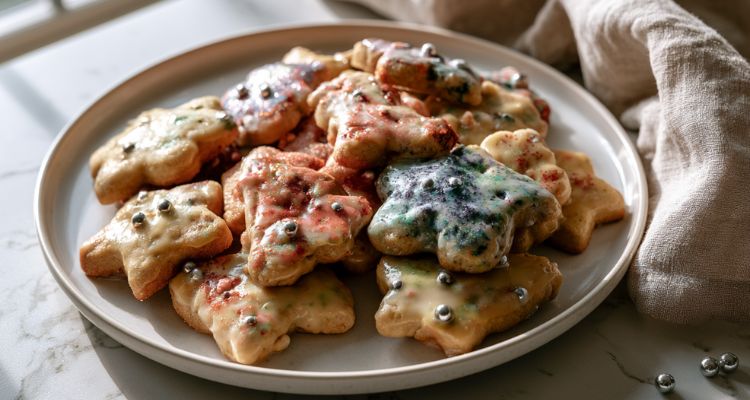
- Bake and decorate: Bake for 10 to 15 minutes until the biscuits are pale golden in colour. Leave on the baking sheet for a few minutes to firm up, then lift onto a wire rack to cool completely. Mix the icing sugar with enough water to make a smooth, very thin glaze. Brush the biscuits with the icing glaze using a pastry brush, then sprinkle on coloured sugar and silver balls if you like. Leave on the rack until the icing is dry.
FAQs
Why does Ramsay add mixed spice instead of vanilla extract?
Most sugar cookie recipes use vanilla as the default flavouring because it’s mild and familiar. Ramsay goes with mixed spice instead, which is a British blend of cinnamon, nutmeg, allspice, and coriander that adds warmth without any one flavour taking over.
The result is a cookie that tastes slightly more complex than a plain butter biscuit but doesn’t steer toward Christmas gingerbread territory. If you prefer a vanilla-forward cookie, swap the mixed spice for 1 tsp vanilla extract and the dough works the same way.
Why does he start mixing with a metal spoon before switching to hands?
A metal spoon distributes flour through the wet mixture without developing gluten the way vigorous kneading would. Once the flour is roughly incorporated, your hands take over for the final kneading because you can feel when the dough turns smooth.
If you go straight to hands, you tend to squeeze and overwork the dough before the flour is evenly mixed, which creates tough spots. The 1 to 2 minutes of hand kneading he specifies is enough to bring it together without making the cookies dense.
Why only 30 minutes of chilling instead of hours?
This dough is leaner than most American sugar cookie recipes. With only 125g butter to 250g flour, the ratio is low enough that the dough firms up quickly. Heavier, butterier doughs need longer chilling because there’s more fat to solidify.
Thirty minutes in the fridge is enough to make the dough rollable without cracking and firm enough to hold cutter shapes. If your kitchen runs hot, add another 10 minutes, but a 4-hour chill would make this dough too stiff to roll without cracking.
How is this different from his shortbread recipe?
His shortbread from Bread Street Kitchen skips the egg entirely and uses a rub-in method instead of creaming. That gives shortbread its sandy, crumbly snap. These sugar cookies include an egg, which adds chew and flexibility so they hold up to cutters and rolling.
The sugar ratio also shifts: shortbread is butter-heavy with less sugar, while these use equal parts butter and sugar for a sweeter, crisper bite. Same pantry, very different textures.
Can these double as Christmas cookies?
Ramsay designed these with Christmas in mind. He specifically says to use festive cutters and poke a skewer hole near the top so you can thread ribbon through and hang them on the tree. The icing glaze and coloured sugar are already built into the recipe.
If you want a more detailed Christmas version, his Christmas cookie recipe on this site takes a no-chill approach with a different butter-to-flour ratio that holds shape without refrigeration.
Why does he bake these at a lower temperature than many cookie recipes?
At 350F (180C), the cookies set slowly from the outside in, which keeps them pale and even-textured all the way through. Higher heat would brown the edges before the centres firm up, and thin shapes like stars would burn at the points while the thicker body stays raw.
His instruction to pull them at “pale golden” is the key visual cue. They look underdone on the tray, but once they cool for a few minutes on the sheet they crisp up completely.

I’m Ava Taylor. I’m A Self-taught Home Cook Who Loves Gordon Ramsay Recipes. I Try Every Dish In My Small Apartment Kitchen And Tweak It Until It Works. I Write Clear Steps With Simple Words So Anyone Can Follow. I Share Honest Wins, Mistakes, And Quick Tips To Help You Cook With Confidence.