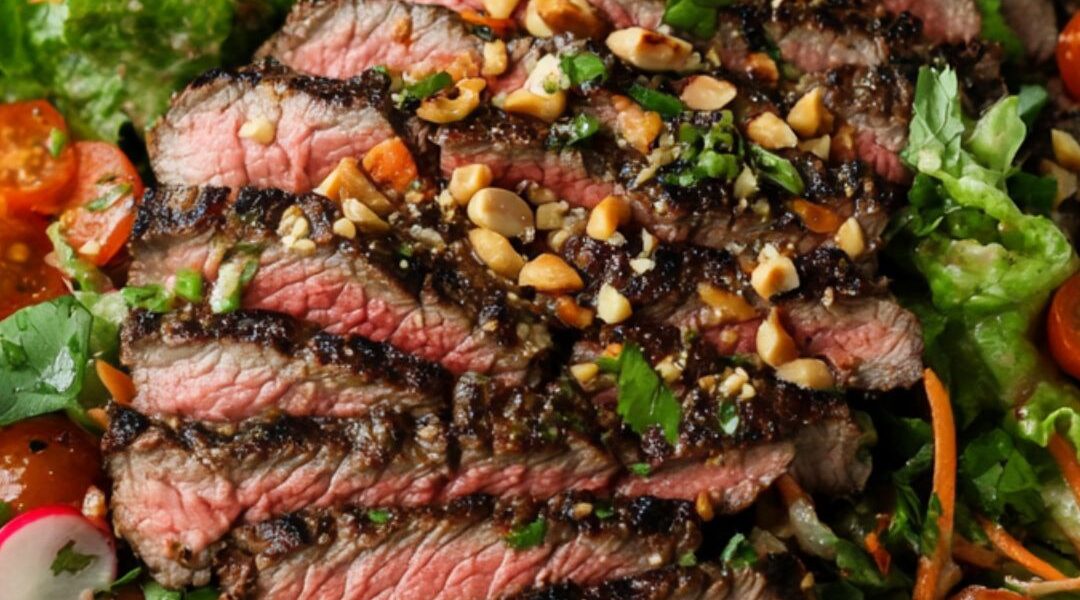

Gordon Ramsay’s Thai beef salad pairs seared sirloin with a spicy dressing built on chilli, fish sauce, lime and sugar, tossed through crunchy vegetables and fresh herbs. It takes about 20 minutes and serves 4.
Ramsay has two versions across his cookbooks. The Spicy Beef Salad in Ultimate Cookery Course is the one he fell in love with travelling through Vietnam and Cambodia, where he writes: “It’s the perfect blend of sweet, sour, salty and bitter.” The Weeping Tiger Spiced Beef Salad in Ramsay in 10 comes from Lucky Cat, his Asian restaurant in London. Both appear on gordonramsay.com and the Cookery Course version has a YouTube video with extra technique.
The technique that ties both versions together: he sears the beef hard and fast on a smoking hot pan, then rests it so it continues cooking off the heat. In the video he explains why: “By the time I let them rest they’re going to go back to medium rare.” Every other step, from the dressing to the salad build, is about not drowning that beef in noise.
Gordon Ramsay Thai Beef Salad Recipe
Course: SaladsCuisine: American, ThaiDifficulty: Easy4
10
minutes10
256
kcal20
Two Thai-inspired beef salads merged from Ultimate Cookery Course and Ramsay in 10. The base recipe uses the Cookery Course method with its mortar-pounded dressing and peanuts, with the Weeping Tiger’s tamarind option and puffed rice as variations below.
Ingredients
2 beef sirloin steaks, 7 to 9 oz (200 to 250g) each
Olive oil, for frying
2 carrots, trimmed and peeled
6 radishes, trimmed and finely sliced
7 oz (200g) cherry tomatoes, sliced in half
Bunch of mint, leaves only, shredded
1 small banana shallot, peeled and finely sliced
3 spring onions, trimmed and shredded
1/2 large cucumber, trimmed, peeled, deseeded and sliced
2 baby gem lettuces, shredded
4 tbsp skinned peanuts, to garnish
Sea salt and freshly ground black pepper
- For the dressing:
1 garlic clove, peeled and roughly chopped
1 red chilli, deseeded and chopped
2 tsp grated palm sugar or palm sugar paste (if unavailable, use golden caster sugar)
2 to 3 tbsp fish sauce, or to taste
Juice of 1 to 2 limes
Directions
- Bring the steaks to room temperature: Take the steaks out of the fridge 20 minutes before cooking. In his video, Ramsay explains this lets you “season right inside the steak” because the surface isn’t cold and wet, and the inside cooks more evenly so the steak spends less time in the pan.
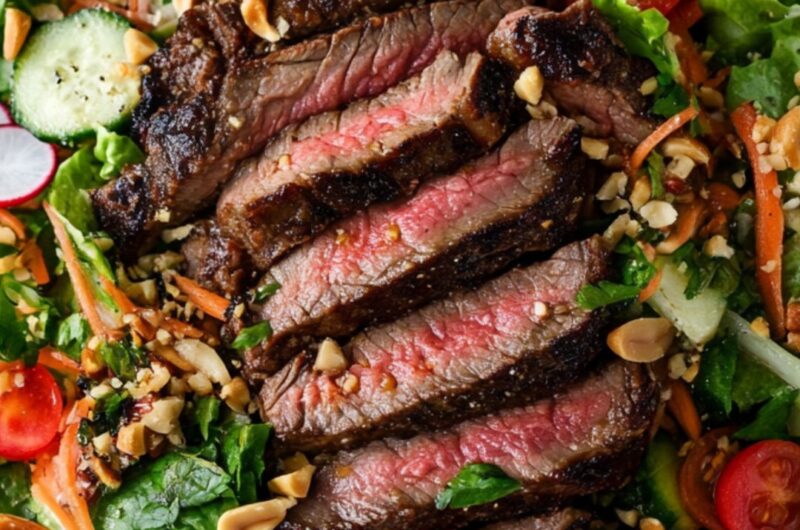
- Sear the beef: Season the steaks generously on both sides, pushing the seasoning into the meat. Add a dash of oil to a hot pan and fry over high heat for 2 to 3 minutes on each side for medium rare. Turn once and once only. Hold the fat side of the steaks against the pan to render the fat. In the video he says: “There should be no white fat left anywhere.” Remove and leave to rest, pouring any cooking juices on top. The steak continues cooking during the rest, moving from rare to medium rare.
- Pound the dressing: Put the garlic and chilli in a mortar with a pinch of salt and grind to a paste. Add the sugar, fish sauce and lime juice and stir with a spoon. Taste and add a little more lime juice if needed. In the video he describes this as “a simple fresh chilli dressing” he fell in love with in Vietnam and Cambodia.
- Prepare the salad: Using a vegetable peeler, cut the carrots into ribbons. Ramsay does this in the video because “when they’re that thin they take the vinaigrette so much better.” Place in a bowl with the radishes, tomatoes, mint, shallot, spring onions, cucumber and lettuce. Add 4 to 6 tablespoons of the dressing and mix well. Don’t flood the salad, because as he says in the video: “We can always add but we can’t take it away.”
- Slice and serve: Trim the fat strip off the rested steak since it has done its job keeping the meat moist. Slice the beef thickly at an angle. In the video he warns against thin slices: “You slice the beef too thinly then it goes stone cold and all the goodness runs out of it.” Toast the peanuts with a pinch of salt in a dry pan and roughly chop. Place the steak on top of the salad, scatter over the peanuts and drizzle with the remaining dressing.
- Weeping Tiger Variation (Ramsay in 10)
For the Lucky Cat restaurant version, make these swaps: - Beef: Use 4 fillet or sirloin steaks, 6.25 to 7 oz (180 to 200g) each. Sprinkle with ground cumin while resting.
- Dressing: Blitz in a blender instead of pounding. Use 1/4 red onion, 2 garlic cloves, 1 green chilli, 2 tbsp fish sauce, juice of 4 limes, 3 tbsp tamarind paste, 2 tbsp dark brown sugar, 3 tbsp golden syrup (corn syrup) or palm sugar, reserved coriander (cilantro) stalks, and 6 chopped plum tomatoes.
- Salad: Swap baby gem for chicory (endive). Replace peanuts with 4 tbsp crispy fried onions and 4 tbsp puffed brown rice. Use three herbs instead of one: coriander (cilantro), Thai basil and mint.
FAQs
Why does Ramsay render the fat on the side of the steak?
Most home cooks ignore the fat strip on a sirloin because it doesn’t face the heat. Ramsay holds the steak on its edge so the fat side presses directly against the hot pan. This melts the white fat down, which bastes the meat from the side and removes that chewy strip nobody wants to eat. In the video he keeps it there until no white fat is visible.
Why pound the dressing in a mortar instead of blitzing it?
The Cookery Course version uses a mortar because grinding garlic and chilli into a paste with salt extracts the oils and juices more intensely than a blade does. The Ramsay in 10 version blitzes because it has more ingredients, including plum tomatoes and tamarind, that need breaking down quickly. If you’re making the simpler lime and fish sauce dressing, the mortar gives you more control over texture.
Why does the Weeping Tiger version use tamarind and lime together?
Lime gives a sharp, bright acidity that hits immediately. Tamarind adds a deeper, rounder sourness that builds slowly. Using both creates layers of acid that keep the dressing interesting across every bite rather than just tasting sharp. The Cookery Course version relies on lime alone, which is cleaner but less complex.
What is the difference between the two versions?
The Cookery Course spicy beef salad is lighter and fresher, built around raw vegetables, a single herb and toasted peanuts. Ramsay traces it to street food he ate in Vietnam and Cambodia. The Ramsay in 10 weeping tiger comes from his Lucky Cat restaurant menu and layers more aggressively with tamarind, cumin on the beef, puffed rice, crispy onions, three herbs and blitzed plum tomatoes in the dressing. Same principle, different intensity.
Why slice the beef thick instead of thin?
Thin slices lose heat instantly and the juices run out onto the plate before you eat them. Thick slices at an angle keep the inside warm and pink, hold their moisture, and give you something to chew against. Ramsay is specific about this in the video: thin slicing turns good steak into cold, dry meat.
Why does the Ramsay in 10 version add cumin to the resting beef?
Sprinkling ground cumin over hot steak while it rests lets the heat bloom the spice without cooking it further. It adds a warm, earthy note that bridges the gap between the rich beef and the sharp, sweet dressing. The Cookery Course version skips this because its dressing is simpler and doesn’t need that middle layer of flavour.

I’m Ava Taylor. I’m A Self-taught Home Cook Who Loves Gordon Ramsay Recipes. I Try Every Dish In My Small Apartment Kitchen And Tweak It Until It Works. I Write Clear Steps With Simple Words So Anyone Can Follow. I Share Honest Wins, Mistakes, And Quick Tips To Help You Cook With Confidence.