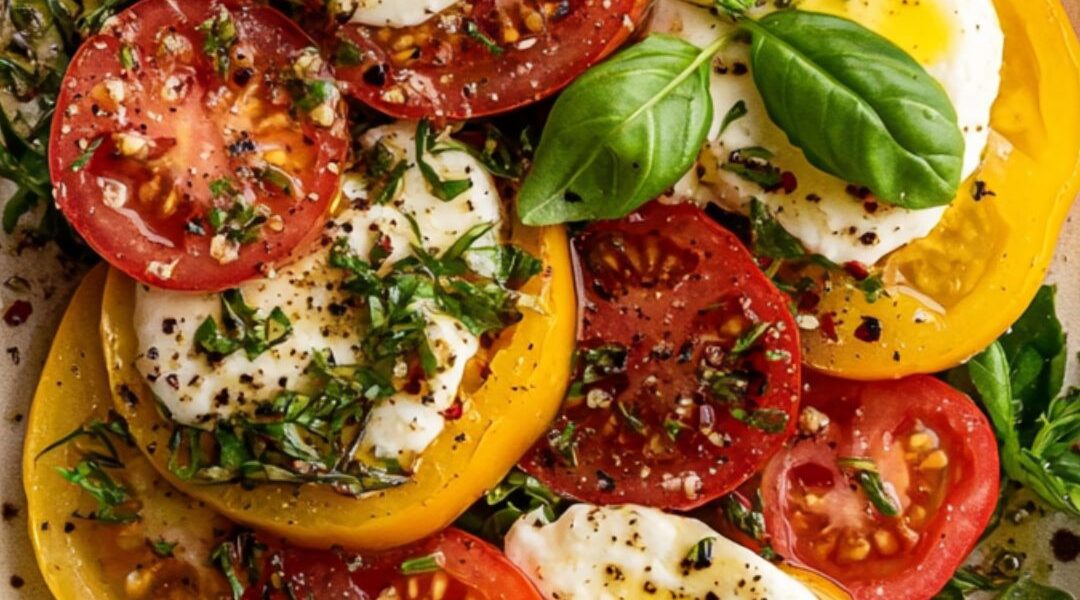

Gordon Ramsay’s caprese salad combines heritage tomatoes with creamy burrata, rocket (arugula) and a warm rosemary shallot dressing. It takes about 15 minutes and serves 4.
This recipe is adapted from his Warm Aubergine, Tomato and Burrata in Quick and Delicious, stripped back to the caprese essentials. In the book he writes: “Make sure you use sweet, ripe tomatoes and firm aubergines in season, then splash out on really good-quality, creamy burrata and you can’t go wrong.” We’ve dropped the aubergine and kept everything else, because his dressing and layering technique turn a basic caprese into something far better.
The technique borrowed from his recipe: he builds the dressing in warm oil so the rosemary, garlic and shallot infuse gently without frying, then drizzles it between layers rather than just over the top. Most caprese recipes pour cold olive oil on cold tomatoes and call it done, which means every bite tastes the same.
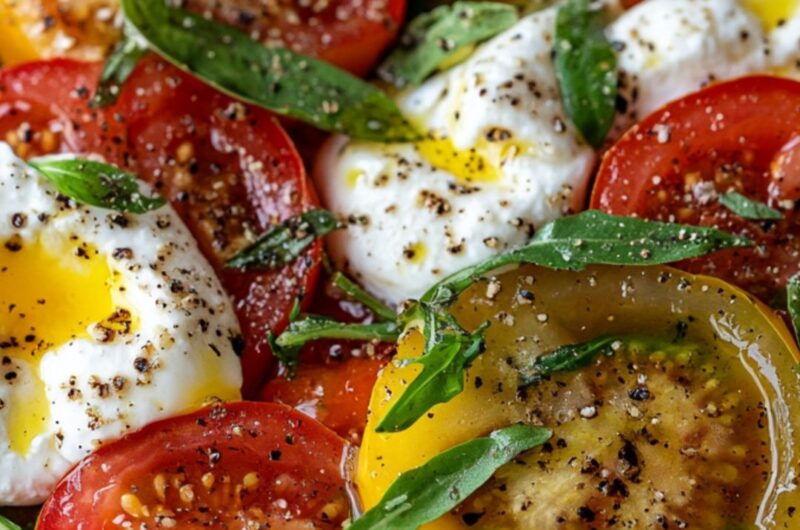
Gordon Ramsay Caprese Salad Recipe
Course: SaladsCuisine: AmericanDifficulty: Easy4
5
minutes15
523
kcal20
Adapted from the Warm Aubergine, Tomato and Burrata in Quick and Delicious, using his warm rosemary dressing and layering method on a classic caprese build. Burrata replaces mozzarella because that’s what Ramsay reaches for when freshness matters.
Ingredients
1 lb 14 oz (850g) heritage tomatoes, sliced 1cm (1/2 inch) thick
2.75 oz (80g) rocket (arugula) leaves
3 burratas
Small handful of fresh basil leaves
Sea salt
- For the dressing:
4 tbsp (60ml) olive oil
2 garlic cloves, peeled and finely diced
1 banana shallot, peeled and finely diced
3 rosemary sprigs, leaves picked and finely chopped
2.5 tbsp (40ml) red wine vinegar
1/2 tsp chilli flakes (optional)
Freshly ground black pepper
Directions
- Make the warm dressing: Pour the olive oil into a small saucepan and place over medium heat for 2 to 3 minutes. It is hot enough when a piece of shallot added to the pan sizzles gently. Turn the heat off, then add all the shallot, the garlic and rosemary and mix well. Leave to cook gently in the residual heat for 2 to 3 minutes, then add the vinegar and chilli flakes if using. Season with salt and pepper.
- Layer the tomatoes: Arrange the heritage tomato slices in a shallow bowl or on a platter, overlapping them slightly. Drizzle a little of the warm dressing over the first layer so it soaks into the tomatoes while they’re exposed, not buried under cheese.
- Add the burrata: Cut each burrata in half and place on top of the tomatoes. The cream inside will spill out and mix with the warm dressing underneath, creating a sauce that cold olive oil can’t match.
- Finish and serve: Scatter the rocket and basil leaves over the top. Drizzle with the remaining dressing and serve straight away while the dressing is still warm.
FAQs
Why is this adapted instead of directly from the cookbook?
Ramsay doesn’t have a traditional caprese salad in any of his 20 cookbooks. His Warm Aubergine, Tomato and Burrata from Quick and Delicious is the closest, so this recipe uses his exact dressing method and ingredients with the aubergine removed. Everything else, the warm rosemary oil, the layering technique, the burrata, comes directly from the book.
Why does Ramsay use burrata instead of mozzarella?
Burrata has a thin mozzarella shell filled with soft stracciatella cream that spills out when you cut it. That cream mixes into the warm dressing and coats the tomatoes underneath, creating a natural sauce. In Ultimate Home Cooking he describes it as “an extra creamy mozzarella from Puglia” that “deserves to be the star attraction, but it has to be eaten when it’s very fresh.”
Why warm the dressing oil instead of using cold olive oil?
Most caprese recipes just pour cold extra virgin olive oil over the tomatoes. Ramsay warms the oil first, adds shallot, garlic and rosemary off the heat, then lets them infuse in the residual warmth. This softens the raw edge of the garlic and releases the rosemary oils without frying anything. The test from his recipe: drop a piece of shallot in and it should sizzle gently, not spit.
Why heritage tomatoes instead of regular vine tomatoes?
Ramsay is blunt about this in the headnote: “There is nowhere to hide.” Heritage tomatoes come in different sizes, colours and sweetness levels, so every slice tastes slightly different. Regular supermarket tomatoes are bred for shelf life, not flavour. Buy heritage tomatoes in summer when they’re at peak sweetness and cheapest. If you can’t find them, the best substitute is ripe vine tomatoes left on the counter for a day or two.
Why layer the dressing between the tomatoes instead of pouring it all on top?
Drizzling the warm dressing over the tomato layer before adding the burrata means the oil, vinegar, rosemary and shallot seep into the slices from below. When the burrata cream spills down from above it meets the dressing coming up, so the middle of the dish tastes as good as the edges. Pouring everything on top leaves the bottom tomatoes dry and flavourless.
Can you add the aubergine back in?
If you want Ramsay’s original version from Quick and Delicious, griddle 3 aubergines (eggplants) sliced 1cm thick. Brush with olive oil, sprinkle with salt and cook 2 to 3 minutes each side until charred and soft. Layer them between the tomato slices before dressing. The smoky char against the sweet tomatoes and creamy burrata is why his original recipe works so well as a summer lunch.

Zaytouna Studio Team is the kitchen team behind Chef Ramsay Recipes. We cook Gordon Ramsay’s recipes from his cookbooks and videos in a home kitchen and write them up for yours, with US and metric measurements.