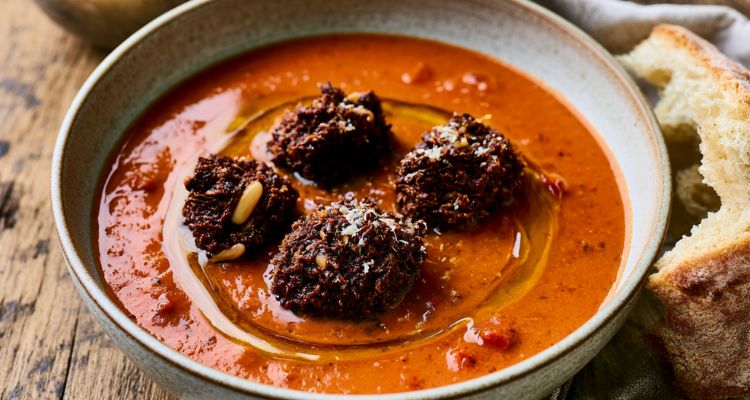
onions, garlic, cayenne pepper, and heavy cream (double cream), finished with a homemade sundried tomato pesto. It takes about 50 minutes, and most of that is hands-off oven time.
This recipe appears as “Creamy Tomato Soup with Sundried Tomato Pesto” in Gordon Ramsay’s Ultimate Home Cooking, where he writes that few things are “as nostalgic as a warming bowl of cream of tomato soup” but that it “can be easily improved by employing a few cheffy tricks.” He suggests serving it with crusty bread or Welsh rarebit.
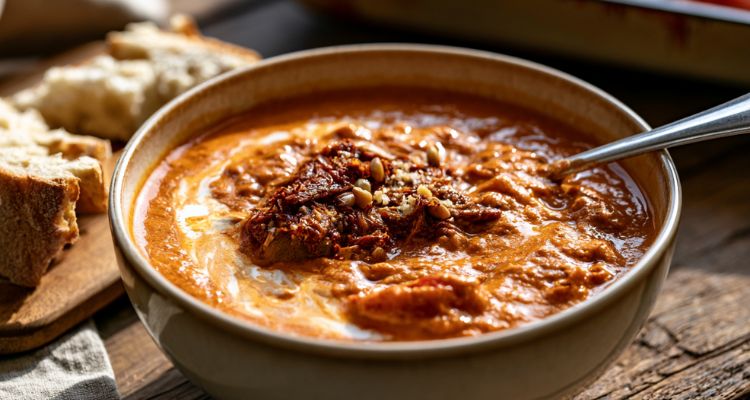
The trick that sets this version apart is the sundried tomato pesto. He pounds sundried tomatoes and toasted pine nuts in a mortar with Parmesan, then drops it on top of the soup. That concentrated, salty hit layered over the cream gives the bowl a depth that plain croutons never could.
Gordon Ramsay Tomato Soup Recipe
Course: SoupsCuisine: BritishDifficulty: Easy4
15
minutes35
230
kcal50
A creamy roasted tomato soup from Gordon Ramsay’s Ultimate Home Cooking, finished with a mortar-pounded sundried tomato pesto made from pine nuts, Parmesan, and sundried tomatoes. Ramsay starts the tomatoes cut side down on the hob before roasting them, so they caramelise twice: once on direct heat and again in the oven.
Ingredients
- For the soup:
3 1/3 lbs (1.5kg) ripe tomatoes, cored and halved
2 red onions, peeled and sliced
2 garlic cloves, peeled and finely sliced
1/2 to 1 tsp cayenne pepper, to taste
1 tsp superfine sugar (caster sugar)
1 tsp aged balsamic vinegar
4 1/4 cups (1 litre) vegetable or chicken stock
Scant 1/2 cup (100ml) heavy cream (double cream)
Olive oil, for drizzling
Sea salt and freshly ground black pepper
- For the sundried tomato pesto:
2 to 3 tbsp pine nuts
2 2/3 oz (75g) sundried tomatoes, drained (oil reserved) and finely chopped
1 3/4 oz (50g) Parmesan cheese, grated
Olive oil
Directions
- Preheat the oven to 350°F (180°C/Gas 4).
- Start on the hob: Place a roasting tray on the hob over medium-high heat. Add the onions, garlic, and cayenne pepper, drizzle with enough olive oil to coat, and cook for 3 to 4 minutes. Add the tomatoes cut side down, season with a pinch of salt, pepper, and the sugar, then drizzle over the balsamic vinegar. Cook over high heat for 3 to 4 minutes until the tomatoes begin to caramelise. Stir well, then transfer to the oven for 20 to 25 minutes.
- Make the pesto: Toast the pine nuts in a dry frying pan until golden. Put the sundried tomatoes into a mortar and pound with a pestle until completely broken down. Season with a touch of salt, add the pine nuts, and continue to pound until you reach a pesto consistency. Stir in the Parmesan, then add olive oil and enough of the reserved sundried tomato oil to bring the pesto to a spooning consistency. You should get about 3 to 4 tablespoons.
- Build the soup: Place the tray of roasted tomatoes back on the hob over medium heat and pour in the stock. Bring to the boil, then simmer for 4 to 5 minutes. Add the cream, stir well, and continue to simmer for 2 to 3 minutes.
- Blend to finish: Using a stick blender, blend the soup until almost smooth but still with a couple of chunky bits. For a more rustic texture, use a potato masher instead. Serve warm with dollops of pesto on top.
FAQs
Why does Ramsay start the tomatoes on the hob before roasting them?
Most roasted tomato soup recipes just throw everything in a tray and put it straight into the oven. Ramsay adds an extra step by cooking the tomatoes cut side down on the hob first over high heat for 3 to 4 minutes.
This gives the cut surface direct contact with the hot pan, which kickstarts the caramelisation before the oven even gets involved. You end up with two layers of browning: one from the hob and one from the roast. That extra depth of flavour is what separates this from a soup that just tastes like cooked tomatoes.
Why add cayenne pepper to a tomato soup?
Cayenne might seem like an odd choice in a comforting cream of tomato soup, but Ramsay uses just half to one teaspoon across 3 1/3 lbs (1.5kg) of tomatoes. It’s not enough to make the soup spicy.
What it does is add a background warmth that lifts the sweetness of the roasted tomatoes without anyone being able to pinpoint the heat. It works the same way a pinch of chilli flakes works in a pasta sauce: you’d miss it if it wasn’t there, but you’d never guess it was cayenne.
Why pound the pesto in a mortar instead of using a food processor?
A food processor spins everything into a uniform paste in seconds. A mortar crushes unevenly, so you get some pieces finely broken down while others stay slightly coarse.
That texture matters when the pesto sits on top of a smooth soup. The irregular bits of sundried tomato and pine nut give each spoonful a different bite, which keeps the bowl interesting instead of one-note. Ramsay uses the same mortar-bashing approach for his mint dressing on lamb koftas for the same reason: crushed herbs release more oil than chopped ones.
How is this different from his roasted tomato soup in Secrets?
The version in Gordon Ramsay’s Secrets takes a more restaurant-style approach. He roasts at a much higher temperature, 425°F (220°C) versus 350°F (180°C) here, and uses thyme instead of cayenne for a more herbal flavour.
The Secrets version also uses smoked sun-dried cherry tomatoes for a hickory note, passes the soup through a fine sieve for a completely smooth finish, and garnishes with pan-fried vine cherry tomatoes. It’s elegant and refined. The Ultimate Home Cooking version is the opposite: it keeps the texture slightly chunky, adds cream for richness, and tops it with that hearty sundried tomato pesto. One is dinner party soup, the other is Tuesday night soup.
Why does Ramsay add balsamic vinegar before roasting?
The balsamic goes on the tomatoes before they hit the oven, not after. That’s deliberate because the vinegar’s sugars caramelise during the roast, which adds a dark, sweet depth you can’t get by stirring vinegar into the finished soup.
Adding acidity after cooking gives you sharpness. Adding it before roasting gives you complexity. The balsamic also helps the tomato skins blister and char at the edges, which Ramsay says gives “a lovely smoky quality to the finished soup.” If your tomatoes aren’t perfectly ripe, this step does a lot of the heavy lifting.
Why leave the soup slightly chunky instead of blending it smooth?
Ramsay is specific about this: blend until “almost smooth but still with a couple of chunky bits.” He even suggests using a potato masher instead of a stick blender if you want it more rustic.
A completely smooth tomato soup drinks more like a sauce. Leaving small pieces of roasted tomato gives each spoonful texture and reminds you it’s made from real tomatoes, not a tin. It also means the pesto has something to cling to when you drop it on top. If you’re after something to serve alongside, his mushroom soup takes the opposite approach and blends completely smooth, so the two make a good contrast on the same table.
Zaytouna Studio Team is the kitchen team behind Chef Ramsay Recipes. We cook Gordon Ramsay’s recipes from his cookbooks and videos in a home kitchen and write them up for yours, with US and metric measurements.