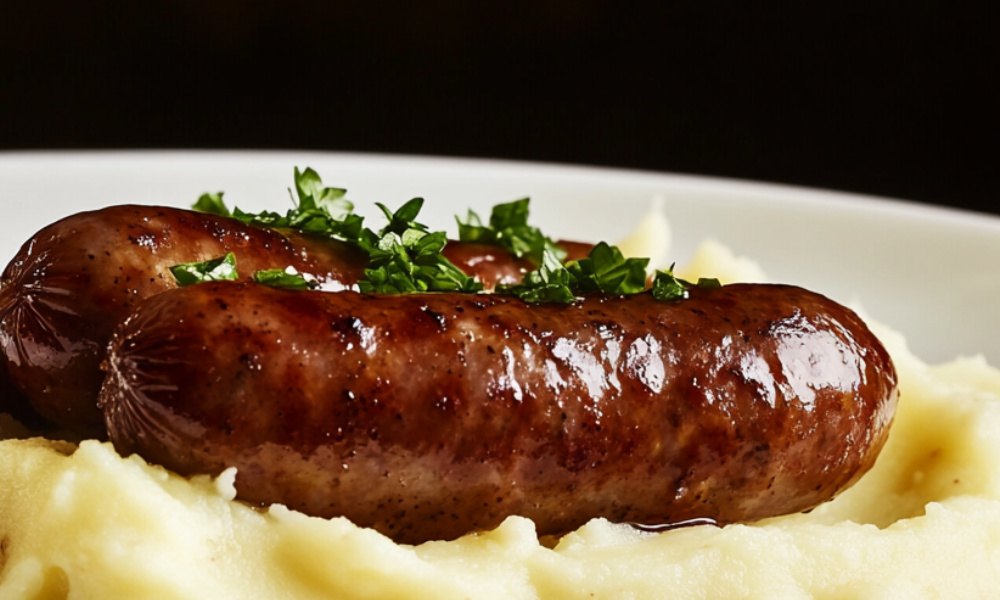

The first time I tried to make Bangers and Mash, I didn’t just screw it up—I brutalized it. Watery potatoes. Rubber sausages. And don’t even get me started on the mustard mess I made. I thought, “How hard can mashed potatoes and sausage be?” Turns out, very—if you don’t respect the technique.
Watching Ramsay walk through it made one thing clear: this is not about shortcuts. It’s about control. You want the mash creamy, not gluey. You want the sausages juicy, not wrinkled and dry. And most of all, the flavor has to punch—not just plod.
Here’s what I learned—and how I fixed it.
Why This Works (And Where Most Go Wrong)
Ramsay’s version works because he treats each part of the dish like it matters. The mash isn’t a throwaway. It’s a rich, mustard-laced foundation. The sausages don’t get boiled to oblivion—they’re roasted on a rack so the fat drains while the skin crisps.
Where people fail:
- Boiling sausages. That’s how you get bland and bouncy.
- Mashing potatoes like they’re drywall filler—overworking them until they turn into glue.
- Ignoring mustard balance. Three types, not for fun. Each has a job.
What surprised me? The crème fraîche. It gives the mash tang and silkiness. Leave it out and you lose half the magic.
Ingredients That Actually Matter
- 900g veal or chicken sausages – You need juicy, high-quality sausages. Avoid overly fatty or smoked ones—they’ll dominate the dish.
- 900g Yukon Gold potatoes – These are non-negotiable. Russets go too fluffy, reds turn waxy. Yukon Golds give that buttery mash texture.
- Crème fraîche (115g) – Adds body and acidity. Don’t swap this for sour cream unless you test the ratios.
- Three Mustards (Dijon, whole grain, dry) – Think of it like layers: Dijon for sharpness, whole grain for texture, dry mustard for that low-end heat.
- Milk (120ml) + Butter (55g) – Smoothness and fat. Warm both before mixing or risk grainy mash.
- Kosher salt + black pepper – Underseasoned mash is the death of this dish.
Optional, but tested:
- Fresh parsley – Not garnish fluff. It cuts through the richness.
How To Make Gordon Ramsay Bangers and Mash
Start by preheating your oven to 220°C (425°F). Don’t skip the rack—it lets heat circulate and prevents soggy bottoms.
Roast the Sausages: Lay sausages on a rack over a baking sheet. Roast for 18–20 minutes until golden and sizzling. Turn halfway if your oven’s uneven. Pull them when they hit 70°C (160°F) internal temp for chicken/veal.
Boil the Potatoes: Peel and dice Yukon Golds evenly so they cook at the same speed. Drop into cold, salted water. Bring to a boil and simmer until tender—about 20–25 minutes. Test with a fork: they should slide off easily.
Dry the Potatoes: This is critical. Drain and return them to the hot pan for a minute to steam off excess water. Wet potatoes = gluey mash.
Mash the Potatoes: Add warm milk, butter, crème fraîche, all three mustards, salt, and pepper. Use a handheld mixer on low or a ricer for the smoothest mash. Do not overmix. You want creamy, not paste.
Plate It Right: Mound the mash. Slice sausages on a bias and lay them like they belong. Finish with chopped parsley.

What Gordon Ramsay Says About This Dish
“Don’t boil the flavor out of the sausage. Roast it.”
I tried both. Roasted = deep, caramelized snap. Boiled = sadness.
“Mash needs character—mustard, crème fraîche. Don’t just make baby food.”
He’s right. Mustard isn’t a gimmick here. It’s the backbone.
“Rest the sausages. Let the juices settle.”
Ever cut into one straight from the oven? Say hello to a plate full of grease.
“Season the water for your potatoes—season it like pasta water.”
Game-changer. Unseasoned water = bland mash, no matter how much you add after.
What I Got Wrong (And How I Fixed It)
- Used cold milk – Split the mash. Always warm your dairy.
- Overmixed with a hand mixer – Glue city. I switched to a ricer + gentle folding.
- Tried pork sausages – Too greasy. Veal or chicken works best here.
- Skipped the dry mustard once – Mash tasted flat. That subtle heat matters.
Variations That Actually Hold Up
- Sausage Swap: Chicken apple sausage? Works if you dial back mustard slightly.
- Mash Variants: Add a bit of roasted garlic or horseradish for punch—but only if you drop one type of mustard to balance.
- Gravy Add-On: Ramsay doesn’t always use gravy for this, but a red onion and balsamic reduction works beautifully if you want it wetter.
Avoid:
- Sweet potatoes – Turns the whole thing cloying.
- No mustard – You’ll end up with beige food.
Pro Tips That Change the Game
- Warm your dairy – Milk + butter go in warm to absorb smoothly.
- Don’t pierce sausages – That lets the fat escape. You want it to baste from the inside.
- Preheat the pan before roasting sausages – Helps snap the casing faster.
- Use a ricer, not a masher – Airier mash, less overworking risk.
Storage + Leftover Moves
- Fridge: Cool to room temp, store in airtight container. Keeps 3 days.
- Freezer: Freeze sausage and mash separately if possible. Up to 3 months.
- Reheat: Sausages in a hot pan for 5–7 minutes. Mash in a saucepan with a splash of milk, stir gently until hot.
Leftover move: Mash cakes. Form into patties, sear in butter. Top with a fried egg.
FAQs
Q: Can I use pork sausages instead?
You can, but they’re fattier and heavier. Veal or chicken gives you a cleaner, more balanced plate.
Q: What kind of mustard does Gordon Ramsay use?
A mix of Dijon, whole-grain, and dry mustard powder—each adds a unique layer of flavor.
Q: Can I make this ahead?
Yes, but store mash and sausages separately. Reheat gently to avoid drying them out.
Q: Why does Gordon Ramsay use crème fraîche?
It adds acidity and creaminess without being heavy like sour cream. Makes the mash feel silkier.
Q: Do I need to peel the potatoes?
Yes. Skin-on mash ruins the texture here. This isn’t rustic—it’s refined comfort.
Try More Recipes:
- Gordon Ramsay Asparagus Risotto Recipe
- Gordon Ramsay Slow Cooked Aubergine Recipe
- Gordon Ramsay Beetroot Wellington Recipe
- Gordon Ramsay Truffle Burger Recipe

Gordon Ramsay Bangers And Mash Recipe
Course: DinnerCuisine: BritishDifficulty: Easy4
servings10
minutes25
minutes890
kcalCreamy mustard mash with juicy roasted sausages—a bold, comforting dish that delivers rich flavor in every bite.
Ingredients
900g veal or chicken sausages
900g Yukon Gold potatoes, peeled and diced
55g unsalted butter
115g crème fraîche
120ml whole milk (warmed)
2 tsp Dijon mustard
2 tsp whole-grain mustard
Kosher salt to taste
1 tsp dry mustard
1 tsp black pepper
Fresh parsley (for garnish)
Directions
- Preheat oven to 220°C (425°F).
- Place sausages on rack over sheet pan. Roast 18–20 minutes, turning once.
- Boil potatoes in salted water until tender (20–25 min). Drain and steam dry.
- Mash with butter, warm milk, crème fraîche, mustards, salt, and pepper until smooth.
- Plate mash, top with sausages, garnish with parsley. Serve hot.
Notes
- Warm your dairy – Milk + butter go in warm to absorb smoothly.
- Don’t pierce sausages – That lets the fat escape. You want it to baste from the inside.
- Preheat the pan before roasting sausages – Helps snap the casing faster.
- Use a ricer, not a masher – Airier mash, less overworking risk.
Zaytouna Studio Team is the kitchen team behind Chef Ramsay Recipes. We cook Gordon Ramsay’s recipes from his cookbooks and videos in a home kitchen and write them up for yours, with US and metric measurements.