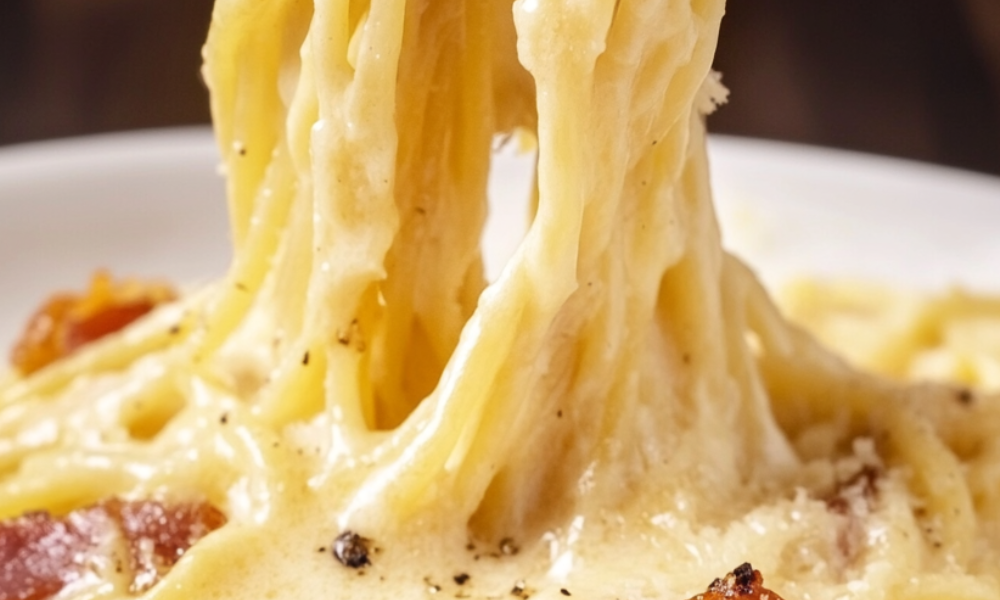

The first time I screwed this up, I dumped in cream. Thought that was the key to “creamy.” Wrong. The result? A heavy, gloopy mess that clung to the noodles like glue and tasted more like alfredo’s awkward cousin than Roman carbonara. I’d seen Gordon do it on a YouTube clip—no cream, no garlic, just eggs, cheese, pasta water, pancetta, and pepper. And yet, mine flopped.
That was the turning point. I stopped chasing shortcuts and started chasing control: temperature, timing, texture. That’s what this recipe is. A system. A test of heat management. And if you nail it, it’s one of the fastest, most rewarding pastas you’ll ever plate.
Here’s how to do it right—the last carbonara recipe you’ll need.
Why This Works (And Where Most Go Wrong)
Ramsay’s version holds the line:
- No cream. The sauce is pure emulsion—egg yolk, Parmesan, and pasta water.
- Crisp pancetta, not chewy bacon. Texture contrast is key.
- Carryover heat cooks the eggs. Not direct heat. Otherwise, you’re making scrambled pasta.
Where people blow it:
- Mixing the eggs with the pasta while the pan’s still blazing hot (hello, scramble city).
- Not using enough pasta water to loosen the sauce—resulting in a clump.
- Using the whole egg when yolks give you richness and body.
Ingredients That Actually Matter
- 200g spaghetti or linguine – Long pasta traps the sauce best. Spaghetti is classic, linguine adds a touch of chew.
- 200g pancetta (or streaky bacon, diced) – Pancetta is traditional and gives a meaty, salty bite. Bacon works, but it’ll add smokiness.
- 6 eggs (4 yolks, 2 whole) – This gives you silkiness and structure without breaking.
- 200g Parmesan, grated – Sharp, salty, dry cheese. Pecorino is traditional, but Parmesan is what Ramsay often uses in demos.
- Freshly ground black pepper – Not an afterthought. It’s part of the flavor base.
- Sea salt – For the pasta water only.
Don’t skip the egg separation. The yolks matter. Whole eggs alone thin out the sauce too much.
How To Make Gordon Ramsay Carbonara
Bring a large pot of water to a boil. Salt it like the sea. Drop the pasta and stir once. Set a timer.
While the pasta cooks, heat a dry pan over medium-high. Add the pancetta. No oil needed—it’ll render. Cook until golden, crisp, and the fat has rendered, about 7–10 minutes. Turn the heat off.
In a bowl, separate 4 yolks. Add 2 whole eggs. Whisk with the grated Parmesan and a generous pinch of black pepper until smooth.
When pasta is al dente, scoop out a mug of pasta water and drain the pasta.
Now here’s the key moment:
Add the hot pasta to the pancetta pan off the heat. Toss to coat in the rendered fat.
Pour in the egg-cheese mixture and immediately toss or stir vigorously. You’re using the residual heat to gently thicken the sauce. It should gloss the noodles—not scramble.
Add pasta water, a spoonful at a time, until the sauce is smooth and silky. You want it to coat the noodles but still move on the plate.
Plate fast. Top with more Parmesan and cracked black pepper.

What Gordon Ramsay Says About This Dish
“Carbonara is all about timing. If the pan’s too hot, you’re finished.”
Exactly. That one insight changed everything. I stopped being afraid of turning off the heat early.
“Pasta water is liquid gold.”
I used to dump it. Now I guard it like stock.
“Whisk fast, stir fast, serve fast.”
If you hesitate, it thickens. Be decisive.
What I Got Wrong (And How I Fixed It)
- I added the eggs on the heat. Scrambled eggs. Fixed it by removing the pan completely before mixing.
- I didn’t separate yolks. Whole eggs made it loose. Yolks give you that dense, rich mouthfeel.
- I forgot pasta water. Without it, the sauce dries and clumps. Now I scoop before draining—non-negotiable.
Variations That Actually Hold Up
- Pecorino instead of Parmesan – Saltier, more traditional Roman flavor.
- Guanciale instead of pancetta – The real deal, if you can find it. More fat, deeper flavor.
- Tagliatelle or bucatini – Great if you want a thicker noodle bite.
- Add peas or mushrooms? Sure, but don’t call it carbonara anymore.
Pro Tips That Change the Game
- Use a metal bowl for the egg mix if you want to warm it slightly with residual pasta water.
- Grate cheese finely so it melts quickly and emulsifies properly.
- Let the pancetta cool for 1 minute before adding pasta. Avoids overshooting the temperature.
- Toss, don’t stir slowly. The movement helps emulsify instead of clump.
Storage + Leftover Moves
- Fridge: Store cooled leftovers in an airtight container for up to 2 days.
- Reheat: Add a splash of water, reheat gently in a pan. Stir constantly. Microwaving ruins the texture.
- Freeze? Don’t. The sauce breaks. Make fresh.
FAQs
Q: Can I use rotisserie chicken in this?
No. That’s a different dish. This is about eggs, cheese, and pork.
Q: Why is Ramsay’s carbonara creamy without cream?
Because of the emulsion between yolks, cheese, and pasta water. That’s real technique—not shortcuts.
Q: What kind of pepper does he use?
Freshly cracked black pepper, coarse ground. It matters.
Q: Can I use whole eggs instead of yolks?
You can, but you’ll get a thinner, looser sauce. Yolks = richness.
Try More Recipes:
- Gordon Ramsay Mussels Recipe
- Gordon Ramsay Pot Roast Slow Cooker Recipe
- Gordon Ramsay Grilled Salmon Recipe
- Gordon Ramsay Fried Fish Recipe

Gordon Ramsay Carbonara Recipe
Course: DinnerCuisine: ItalianDifficulty: Easy4
servings10
minutes15
minutes764
kcalCreamy, no-cream carbonara with crisp pancetta, rich yolks, and Parmesan. Fast, bold, and pure Italian technique.
Ingredients
200g spaghetti or linguine
200g pancetta (or streaky bacon), diced
6 eggs (4 yolks, 2 whole)
200g Parmesan, grated
Sea salt
Freshly cracked black pepper
Directions
- Boil pasta in salted water until al dente. Scoop out pasta water before draining.
- Cook pancetta in a dry pan until golden and crisp. Turn off heat.
- Whisk egg yolks, whole eggs, Parmesan, and black pepper in a bowl.
- Add pasta to pancetta (off heat). Toss to coat in fat.
- Add egg-cheese mix. Toss vigorously.
- Add pasta water a little at a time until sauce is silky.
- Serve immediately with more cheese and pepper.
Notes
- Use a metal bowl for the egg mix if you want to warm it slightly with residual pasta water.
- Grate cheese finely so it melts quickly and emulsifies properly.
- Let the pancetta cool for 1 minute before adding pasta. Avoids overshooting the temperature.
- Toss, don’t stir slowly. The movement helps emulsify instead of clump.
Zaytouna Studio Team is the kitchen team behind Chef Ramsay Recipes. We cook Gordon Ramsay’s recipes from his cookbooks and videos in a home kitchen and write them up for yours, with US and metric measurements.