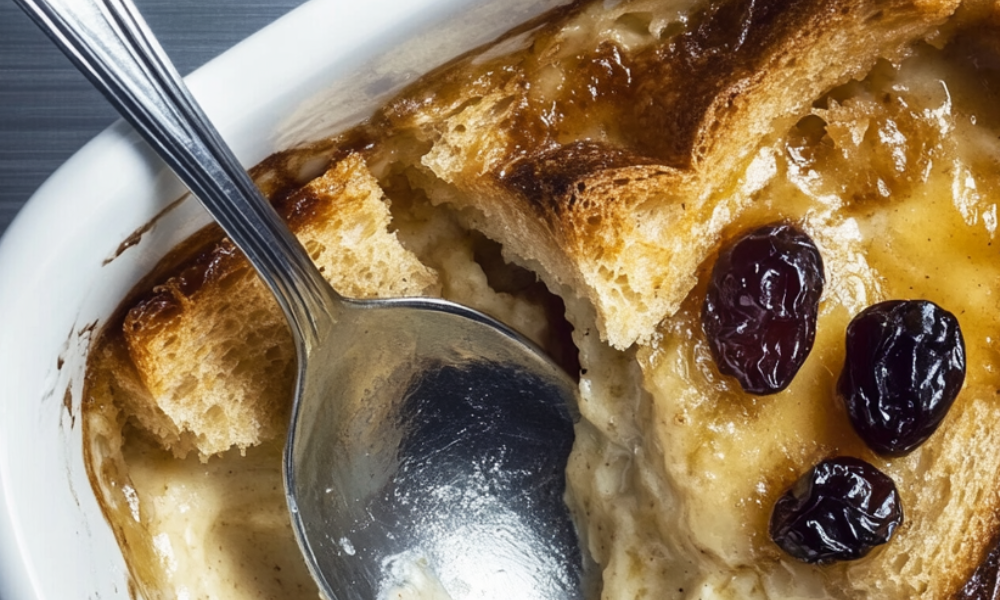

The First Time I Screwed This Up…
I drowned the bread. Thought more custard = more indulgence. What I got was a soggy, eggy mess that tasted like warm cereal and regret. Bread and butter pudding sounds too easy—that’s the trap. It’s not just “layer bread and pour custard.” Gordon Ramsay’s version is a heat-staged, texture-balanced, subtly spiced dessert that actually respects structure.
This version isn’t just cozy—it’s calculated. I’ll show you why stale bread is smarter, how to build layers like a lasagna, and how Ramsay’s custard-to-bread ratio holds everything together like scaffolding, not soup.
Why This Works (And Where Most Go Wrong)
Most home cooks either soak too long, pour too much, or bake too hot. Ramsay’s method avoids all three pitfalls. Here’s the engineering behind it:
- Stale bread = structure. Fresh bread turns mushy before the custard even hits the oven.
- Layered flavoring. Cinnamon and sultanas between each layer—not just dumped on top—gives balanced sweetness and texture.
- Scalded dairy, not boiled. You want warmth to temper eggs, not scramble them.
- Rest before bake. The 30-minute soak lets custard absorb into every edge without flooding the dish.
Ingredients That Actually Matter
- 25g butter (plus extra for greasing) – The foundation of flavor. Salted butter adds a savory punch—use it.
- 8 thick slices white bread – Slightly stale, cut thick. Thin slices collapse.
- 50g sultanas – More subtle than raisins. Soak them in rum if you’re wild.
- 2 tsp cinnamon powder – Adds warmth. Go fresh or go bland.
- 350ml full-fat milk – Don’t skimp on fat. Skim milk ruins mouthfeel.
- 50ml double cream – Makes the custard luxurious, not watery.
- 2 free-range eggs – Fresh eggs help avoid that sulfuric edge.
- 25g sugar – Use 20g in the custard, reserve 5g for the top. Trust me.
- Freshly grated nutmeg – Only grate what you use. Pre-ground is perfume by comparison.
- Optional: Custard to serve – For those who want extra sauce.
How To Make Gordon Ramsay Bread and Butter Pudding
Grease your oven dish with butter—don’t skip the corners. This is your non-stick insurance.
Butter the bread slices fully, especially the edges. Cut diagonally into triangles. The shape matters—it creates those golden, crusty peaks during baking.
Layer the bread in the dish, buttered-side up. Scatter a layer of sultanas and dust with cinnamon. Repeat until the dish is full, ending with a neat bread layer.
Heat milk and cream in a pan over low heat until just scalding—steaming but not bubbling. This keeps the custard smooth.
Whisk eggs with ¾ of the sugar until light and pale. Slowly pour in the warm dairy, whisking constantly. Strain to remove chalazae and any stringy egg bits.
Pour custard evenly over the bread. Gently press the top layer down so everything gets soaked. Sprinkle with grated nutmeg and remaining sugar.
Let the dish rest 30 minutes. This is where absorption magic happens. Preheat oven to 180°C (160°C fan) / 350°F.
Bake uncovered for 30–40 minutes. You want a golden, slightly crisp top and just-set custard. Jiggle the dish—if it wobbles slightly in the center, it’s done.
Cool 10 minutes before serving. Optional: serve with more warm custard.

What Gordon Ramsay Says About This Dish
“Bread and butter pudding is cheap to make, but the real secret is patience and layering.”
(MasterClass) – He’s not wrong. Every shortcut I took ruined the final result.
“Don’t boil the milk. You’ll scramble the eggs and ruin the custard.”
Yep—did this once. Ended up with sweet scrambled eggs and bread soup.
“Nutmeg should hit your nose, not your tongue.”
Means: don’t overdo it. Use a microplane and keep it light.
“Let it sit before baking. That’s when the custard gets to know the bread.”
Translation: That soak is the difference between fusion and confusion.
What I Got Wrong (And How I Fixed It)
- Used fresh bread. Turned to mush. Fixed it by drying slices in the oven for 10 minutes at 120°C (250°F).
- Overfilled with custard thinking “more is more.” It flooded. Stick to the recipe ratio.
- Forgot to strain the custard. Got eggy lumps. Straining = smooth pudding.
- Didn’t rest before baking once. The result was dry on top, raw in the middle.
Variations That Actually Hold Up
- Brioche or croissants instead of white bread = richer texture. Tested: works, but reduce butter slightly.
- Rum-soaked raisins instead of sultanas. Adds depth, but overpowering if overdone.
- Orange zest in custard for brightness. Adds elegance.
- Chocolate chips instead of sultanas? Tried it. Works—but feels more like dessert, less like classic pudding.
Pro Tips That Change The Game
- Toast your bread slices lightly if they’re not stale enough.
- Always use a bain-marie if you want the creamiest custard—but Ramsay doesn’t. He wants a bit of crust.
- If top browns too fast, foil it loosely at the 25-minute mark.
- Want it sliceable? Chill it after baking, then reheat individual squares in the oven or pan.
Storage + Leftover Moves
- Fridge: Cool completely, then cover. Keeps 2–3 days.
- Reheat: Oven at 160°C / 320°F, 10–12 minutes. Microwave works, but softens the crust.
- Freeze? Yes, tightly wrapped. Thaw overnight in fridge. Reheat as above.
- Leftover hack: Cube it, pan-fry in butter, drizzle with honey. Bread and butter French toast bites.
FAQs
Q: Can I use brioche instead of white bread?
Yes, but reduce the added butter or it’ll get greasy.
Q: Why does Ramsay use full-fat milk and cream?
For structure and richness. Skim milk won’t set right and lacks body.
Q: Do I really have to strain the custard?
Yes. It removes egg bits and gives that silky-smooth finish.
Q: Why rest the pudding before baking?
So the bread soaks up custard evenly—no floating slices or dry corners.
Q: Can I make it the night before?
Yes—assemble, cover, refrigerate. Bake straight from fridge, add 5–10 minutes to bake time.
Try More Recipes:
- Gordon Ramsay Biscuits Recipe
- Gordon Ramsay Passion Fruit Souffle Recipe
- Gordon Ramsay Muffins Recipe
- Gordon Ramsay Vanilla Cupcakes Recipe

Gordon Ramsay Bread And Butter Pudding Recipe
Course: DessertsCuisine: BritishDifficulty: Easy6
servings15
minutes40
minutes446
kcalClassic comfort dessert with buttery layers, warm spice, and creamy custard—bread and butter pudding done right.
Ingredients
25g butter, plus extra for greasing
8 thick slices white bread, crusts optional
50g sultanas
2 tsp cinnamon powder
350ml full-fat milk
50ml double cream
2 eggs
25g sugar
Freshly grated nutmeg
Optional: extra custard to serve
Directions
- Grease 23×28 cm dish with butter.
- Butter bread, cut into triangles.
- Layer bread, sultanas, and cinnamon. Finish with bread on top.
- Heat milk and cream to scalding (don’t boil).
- Whisk eggs with ¾ sugar. Slowly add warm milk. Strain.
- Pour custard over bread. Press lightly. Sprinkle nutmeg + rest of sugar.
- Let sit 30 minutes. Preheat oven to 180°C (160°C Fan) / 350°F.
- Bake 30–40 minutes until golden and just set.
- Cool slightly. Serve warm, with custard if you like.
Notes
- Toast your bread slices lightly if they’re not stale enough.
- Always use a bain-marie if you want the creamiest custard—but Ramsay doesn’t. He wants a bit of crust.
- If top browns too fast, foil it loosely at the 25-minute mark.
- Want it sliceable? Chill it after baking, then reheat individual squares in the oven or pan.

Zaytouna Studio Team is the kitchen team behind Chef Ramsay Recipes. We cook Gordon Ramsay’s recipes from his cookbooks and videos in a home kitchen and write them up for yours, with US and metric measurements.