
The first time I cooked duck breast, I scorched the skin, undercooked the center, and served a chewy mess I tried to pass off as “rustic.” It wasn’t. It was a failure of technique—specifically, heat control and fat rendering.
Gordon Ramsay’s duck breast method taught me the two things that fix everything: start cold and respect the fat. You’re not frying a steak—you’re rendering a fat cap into crackling.
Here’s how to actually get it right.
Why This Works (And Where Most Go Wrong)
Most people mess up duck breast for one of three reasons:
- Starting in a hot pan – This shocks the fat instead of slowly rendering it. You get rubbery skin instead of crisp.
- Not scoring the fat properly – You need shallow crosshatches, not deep cuts. Go too deep, and you bleed into the meat.
- Overcooking or skipping the thermometer – Duck breast isn’t forgiving. Medium-rare is the line between velvet and liver.
What makes Ramsay’s approach better?
He treats duck breast like a reverse-seared steak with a built-in fat cap. Cold pan start, slow render, consistent press—then a quick sear and a rest. That’s control.
Ingredients That Actually Matter
- 4 skin-on duck breasts – Small goose breasts work, but you’ll need to render longer.
- Coarse sea salt – Draws moisture, boosts crust.
- Fresh cracked black pepper – For finish and aroma. Don’t season too early—pepper can scorch.
I once used pre-salted duck. Big mistake. The skin wept moisture and wouldn’t crisp. Always start with dry, unseasoned skin.
How To Make Gordon Ramsay Duck Breast
Step 1 – Dry and score the duck.
Pull the duck breasts from the fridge 1 hour ahead. Pat them bone-dry with paper towels. Using a razor-sharp knife, gently score the skin in a crosshatch pattern—don’t go into the meat. This opens up the fat cap.
Step 2 – Season last-minute.
Salt and pepper both sides just before cooking. If you do it early, moisture comes out and ruins your crisp.
Step 3 – Cold pan start.
Place duck breasts skin-side down in a cold, dry cast iron skillet. No oil. Set heat to medium. Let the fat render slowly—don’t touch it yet.
Step 4 – Press for contact.
Use a spatula to gently press the center down. Or better, set a flat heavy pan on top. You want full contact with the skillet so the skin crisps evenly.
Step 5 – Watch and control.
Cook skin-side down for 5–7 minutes, depending on size, until golden brown and much of the fat has rendered out. If the pan sizzles too hard, lower the heat. You want gentle, even crackling.
Step 6 – Flip and finish.
Flip the breasts and cook for 2–4 minutes, until the internal temp hits 128–130°F (54–55°C) for medium-rare. Use a meat thermometer. Don’t guess.
Step 7 – Rest and slice.
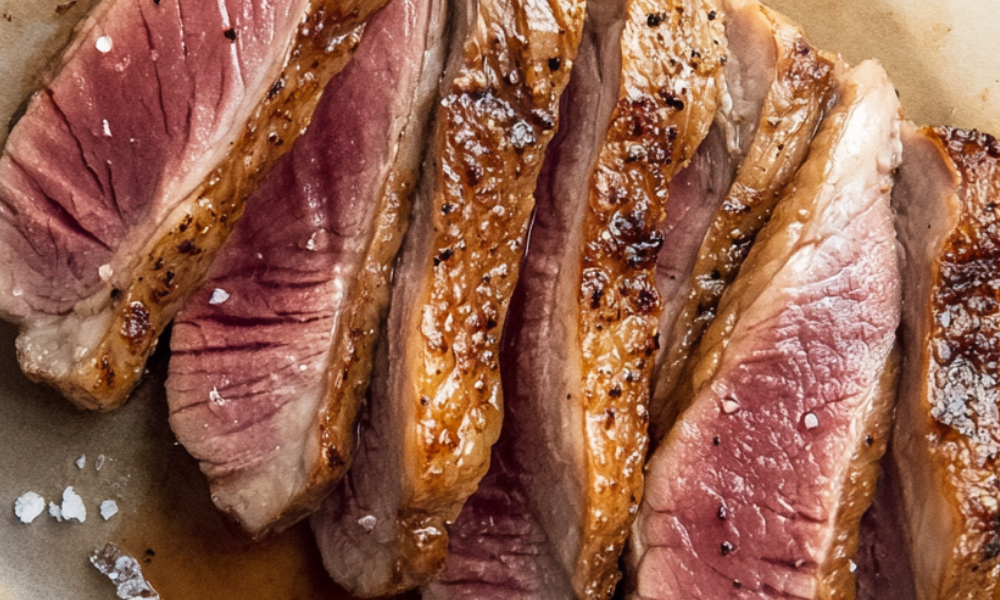
Rest the duck breasts skin-side up on a board for 6–8 minutes. Slice against the grain. Skin should be shatter-crisp, meat should be pink and tender.

What Gordon Ramsay Says About This Dish
“Duck is all about rendering. Rush that and you’ll have rubbery skin and undercooked fat.”
That’s why the cold pan start is non-negotiable.
“Score it gently, just enough to let the fat escape, not the flavor.”
Too deep, and you bleed the muscle. Too shallow, and the fat stays trapped.
“Let it rest longer than you think. Duck holds heat.”
Unlike chicken, duck can overcook during the rest. Time it right.
“Don’t cook it like chicken—it’s red meat.”
Meaning: keep it medium-rare. You want the richness, not dryness.
What I Got Wrong (And How I Fixed It)
- Used a hot pan – Skin blistered before fat rendered. Switched to cold pan start and controlled the heat.
- Didn’t score deep enough – Fat pooled instead of rendering. I now go about 1/8 inch into the fat only.
- Overcooked it – Took it to 140°F. It was dry and dull. Medium-rare at 128°F is where the magic lives.
Variations That Actually Hold Up
- With orange glaze – Deglaze the pan with a splash of orange juice, honey, and a touch of soy. Reduces fast, complements the fat.
- Use goose breast – Score deeper and render longer. Add thyme or juniper to cut the richness.
- With cherry compote – Duck loves tart fruit. Just don’t drown it.
Tried duck with BBQ sauce once. Total clash. Don’t do it.
Pro Tips That Change the Game
- Save the rendered duck fat – Liquid gold. Roast potatoes in it. Or eggs. Or anything.
- Use a fish spatula – For clean pressing and flipping without tearing the skin.
- Rest skin-side up – Keeps the crust from steaming into mush.
Storage + Leftover Moves
- Fridge: Cool fully, then seal in an airtight container. Keeps for 3 days.
- Freeze: Wrap tightly and freeze for up to 3 months.
- Reheat: Use a skillet on medium-low, skin-side down. No microwave—it’ll wreck the texture.
- Leftover move: Slice thin, flash-sear, and use in rice bowls or tacos with quick-pickled onions.
FAQs – Covering What You’ll Ask
Q: Can I use a nonstick pan instead of cast iron?
You can, but cast iron gives better sear and heat retention. Just watch the heat closely if you switch.
Q: What temp should duck breast be?
128–130°F (54–55°C) for medium-rare. Go higher and you risk losing texture.
Q: Should I trim the fat?
No. Score it. Render it. Then baste with it if you want extra luxury.
Q: Why start in a cold pan?
It slowly melts the fat, creating crispy skin. Starting hot seizes the fat and scorches the skin.
Q: Can I finish in the oven?
Yes, but only after rendering skin-side down. Oven at 400°F (200°C) for 2–3 minutes max.
Try More Recipes:
- Gordon Ramsay Lobster Risotto Recipe
- Gordon Ramsay Vegetable Curry Recipe
- Gordon Ramsay Thai Red Curry Recipe
- Gordon Ramsay Green Curry Rice Recipe

Gordon Ramsay Duck Breast Recipe
Course: DinnerCuisine: BritishDifficulty: Easy4
servings10
minutes10
minutes244
kcalCrispy skin, juicy center—this duck breast nails restaurant quality with just a skillet, salt, and patience.
Ingredients
4 skin-on duck breasts
Coarse sea salt
Fresh cracked black pepper
Directions
- Bring duck to room temp for 1 hour. Pat skin very dry.
- Score skin in shallow crosshatch pattern.
- Season both sides with salt and pepper.
- Place skin-side down in a cold cast-iron skillet. Set heat to medium.
- Cook for 5–7 minutes, pressing lightly, until skin is golden and fat rendered.
- Flip and cook meat side for 2–4 minutes until internal temp is 128–130°F (54–55°C).
- Rest skin-side up for 6–8 minutes. Slice against the grain.
Notes
- Save the rendered duck fat – Liquid gold. Roast potatoes in it. Or eggs. Or anything.
- Use a fish spatula – For clean pressing and flipping without tearing the skin.
- Rest skin-side up – Keeps the crust from steaming into mush.

I’m Ava Taylor. I’m A Self-taught Home Cook Who Loves Gordon Ramsay Recipes. I Try Every Dish In My Small Apartment Kitchen And Tweak It Until It Works. I Write Clear Steps With Simple Words So Anyone Can Follow. I Share Honest Wins, Mistakes, And Quick Tips To Help You Cook With Confidence.