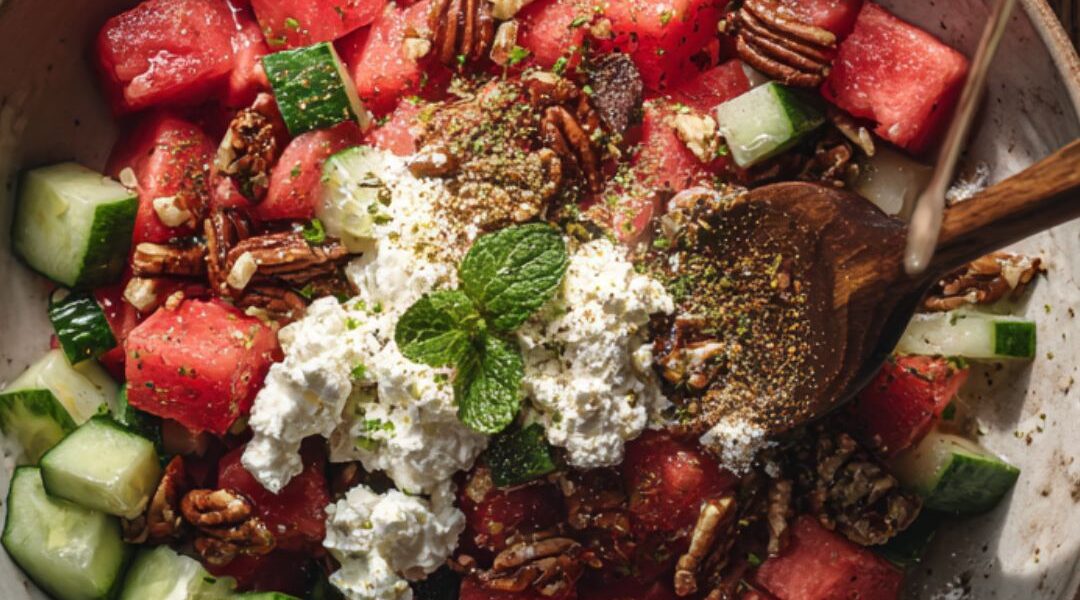

Gordon Ramsay’s Greek salad recipe swaps tomatoes for watermelon and olives for toasted pecans, keeping the feta, cucumber, olive oil, and lemon that define the original. It takes about 10 minutes and serves 4.
The recipe appears as “Feta, Watermelon, Cucumber and Mint Salad” in Gordon Ramsay’s Ultimate Home Cooking, where he writes: “In Greece, where it originates, they’ll often throw in some black olives too but I like the crunch you get from the toasted pecans.” He pairs it with his griddled chicken thighs with chickpeas and piquillo peppers.
The ingredient that pulls this together is sumac. It’s a tangy, citrusy spice common in Middle Eastern cooking that replaces the dried oregano you’d find on a traditional horiatiki, giving the salad a sharper, more complex acidity alongside the lemon juice.
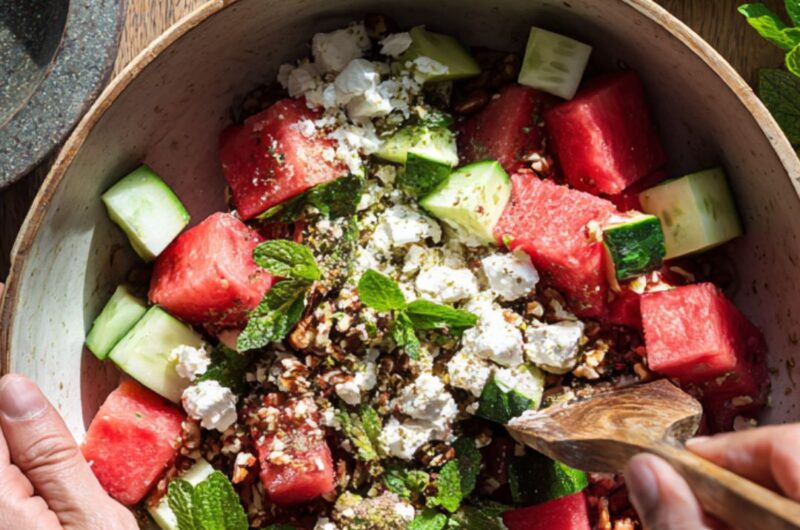
Gordon Ramsay Greek Salad Recipe
Course: SaladsCuisine: AmericanDifficulty: Easy4
10
minutes2
210
kcal12
Ramsay’s Greek-inspired salad from Ultimate Home Cooking, built on watermelon and feta rather than the classic tomato base. His Fit Food version blends feta into a yoghurt dressing instead of crumbling it over the top.
Ingredients
1/4 cup (50g) whole pecan nuts
1 ripe watermelon, flesh cut into chunks, seeds and white parts discarded
1 cucumber, peeled, deseeded and chopped into chunks
7 oz (200g) best-quality feta cheese
Extra virgin olive oil, for drizzling
Small bunch of mint, leaves only, roughly chopped
1 tsp ground sumac
Juice of 1 lemon
Sea salt and freshly ground black pepper
Directions
- Toast the pecans: Break up the pecans and toast in a dry frying pan with a pinch of salt until golden. Remove from the heat, lightly crush in a pestle and mortar, and leave to cool. Crushing them rather than leaving them whole means you get pecan flavour in every bite instead of occasional big chunks.
- Combine the salad: Place the watermelon in a serving bowl and mix in the cucumber. Crumble in the feta and mix well, seasoning with a little salt and pepper and a drizzle of olive oil.
- Finish and serve: Add the mint leaves, crushed pecans, sumac, and lemon juice to taste. Toss lightly and serve immediately. Don’t make this salad ahead because the salty cheese and nuts will draw moisture out of the watermelon and turn everything soggy.
FAQs
Why does Ramsay use watermelon instead of tomatoes?
Watermelon plays the same role as tomato in a traditional Greek salad: it’s the juicy, sweet base that contrasts with salty feta. The difference is intensity, because watermelon is sweeter with higher water content, so the contrast is sharper and more refreshing.
Why pecans instead of the traditional black olives?
Ramsay acknowledges the Greek olive tradition in his headnote but chooses pecans for texture. Olives and feta are both salty and soft, so the plate ends up one-note. Toasted pecans add crunch and a buttery sweetness that balances the salt from two directions.
How is the Fit Food version different?
The Ultimate Fit Food version from 2018 blends feta with natural yoghurt and mint into a smooth dressing instead of crumbling it on top. The salad base changes too: radishes and sugar snap peas replace cucumber and pecans, and he uses dried oregano instead of sumac. It comes in at 275 calories per serving.
Why does he say not to make this ahead?
Feta is salty, so the moment it touches watermelon, moisture starts moving out of the fruit through osmosis. Within 30 minutes the bowl fills with pink liquid and everything goes limp. Cut your components in advance if you want, but keep them separate until serving.
What does sumac add that oregano doesn’t?
Traditional Greek salad uses dried oregano for earthy, herbal warmth. Sumac is tart and citrusy, almost like dry lemon zest. Combined with the fresh lemon juice, it creates a layered acidity that cuts through rich feta and sweet watermelon. If you’re serving this alongside Ramsay’s griddled chicken thighs, that brightness keeps the whole plate from feeling heavy.

Zaytouna Studio Team is the kitchen team behind Chef Ramsay Recipes. We cook Gordon Ramsay’s recipes from his cookbooks and videos in a home kitchen and write them up for yours, with US and metric measurements.