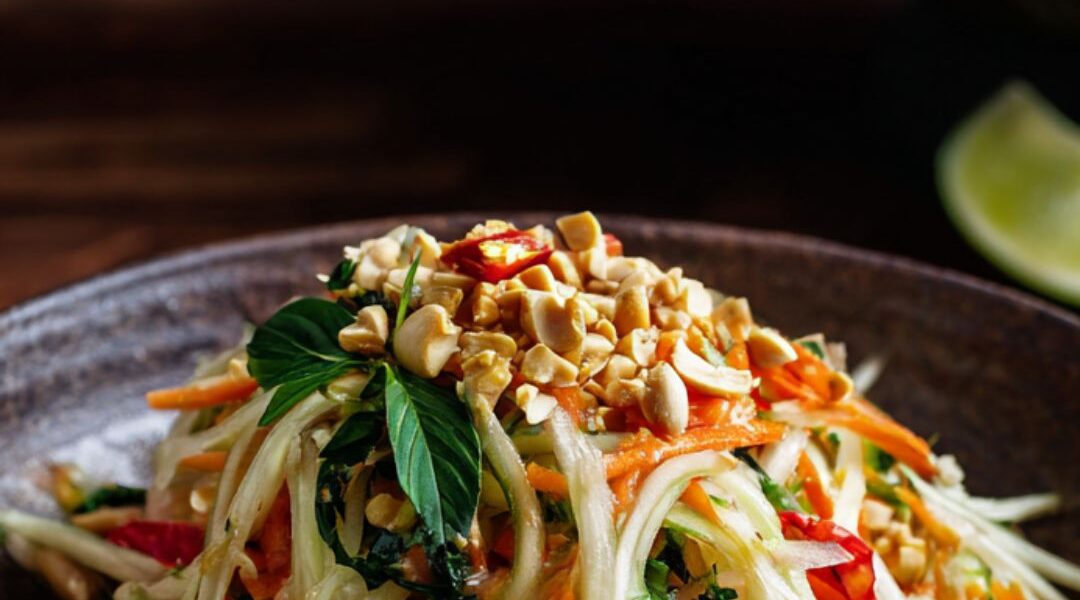

Gordon Ramsay’s green papaya salad is a bold Thai-inspired dish made with grated green papaya, a spicy shrimp paste, toasted peanuts, Thai basil, and fresh coriander (cilantro). It takes about 20 minutes and holds up for hours without wilting, which makes it a perfect party salad.
This recipe comes from Gordon Ramsay’s Ultimate Cookery Course (2012), where he calls it “a great salad to serve at a party” because it’s “robust enough to last the whole evening without wilting.” In his YouTube video for the same dish, he describes it as “inspired by my travels across Thailand” and says the secret is building a paste that balances “the heat, the sourness, the tartness.”
The technique that makes this version work: he builds the dressing in a mortar, grinding dried shrimp first into a powder, then layering garlic, chillies, sugar, tamarind, and fish sauce on top. That pounded paste coats the papaya strands in a way that a whisked dressing never could, because the mortar breaks everything down into one concentrated hit of flavour.
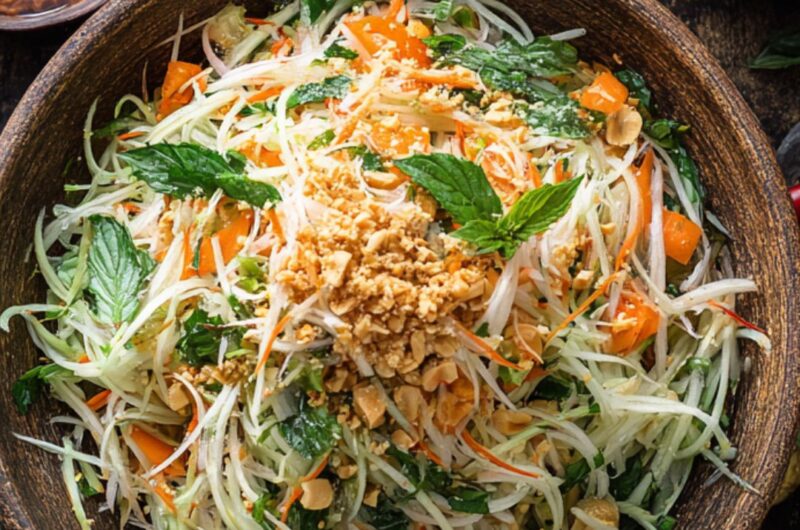
Gordon Ramsay Green Papaya Salad Recipe
Course: SaladsCuisine: AmericanDifficulty: Easy6-8
20
minutes3
180
kcalA Thai-inspired party salad from Gordon Ramsay’s Ultimate Cookery Course, built around a mortar-pounded shrimp and tamarind paste. Unlike most salads, this one actually improves when dressed a few hours ahead because the sturdy papaya strands absorb the dressing without going limp.
Ingredients
4-6 tbsp dried shrimp, to taste
Sea salt
2 garlic cloves, peeled and roughly chopped
2 red bird’s eye chillies (chili peppers), chopped
4 tbsp golden caster sugar (superfine sugar)
2 tbsp tamarind paste
4 tbsp fish sauce
Juice of 2 limes
2 large green papayas, peeled and grated, core and seeds discarded
2 shallots (banana shallots), peeled and grated
2 carrots, peeled and grated
6 tbsp roughly chopped coriander (cilantro)
6 tbsp roughly chopped Thai basil (or regular basil)
6 tbsp roughly chopped skinned peanuts
Directions
- Pound the shrimp paste: Using a large pestle and mortar, grind the dried shrimp with a pinch of salt until broken into small pieces, almost like a powder. Add the garlic, chillies, sugar, tamarind paste, and fish sauce, then grind until the mixture has a paste-like consistency. Stir in the lime juice to loosen. You’re looking for a paste that’s thick and fragrant with balanced heat, sourness, and tartness.
- Prep the papaya: Stand each green papaya upright and cut down around the sides to peel it, like paring an orange. Grate the flesh into thin strands, discarding the central core and seeds. The texture is strong and durable, like a palm heart, so it takes the dressing without wilting.
- Build the salad: Mix the grated papaya, shallots, carrots, coriander, and Thai basil together in a large bowl. Ramsay notes that Thai basil is “a much more fragrant basil, it’s stronger and slightly thicker,” but normal basil works well too.
- Toast the peanuts: Roll the chopped peanuts around in a dry pan with a pinch of salt for 2-3 minutes until golden. This makes them sweeter and more intensely flavoured. Don’t chop them too small or they will burn.
- Dress and serve: Add 6 tablespoons of the shrimp paste to the salad and toss really well. Taste and add more paste if needed. Garnish with the toasted peanuts and serve. Don’t hold back with the herbs because they make the whole thing vibrant and aromatic.
FAQs
Why does Ramsay grind the dressing in a mortar instead of blending it?
A mortar and pestle crushes and bruises the ingredients rather than slicing them, which releases more oils from the garlic and chillies. The paste clings to the papaya strands in a way that a blended or whisked dressing can’t match, because the texture is thicker and more uneven. Thai cooks have used this method for centuries, and Ramsay picked it up during his travels across Thailand.
Why dried shrimp as the base of the paste?
Dried shrimp add umami depth that you can’t get from fish sauce alone. Grinding them into a powder first creates the foundation that holds the rest of the paste together. Ramsay says they “smell almost of the seabed,” and that briny, savoury base is what makes the dressing taste distinctly Thai rather than just spicy and sour.
Can this salad be dressed ahead of time?
Yes, and Ramsay actually recommends it. In the chapter intro of Ultimate Cookery Course, he writes that this salad “actually improves with the extra time” when dressed a few hours in advance. Green papaya has a texture similar to palm heart, so it absorbs the dressing and softens slightly without going limp or watery the way lettuce or spinach would.
Why does he toast the peanuts in a dry pan?
Raw peanuts taste flat and starchy compared to toasted ones. Rolling them in a hot dry pan with salt for a couple of minutes brings out their natural sweetness and adds a deeper, roasted flavour. Ramsay warns not to chop them too small before toasting because small pieces burn quickly. You want rough chunks that give the salad crunch against the soft grated papaya.
What can you serve this with?
Ramsay places this recipe in his “Cooking for Crowds” chapter alongside sticky pork ribs, paella, and roast sirloin of beef. It works as a side for grilled or roasted meats because the sour, spicy dressing cuts through rich fat. For a lighter spread, pair it with his green bean salad or serve it next to a cucumber salad for a Thai-inspired table with contrasting textures.
Zaytouna Studio Team is the kitchen team behind Chef Ramsay Recipes. We cook Gordon Ramsay’s recipes from his cookbooks and videos in a home kitchen and write them up for yours, with US and metric measurements.