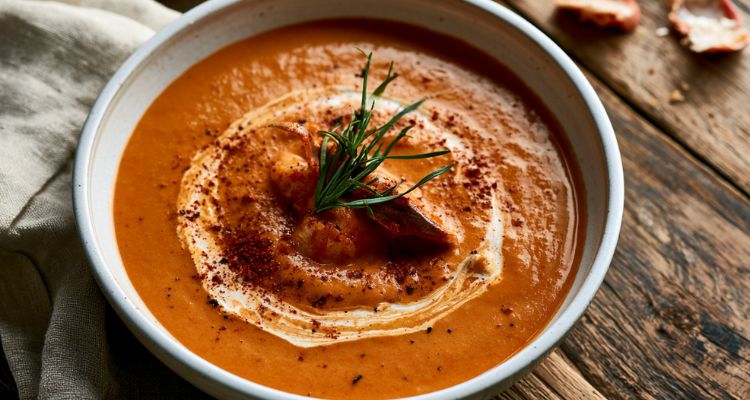

Gordon Ramsay’s lobster bisque is a silky, intensely flavoured soup made from lobster shells and heads, simmered with Cognac, dry vermouth and fish stock, then strained and finished with cream and a pinch of cayenne. It takes about 45 minutes from start to bowl.
This recipe appears as “Lobster Bisque” in Gordon Ramsay’s Secrets, where he calls it “the gourmet soup of leftovers, this wonderful bisque is light and delicate with an intense shellfish flavour. There’s nothing difficult about it…you simply use the heads and shells of lobsters rather than throw them away.”
The technique that separates this from other bisques: he chops the shells as finely as possible before sautéing them, because the smaller the pieces, the more flavour they release into the broth. After simmering, he presses the shells hard against the sieve with the back of a ladle to squeeze out every last drop of shellfish flavour before reducing the strained liquid by half.
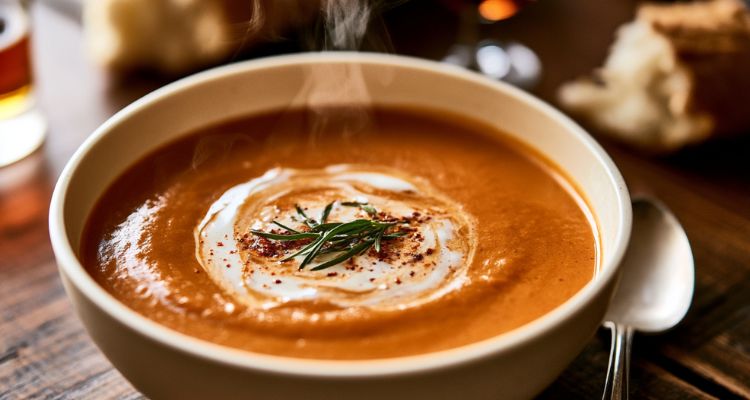
Gordon Ramsay Lobster Bisque Recipe
Course: SoupsCuisine: American, BritishDifficulty: Easy2-3
15
minutes35
522
kcalLobster shell bisque from Gordon Ramsay’s Secrets, built from leftover shells and heads sautéed in olive oil, deglazed with Cognac and Noilly Prat, then simmered with fish stock, tomatoes and fresh herbs. Strained, reduced and finished with double cream and cayenne for a restaurant-quality soup from scraps most people throw away.
Ingredients
Shells and heads of 2 lobsters
6 tbsp olive oil
1 medium onion, finely chopped
2 carrots, finely chopped
1 celery stick or 1/2 fennel bulb, chopped
1 fat garlic clove, chopped
2 lemongrass stems, chopped
Generous pinch of saffron strands (optional)
2 tsp Cognac
7/8 cup (200ml) Noilly Prat, or dry vermouth
4 cups (1 litre) fish stock
3 plum tomatoes, chopped
1 tbsp tomato puree (paste)
1 large basil sprig
1 large tarragon sprig
1 large parsley sprig
1 bay leaf
1/3 cup plus 1 tbsp (100ml) heavy cream (double cream)
Generous pinch of cayenne pepper
Sea salt and freshly ground black pepper
Directions
- Chop the shells: Chop up the lobster shells and heads using a large heavy knife or Chinese cleaver. The finer you chop them, the more flavour you will extract. Retain the soft tissue in the heads because this adds to the flavour.
- Sauté the shells: Heat half the olive oil in a large saucepan and sauté the lobster shells and heads for about 5 minutes. Remove them with a slotted spoon and set aside.
- Sweat the vegetables: Heat the remaining oil in the pan, then add the vegetables, garlic and lemongrass. Sauté for about 5 minutes until softened. Sprinkle in the saffron if using, and cook for 30 seconds.
- Deglaze and build the broth: Deglaze with the Cognac, then add the Noilly Prat and bubble until reduced by half. Return the shells to the pan. Add the fish stock, tomatoes, tomato puree and herbs. Season with pepper to taste, but hold back on salt at this stage. Bring to the boil, lower the heat and simmer for 20 minutes.
- Strain and press: Strain the liquor through a large sieve into another pan, pressing the shells with the back of a ladle to extract as much flavour as possible. Don’t rush this step because the flavour trapped inside the shells is what makes this bisque taste like lobster rather than just fish stock.
- Reduce: Bring the strained liquor to the boil and simmer until reduced to about 2 cups (500ml). This concentrates the shellfish flavour into something intense and full-bodied.
- Finish with cream: Stir in the cream and bring to a gentle simmer. Cook gently for 4 to 5 minutes. Check the seasoning, adding salt to taste at this stage and cautious pinches of cayenne. Serve hot.
FAQs
Why does Ramsay use Noilly Prat instead of white wine?
He shares this as a chef’s secret in the book: “Noilly Prat is one of my secret flavourings. This classic vermouth with its hint of sweet aniseed is perfect for enhancing fish and shellfish.” He often uses it in combination with a little Cognac.
Dry vermouth has a more complex flavour than white wine because it’s infused with botanicals, and that aniseed note pairs naturally with shellfish. It’s also a fortified wine, so once opened it keeps in the cupboard for months. White wine would work but the bisque would taste simpler and flatter.
Why chop the shells as finely as possible?
Lobster shells contain intense flavour in their structure, but it only releases when the surface area is exposed to heat and liquid. Larger pieces have less exposed surface, so they give up less flavour during the 20-minute simmer.
Fine chopping also makes it easier to press the shells against the sieve at the straining stage. You can lean hard with the ladle and squeeze out liquid that would stay trapped inside bigger chunks. A heavy Chinese cleaver is the best tool for this because a regular knife can slip on the hard shell.
Why does he hold back on salt until the end?
The bisque reduces by more than half during cooking, from a litre of stock down to about 2 cups (500ml). Any salt added early gets concentrated along with everything else, so a reasonable amount at the start could become overpowering by the time the bisque is finished.
Adding salt only after the reduction and the cream go in gives you control over the final seasoning. The fish stock and Noilly Prat already carry some salinity, so you may need less than you’d expect. This is the same reason he seasons with “cautious pinches” of cayenne rather than a measured amount.
Can crab or langoustine shells be used instead of lobster?
Ramsay says so directly in the book: “Langoustine and crab shells are suitable, too.” The method stays identical because the technique works for any crustacean shell.
Crab shells produce a slightly sweeter, more delicate bisque. Langoustine shells give something closer to lobster in flavour but milder. You can also mix shells from different shellfish if you don’t have enough of one kind. The key is using shells that still have soft tissue and residual meat clinging to them, because that’s where much of the flavour lives.
How is this different from his lobster soup in Passion for Flavour?
Completely different dish. The Passion for Flavour version is a chilled summer soup served with poached baby lobster medallions and blanched vegetables like baby carrots, broad beans and petits pois. It’s closer to a main course than a starter.
This bisque is hot, rich and concentrated, built entirely from shells that would otherwise be waste. One uses four whole live lobsters and costs accordingly. The other turns leftovers into something that tastes like it belongs on a restaurant menu. If you enjoy Ramsay’s approach to building deep flavour from simple starts, his roasted tomato soup follows the same philosophy of extracting maximum flavour from basic ingredients.
Why add lemongrass to a French-style bisque?
Most classic bisque recipes stick to the standard mirepoix of onion, carrot and celery. Ramsay adds chopped lemongrass, which brings a citrusy, slightly floral note that lifts the richness of the cream and shell flavour without tasting overtly Asian.
It’s a subtle addition that you wouldn’t be able to identify in the finished soup, but you’d notice something missing without it. The lemongrass works alongside the tarragon and basil to keep the bisque tasting bright rather than heavy. If you enjoy how Ramsay blends French and Asian influences, his butternut squash soup takes a similar cross-cultural approach.

Zaytouna Studio Team is the kitchen team behind Chef Ramsay Recipes. We cook Gordon Ramsay’s recipes from his cookbooks and videos in a home kitchen and write them up for yours, with US and metric measurements.