

The first time I tried to roast beef like this, I followed the steps and still ended up with a dry, tough slab that chewed like an old boot. I didn’t rest the meat long enough. My onions weren’t properly caramelised—they were just soft and sweaty. And I definitely overcooked the flour, giving the gravy a bitter edge.
Here’s the truth: roasting beef isn’t about ticking boxes—it’s about control. Ramsay’s method, once you understand the temperature management, sear discipline, and gravy mechanics, gives you restaurant-level results. Juicy meat. Deep, glossy gravy. Real finesse. This is the tested, locked-in version you’ll keep using.
Why This Works (And Where Most Go Wrong)
The roast is about three moments: seasoning, searing, and resting. Most home cooks mess up the sear—either not hot enough or too much oil—and don’t allow the beef to rest long enough. Ramsay’s method starts with a dry pan, not oiled, for max crust. His long rest period (20–40 min) isn’t optional—it redistributes moisture so every slice stays juicy.
As for the gravy? It’s not just “add onions.” It’s low-and-slow until jammy, then flour in before wine to avoid lumps. That order matters.
Ingredients That Actually Matter
- 1 head garlic, halved – Infuses the beef with a soft, roasted pungency. Not raw garlic sharpness—this is mellow and nutty.
- 5 thyme sprigs + 1 extra – Earthy depth. Skip it and the whole roast lacks structure.
- 1.8kg beef sirloin – Sirloin’s lean but full-flavored. You need the right cut here—don’t sub in rump or you’ll lose texture.
- 3–4 tbsp olive oil – Only used to rub the beef. No oil in the pan.
- 4 large onions, sliced – These are the gravy’s backbone. Go yellow or Spanish. Red onions will go too sweet.
- 150g plain flour – Thickens the gravy. Key is cooking out the raw edge before liquid.
- 500ml red wine – Pick something dry and tannic (Cabernet works). Adds bitterness and balance.
- 1.5 litres hot beef stock – Not warm—hot. Helps emulsify the gravy smoothly.
How To Make Gordon Ramsay Roast Beef with Caramelised Onion Gravy
Bring the beef to room temp an hour before you start. Cold beef roasts unevenly.
Preheat your oven to 190°C (375°F).
Rub the halved garlic and picked thyme leaves all over the beef. Then drizzle with olive oil and massage it in. If you’ve got time, marinate this for 1–2 days covered in the fridge. That’s Ramsay’s long game for flavor.
Get a dry frying pan ripping hot. No oil. Sear the beef on all sides until deep brown crust forms—about 2–3 mins per side. This is your flavor foundation. Then transfer to a roasting tray with the garlic halves and extra thyme sprig.
Roast:
- 45 minutes = medium-rare
- Add 10–12 mins = medium
- Add 20 mins = well done
Always use a thermometer if you’re serious. You’re looking for:
- 52–54°C (125–130°F) = medium rare
- 60°C (140°F) = medium
- 65–70°C (150–160°F) = well done
Remove from oven, tent with foil, and rest 20–40 minutes. This isn’t just about keeping it warm—it redistributes the juices.
Now for the gravy: set your roasting tray over low heat. Toss in sliced onions and cook slowly—minimum 20 minutes. Stir often. You want dark golden, sticky onions, not just translucent.
Sprinkle the flour over the onions. Stir it in and cook for 2–3 minutes. No raw flour taste allowed.
Pour in the red wine. Whisk hard to smooth out any lumps. Reduce by half. Only then add the hot beef stock. Simmer until thick and glossy—about 8–10 mins.
Slice the beef thin, serve with the gravy in a warm jug. It deserves Yorkshire puddings and something green (I like steamed chard or kale for bitterness).
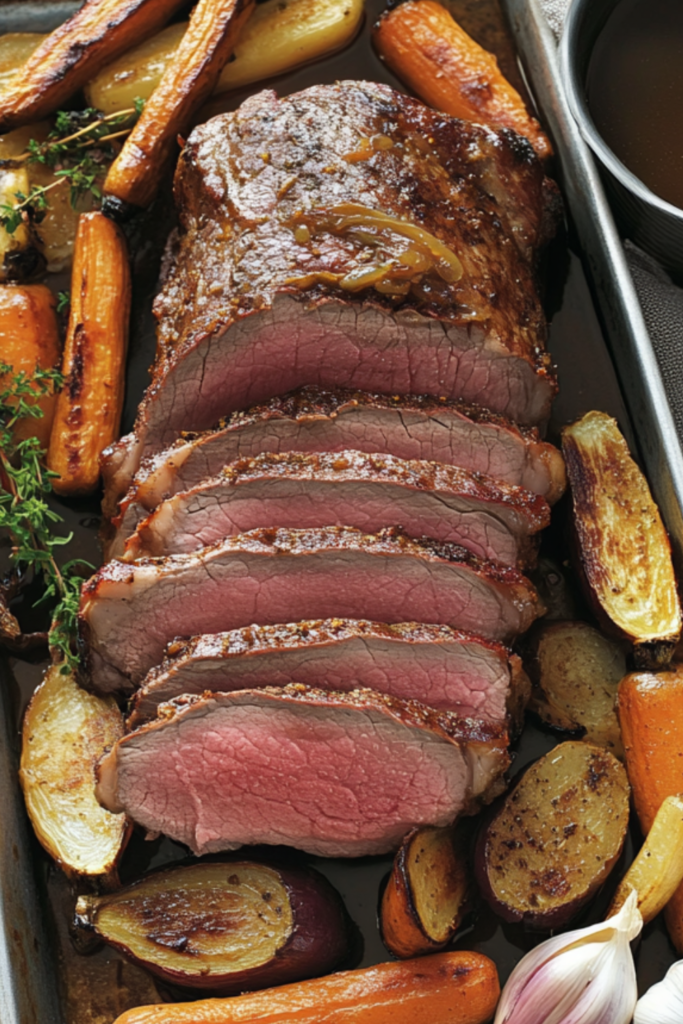
What Gordon Ramsay Says About This Dish
“Resting is as important as roasting.”
He’s right. I rushed it once—juices bled out, beef went dry. Never again.
“Always sear in a dry pan.”
Adding oil just steams the meat. The dry pan method is the cheat code to crust.
“Don’t be scared to reduce the wine hard.”
I used to stop too early. Now I push it until the aroma’s deep and jammy.
“The onions are the sauce.”
That clicked for me. The gravy isn’t separate—it’s a transformation of those onions.
What I Got Wrong (And How I Fixed It)
- Used cold beef – center was raw while outside overcooked. Always rest it out of the fridge.
- Didn’t sear hard enough – meat looked grey. Pan needs to be nearly smoking.
- Skipped the flour step timing – added wine before flour once = lumpy nightmare.
- Used warm stock – gravy broke and got greasy. Has to be hot.
Variations That Actually Hold Up
- Different cuts: You can sub ribeye roast, but it’s fattier—cut 5 mins off the roast time.
- Herb swap: Rosemary works in place of thyme, but don’t mix both.
- Gravy twist: Add a spoon of Dijon with the stock for extra tang.
Avoid:
- Skipping wine – the gravy loses depth fast.
- Using pre-chopped onions – they don’t caramelise evenly.
Pro Tips That Change the Game
- Rest your roast for minimum 20 minutes. Up to 40 minutes under foil is fine—it stays warm.
- Deglaze that roasting tray. Don’t switch pans. All the flavor is in the crust stuck to the bottom.
- Push your onion color. Pale onions = weak gravy. Aim for deep gold bordering on jam.
- Slice against the grain. Always. Sirloin can be chewy if you don’t.
Storage + Leftover Moves
- Fridge: Store sliced beef and gravy separately. Lasts 3 days.
- Freeze: Wrap beef tight in foil or vacuum bags. Gravy freezes well in containers. 3 months max.
- Reheat: Always reheat beef in the gravy—it keeps it moist. Do it gently on low.
Leftover move? Thin-sliced beef + gravy + horseradish cream = elite sandwich.
FAQs
Q: Can I use a different cut like rump or topside?
Yes, but expect a drier texture unless you baste constantly and roast slower.
Q: How do I get really crispy edges on my roast?
Hot sear, dry pan, and don’t crowd the pan. Crust needs room to form.
Q: Why does my gravy taste thin?
You didn’t reduce the wine enough or used weak stock. Reduce more. Add a spoon of Worcestershire if you need depth.
Q: What wine works best?
Go bold. Cab Sauv, Syrah, or a Rhône blend. Avoid anything too sweet.
Q: Can I skip the flour?
You can, but then you’ll need to reduce the sauce for much longer to get thickness. And it won’t coat like Ramsay’s.
Try More Gordon Ramsay Recipes:
- Gordon Ramsay Thai Beef Salad Recipe
- Gordon Ramsay Beef Barley Soup Recipe
- Gordon Ramsay Beef Casserole Recipe
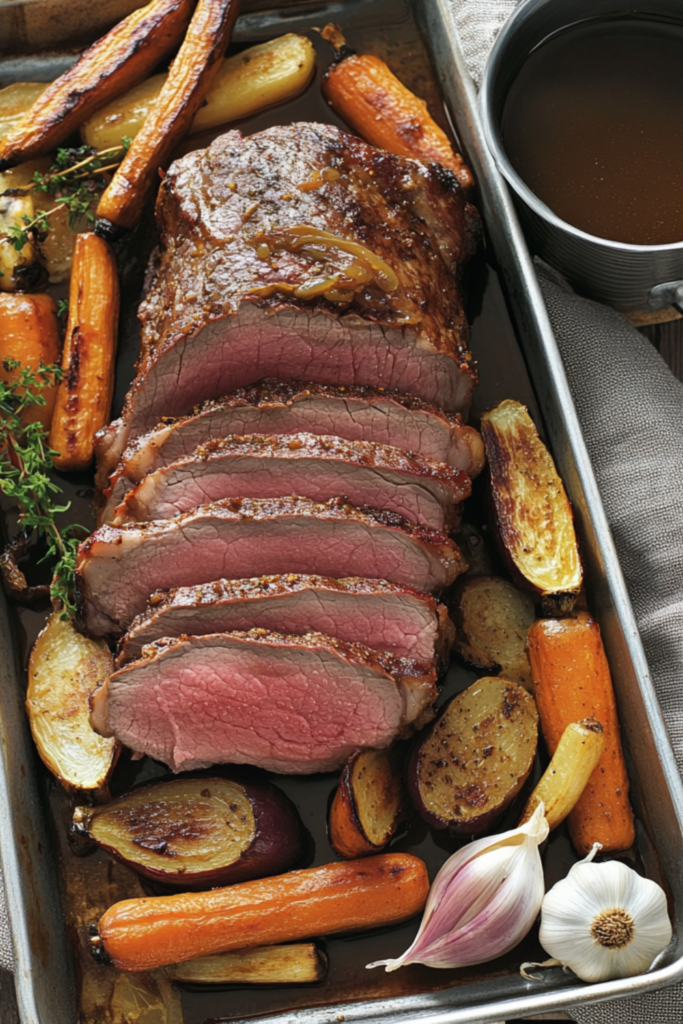
Gordon Ramsay Roast Beef with Caramelised Onion Gravy Recipe
Course: DinnerCuisine: britishDifficulty: Easy6
servings50
minutes1
hour550
kcalFirst time I made this, it was dry and bland—until I learned how Ramsay builds flavor and moisture control.
Ingredients
1.8kg beef sirloin
1 garlic bulb, halved
5 thyme sprigs, leaves picked + 1 sprig whole
3–4 tbsp olive oil
4 onions, sliced
150g plain flour
500ml red wine
1.5L hot beef stock
Directions
- Rub beef with garlic and thyme, drizzle with oil. Marinate up to 2 days.
- Bring beef to room temp 1 hour before cooking.
- Preheat oven to 190°C / 375°F.
- Sear beef in hot dry pan on all sides.
- Transfer to tray with garlic and thyme. Roast 45 mins (med-rare).
- Rest beef 20–40 mins under foil.
- Cook onions in tray over low heat 20 mins.
- Stir in flour. Cook 2–3 mins.
- Add red wine. Whisk. Reduce by half.
- Add hot stock. Simmer 8–10 mins until thick.
- Slice beef, serve with gravy.
Notes
- Rest your roast for minimum 20 minutes. Up to 40 minutes under foil is fine—it stays warm.
- Deglaze that roasting tray. Don’t switch pans. All the flavor is in the crust stuck to the bottom.
- Push your onion color. Pale onions = weak gravy. Aim for deep gold bordering on jam.
- Slice against the grain. Always. Sirloin can be chewy if you don’t.

I’m Ava Taylor. I’m A Self-taught Home Cook Who Loves Gordon Ramsay Recipes. I Try Every Dish In My Small Apartment Kitchen And Tweak It Until It Works. I Write Clear Steps With Simple Words So Anyone Can Follow. I Share Honest Wins, Mistakes, And Quick Tips To Help You Cook With Confidence.