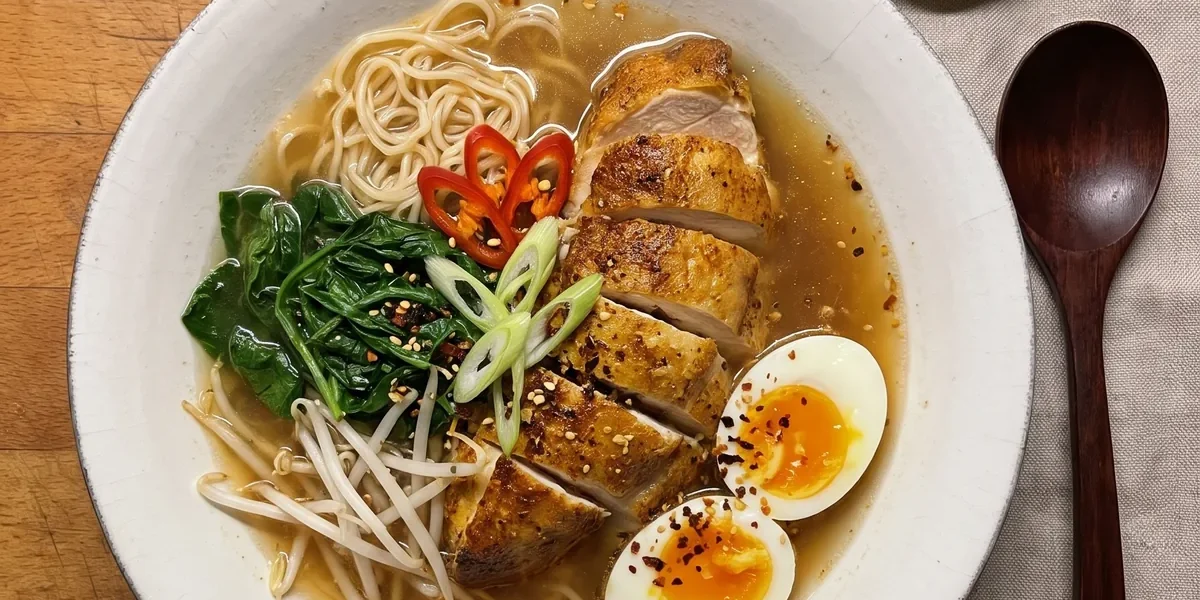

Gordon Ramsay’s chicken ramen is a bowl of ramen noodles, spinach and beansprouts under a miso, dashi and soy chicken broth, topped with sliced pan-fried chicken breast and soft-boiled eggs. It serves two and takes about 30 minutes, using one saucepan for the eggs and noodles, a frying pan and a small pot for the broth.
The Quick and Delicious (2019) headnote traces ramen from China to Japan, where cooks built the broth on miso, kombu and katsuobushi, or dried tuna flakes. His shortcut is miso plus dashi powder, which gives you that seaweed and fish depth in minutes, and both sit in Asian grocery stores or online.
The clever part is the saucepan. The eggs cook in it first, then you salt the same water and boil the noodles in it, so nothing else needs to come to a boil. You’ll end up with golden slices of chicken, eggs with soft orange yolks and a cloudy, savory broth wilting the spinach underneath.
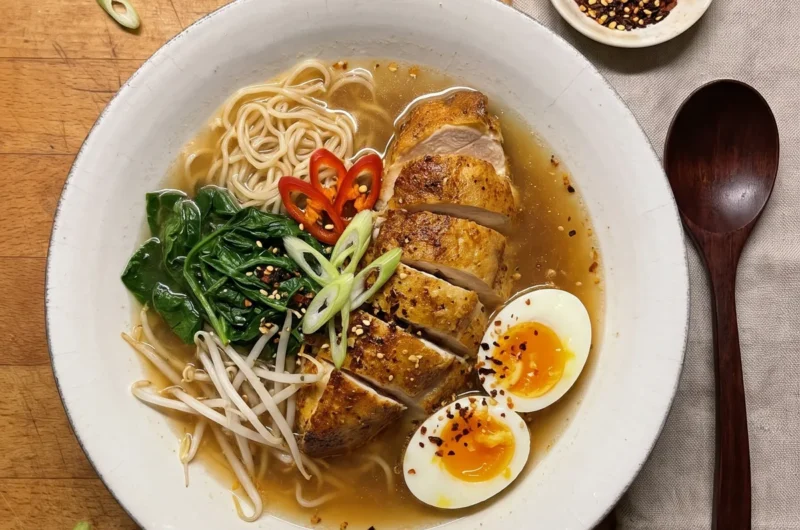
Gordon Ramsay’s Chicken Ramen
Course: SoupsCuisine: JapaneseDifficulty: Easy2
10
minutes20
880
kcalSkin-on chicken breast cooked with garlic, ginger and sake, served over ramen noodles in a miso and dashi broth with soft-boiled eggs, from Quick and Delicious. It serves 2.
Ingredients
- For the ramen:
2 eggs
2 tablespoons vegetable oil
2 chicken breasts, skin on
3½ ounces (100 g) ramen noodles
2 large handfuls of baby spinach
2 large handfuls of beansprouts
sea salt and ground white pepper
- For the broth:
4¼ cups (1 liter) chicken stock
1 tablespoon white miso paste
2 teaspoons dashi powder
2 tablespoons soy sauce
3 garlic cloves, peeled and finely sliced
a 1½-inch (4 cm) piece of fresh ginger, peeled and cut into thin matchsticks
2 tablespoons sake (Japanese rice wine)
1 long red chili, seeded for a milder bowl, finely sliced at an angle
2 scallions, trimmed and finely sliced at an angle
1 teaspoon furikake seasoning
sesame oil, to drizzle
Directions
- Eggs: Boil a kettle, pour the water into a saucepan and bring it back to a boil over high heat. Gently lower in the eggs and cook for 5 to 6 minutes, for a slightly runny yolk.
- Chicken: Meanwhile, heat the vegetable oil in a nonstick frying pan over high heat. Season the chicken with salt and a little white pepper, lay it in skin side down, and cook over medium heat for 4 to 5 minutes.
- Cool the eggs: Lift the eggs into a bowl of cold water with a slotted spoon to stop them cooking.
- Noodles: Salt the egg water and bring it back to a boil. Cook the noodles for 3 to 4 minutes, until just tender, then drain and divide between two bowls, adding a handful each of spinach and beansprouts.
- Broth: Pour the stock into a saucepan, add the miso, dashi powder and soy sauce, and set it over medium heat. Peel the eggs and halve them lengthways.
- Finish the chicken: Turn the chicken and add the garlic and ginger to the pan. Cook for 2 to 3 minutes, stirring the garlic and ginger often, then add the sake and cook for 2 minutes more.
- Rest: When the chicken is cooked through (165°F / 74°C), lift it out to rest. Stir the pan juices, garlic and ginger into the broth.
- Serve: Slice the chicken onto the noodles and ladle over the broth. Top with the chili, scallions, furikake and halved eggs, then drizzle with a little sesame oil.
Notes
- The book's last step also mentions microherbs as a garnish, though they aren't in its ingredient list, so add a few if you have them.
- Dashi powder is a Japanese instant stock of kelp and bonito, sold in small jars or sachets in Asian grocery stores.
- Use dried or chilled ramen noodles rather than an instant cup, since the broth here replaces any flavor sachet.
FAQs
Do the spinach and beansprouts really go in raw?
Yes, they sit raw in the bowls and the hot broth does the cooking when it’s ladled over. The spinach wilts in seconds, while the beansprouts stay crunchy, which gives the bowl some bite.
Raw sprouts aren’t advised for anyone pregnant, elderly or immune-compromised, though. For them, I’d drop the beansprouts into the noodle water for the last minute, which is my own safety step.
How do I know the chicken is cooked through?
Go by temperature rather than the clock, because the book’s 8 to 10 minutes in the pan suits medium-sized breasts. The thickest part should read 165°F (74°C), and the juices should run clear.
If your breasts are thick, I’d slice them in half horizontally before cooking, so they cook in the same time. Then let the chicken rest while you finish the bowls, and slice it just before it goes on top.
What can I use instead of sake?
Dry sherry is the closest swap, which is my own suggestion rather than the book’s. A dry white wine works too, but skip mirin here, because it’s much sweeter than sake.
If you don’t cook with alcohol, use 2 tablespoons of the chicken stock instead. You’ll lose a little of the rice wine flavor, but the pan juices still go into the broth.
How is it different from his Academy chicken ramen?
His Academy’s simple chicken ramen uses boneless chicken thighs marinated in sriracha, with rice noodles, so it’s gluten-free and dairy-free. Its broth simmers ginger, garlic, carrot and scallion in chicken stock with miso, soy and sriracha, then gets strained.
It’s finished with pak choi, a soft egg and a lime half charred in the pan. So I’d cook this book version for crisp chicken skin and that one when you want heat.
Does he have a vegetarian ramen?
Yes, his vegetarian Gordon Ramsay ramen from Ramsay in 10 swaps the chicken stock for an almost-instant shiitake broth. It’s topped with tofu and crispy fried cauliflower instead of chicken.
And from this same book, his chicken and shiitake noodle soup is the one to try next, with shiitake and choi sum in the bowl. It’s another of his weeknight noodle soups from that book.

Zaytouna Studio Team is the kitchen team behind Chef Ramsay Recipes. We cook Gordon Ramsay’s recipes from his cookbooks and videos in a home kitchen and write them up for yours, with US and metric measurements.