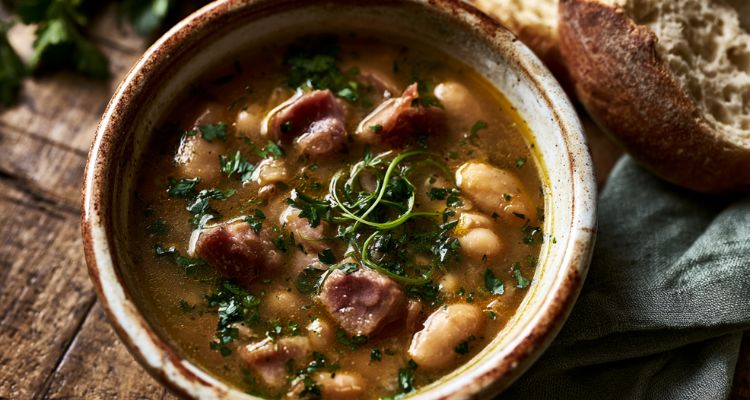

Gordon Ramsay’s white bean soup is a slow simmered potage of ham hocks and butter beans with celery, leeks, carrots, and celeriac, finished with fresh herbs. It takes about 2 and a half hours, though most of that is hands off while the hocks do their work.
The recipe appears as “Potage of Ham Hocks with White Beans” in Gordon Ramsay: Make It Easy, where it sits in the “Cooking for a Crowd” chapter. In Cooking for Friends, Ramsay writes about watching his mother at the Cobweb tearooms in Stratford-upon-Avon, “making ham hock and barley soup, white veal stew, and the most amazing honey-glazed roast ham.” Ham hock soups run deep in his cooking history.
What sets this version apart is the celeriac. Most white bean soups rely on the usual celery, carrot, and onion base, but Ramsay adds julienned celeriac alongside the celery stalks, which gives the broth a warm, earthy sweetness you won’t get from celery alone.
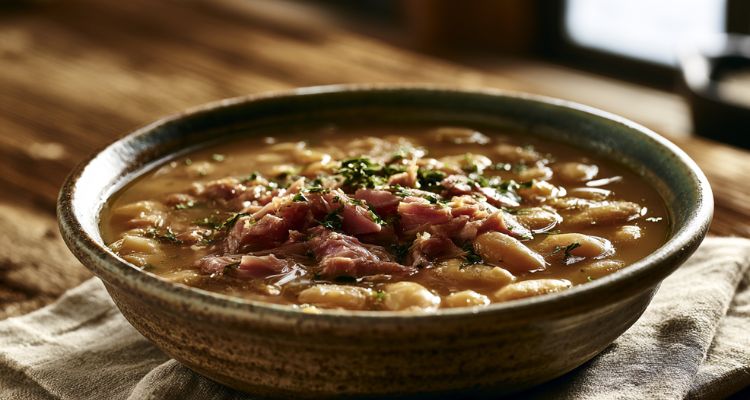
Gordon Ramsay White Bean Soup Recipe
Course: SoupsCuisine: British, AmericanDifficulty: Easy4-6
20
minutes2
15
minutes320
Adapted from the “Potage of Ham Hocks with White Beans” in Gordon Ramsay: Make It Easy, scaled down from the original 10 servings to a more practical 4 to 6. The method stays the same: a long, gentle simmer builds a rich broth from the hocks themselves, then canned butter beans go in at the end so they hold their shape.
Ingredients
2 ham hocks
4 celery stalks, finely chopped
1 leek, finely sliced
1 carrot, finely sliced
8 oz (225g) celeriac, peeled and cut into thin matchsticks
4 garlic cloves, peeled and lightly crushed
1 small bunch of flat-leaf parsley, stalks and leaves separated
2 bay leaves
4 fresh thyme sprigs
1/4 tsp freshly ground coriander seeds
Freshly ground black pepper
4 cups (1 litre) chicken stock
2 x 15 oz (420g) cans butter beans (lima beans), drained and rinsed
Small handful of fresh chervil or extra parsley, chopped
Sea salt
Directions
- Soak the hocks: Place the ham hocks in a large pot and cover with cold water. Leave to soak overnight in a cool place. This draws out excess salt so the finished soup isn’t too salty to eat.
- Build the broth: Drain and discard the soaking water. Return the hocks to the pot and add the celery, leek, carrot, celeriac, garlic, parsley stalks, bay leaves, thyme, and coriander seeds. Season with black pepper but hold the salt for now because the hocks will release more as they cook. Pour in the chicken stock and add enough water to just cover the hocks. Bring to the boil, skim off any foam that rises, then lower the heat and simmer gently for 2 hours.
- Cool in broth: Let the hocks cool in the pot for about 20 minutes. This keeps the meat moist instead of drying out the moment it hits the air.
- Shred the meat: Lift the hocks onto a cutting board and carefully remove the skin and fat. Strip the meat from the bones, cut into bite-sized pieces, and return to the pot. Discard the bones and skin. Pick out and discard the bay leaves, thyme sprigs, and parsley stalks.
- Finish the soup: Add the drained butter beans and bring everything back to a gentle boil. Lower the heat and simmer for about 10 minutes so the beans warm through and absorb some of the broth. Taste and season with salt and pepper. Chop the reserved parsley leaves.
Finish the soup: Add the drained butter beans and bring everything back to a gentle boil. Lower the heat and simmer for about 10 minutes so the beans warm through and absorb some of the broth. Taste and season with salt and pepper. Chop the reserved parsley leaves. - Serve it up: Ladle into warm bowls and scatter with the chopped parsley and chervil.
FAQs
Why does Ramsay soak the ham hocks overnight before cooking?
Ham hocks are cured, which means they carry a lot of salt. Soaking them in cold water overnight pulls much of that salt out, so you can actually control the seasoning of the finished soup. Skip this step and the broth can end up almost inedibly salty, with no way to fix it once the hocks have simmered for two hours.
Why use canned butter beans instead of cooking dried beans from scratch?
The ham hocks already need a two hour simmer, and during that time the broth picks up all the depth and body it needs from the meat and vegetables. Adding canned beans at the end means they hold their shape and texture instead of turning to mush over a long cook. Ramsay’s bean soup recipe uses a similar approach with canned beans for the same reason.
Why does Ramsay let the hocks cool in the broth instead of pulling them straight out?
Hot meat exposed to air immediately starts losing moisture. Letting the hocks rest in the liquid for 20 minutes means the fibres relax and reabsorb some of that broth, so the shredded pieces stay tender and juicy once you cut them up. It’s the same principle behind resting a roast before carving.
What does celeriac add that regular celery doesn’t?
Regular celery gives the broth a clean, grassy note, but celeriac brings something warmer and more rounded. It has a nutty, almost parsnip-like sweetness that deepens the base flavour without adding any actual sweetness. Using both together gives the soup two layers of celery character. If you enjoy that earthy vegetable depth, Ramsay’s celery soup builds a whole bowl around that flavour.
Why ground coriander seeds in a white bean soup?
It’s an unusual addition, but Ramsay specifies half a teaspoon of freshly ground coriander seeds in the original recipe. Coriander has a warm, citrusy quality that lifts the richness of the ham without competing with it. You won’t taste coriander in the finished soup, but you’d notice something missing without it, because it rounds out the background the same way a bay leaf does.
How is this different from his pea and ham soup?
Ramsay’s pea and ham soup follows a similar ham hock base, but the peas dominate the flavour and the soup gets blitzed until smooth. This white bean version stays chunky and brothy, with whole beans and shredded meat in every spoonful. The vegetable base is also more complex here, with celeriac and leeks doing work that the pea version doesn’t need.
Zaytouna Studio Team is the kitchen team behind Chef Ramsay Recipes. We cook Gordon Ramsay’s recipes from his cookbooks and videos in a home kitchen and write them up for yours, with US and metric measurements.