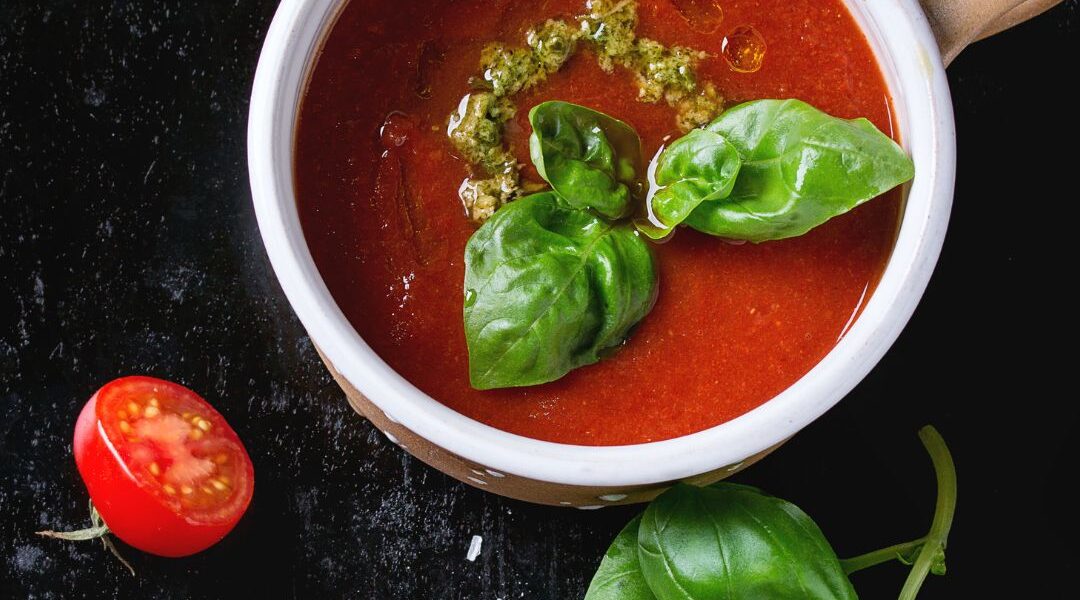
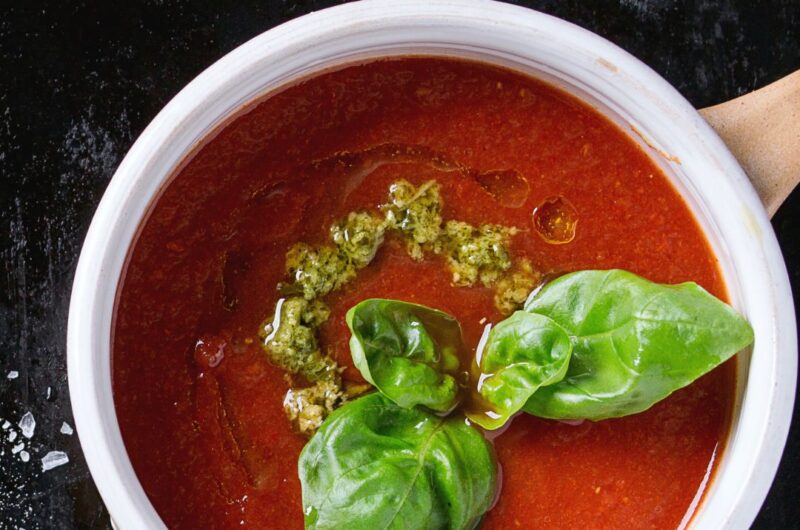
Gordon Ramsay’s roasted tomato soup is a rich, smoky bowl made with oven-roasted plum tomatoes, red onions, garlic, cayenne pepper, and balsamic vinegar, finished with cream and topped with a homemade sundried tomato pesto. It takes about 45 minutes start to table.
This recipe appears as “Creamy Tomato Soup with Sundried Tomato Pesto” in Gordon Ramsay’s Ultimate Home Cooking, where he says it can be “easily improved by employing a few cheffy tricks” and that “roasting the tomatoes first really helps to intensify their flavour and the charred edges give a lovely smoky quality.” He suggests serving it with crusty bread or his Welsh rarebit.
The technique that sets this apart: he starts the tomatoes cut-side down on a hot roasting tray on the hob before transferring to the oven. That initial sear on direct heat caramelises the sugars against the hot pan, so by the time the oven finishes the job, you get charred, concentrated tomatoes that taste nothing like raw ones simmered in stock.
Gordon Ramsay Roasted Tomato Soup Recipe
Course: SoupsCuisine: British, AmericanDifficulty: Easy4
15
minutes30
220
kcal45
Oven-roasted tomato soup from Gordon Ramsay’s Ultimate Home Cooking, seared on the hob first then finished in the oven for deep caramelisation. The sundried tomato pesto stirred through at the end is what lifts this above every other tomato soup recipe online.
Ingredients
- For the soup:
3 1/3 lbs (1.5kg) ripe plum tomatoes, cored and halved
2 red onions, peeled and sliced
2 garlic cloves, peeled and finely sliced
1/2 to 1 tsp cayenne pepper, to taste
Olive oil, for drizzling
1 tsp caster sugar (superfine sugar)
1 tsp aged balsamic vinegar
4 1/4 cups (1 litre) vegetable or chicken stock
7 tbsp (100ml) heavy cream (double cream)
Sea salt and freshly ground black pepper
- For the sundried tomato pesto:
2 to 3 tbsp pine nuts
2 1/2 oz (75g) sundried tomatoes, drained (oil reserved), finely chopped
1 3/4 oz (50g) Parmesan cheese, grated
Olive oil
Directions
- Preheat the oven to 350F (180C / Gas 4).
- Sear the vegetables: Place a roasting tray on the hob over medium-high heat. Add the onions, garlic, and cayenne pepper, drizzle with enough olive oil to coat, and cook for 3 to 4 minutes. Add the tomatoes cut-side down, season with a pinch of salt, pepper, and the sugar, then drizzle over the balsamic vinegar. Cook over high heat for 3 to 4 minutes until the tomatoes begin to caramelise. Stir well, then transfer to the oven for 20 to 25 minutes.
- Make the pesto: Toast the pine nuts in a dry frying pan until golden. Put the sundried tomatoes into a mortar and pound with a pestle until completely broken down. Season with a touch of salt, add the pine nuts, and continue to pound until you reach a pesto consistency. Stir in the Parmesan, then add olive oil and enough of the reserved sundried tomato oil to bring the pesto to a spooning consistency. You should get about 3 to 4 tablespoons.
- Build the soup: Place the tray of roasted tomatoes on the hob over medium heat and pour in the stock. Bring to the boil, then simmer for 4 to 5 minutes. Add the cream, stir well, and continue to simmer for 2 to 3 minutes.
- Blend and serve: Using a stick blender, blend the soup until almost smooth but still with a couple of chunky bits. For a more rustic texture, use a potato masher instead. Serve warm with dollops of pesto on top.
FAQs
Why does Ramsay start the tomatoes on the hob before roasting?
Most tomato soup recipes just toss everything into the oven raw. Ramsay sears the tomatoes cut-side down on a hot roasting tray first because that direct contact with the metal caramelises the natural sugars in 3 to 4 minutes.
By the time they go into the oven, the tomatoes already have a charred base that deepens into something smoky and sweet over the next 20 minutes. Without that hob step, you get roasted tomatoes. With it, you get caramelised ones, and the difference in the finished soup is obvious.
Why add cayenne pepper instead of regular chilli?
Cayenne works in the background. It adds warmth without a specific chilli flavour, so the tomato still tastes like tomato rather than a spiced soup.
Ramsay lets you adjust the amount between half a teaspoon and a full teaspoon depending on your taste. At the lower end you barely notice heat, just a faint tingle. At the higher end it cuts through the cream nicely. The cayenne also goes into the pan with the onions before the tomatoes, so it blooms in the oil and distributes evenly.
Why does he pound the pesto in a mortar instead of using a blender?
A blender spins the pine nuts and sundried tomatoes into a uniform paste. A mortar crushes them unevenly, which gives the pesto texture you can feel when it hits the soup.
Ramsay pounds the sundried tomatoes first until fully broken down, then adds the pine nuts and works them in. This two-stage approach means the tomato base is smooth while the nuts keep some crunch. The Parmesan goes in last with oil, binding everything into a spooning consistency that sits on top of the soup rather than dissolving into it.
How is this different from his Secrets version?
In Gordon Ramsay’s Secrets, his “My Roasted Tomato Soup” takes a more restaurant-style approach. The oven runs much hotter at 425F (220C), and he uses thyme and basil sprigs roasted directly with the tomatoes instead of cayenne.
The biggest difference is what goes into the blender. The Secrets version adds smoked sun-dried cherry tomatoes with a hickory flavour for depth, while the Home Cooking version gets its complexity from the sundried tomato pesto on top. The Secrets version also gets sieved for a silky finish and garnished with pan-fried cherry tomatoes on the vine, making it more of a dinner-party dish. If you enjoy roasted vegetable soups, his butternut squash soup uses a similar oven-first technique.
Why does Ramsay leave the soup slightly chunky?
He specifically says to blend “until almost smooth but still with a couple of chunky bits” and even suggests using a potato masher for a more rustic texture. This is a deliberate choice.
A perfectly smooth tomato soup feels like something from a can. Leaving small pieces of roasted tomato in the bowl gives each spoonful a slightly different texture, which keeps it interesting to eat. The chunks also hold onto the caramelised flavour from the roasting tray better than a fully blended soup does. For a smooth-style approach, his pumpkin soup gets sieved twice for a completely silky result.
Why add balsamic vinegar before roasting instead of after?
Drizzling balsamic over raw tomatoes at the table adds sharpness. Drizzling it over tomatoes in a scorching hot pan does something completely different because the vinegar reduces and caramelises almost instantly.
That hit of aged balsamic reacts with the sugar Ramsay adds at the same time, creating a sticky glaze on the bottom of the tray. When the stock goes in later, all of that concentrated flavour lifts off the pan and dissolves into the soup. The same book includes a tip about using sugar to bring out natural tomato sweetness, which works hand-in-hand with the acidity of the vinegar to balance the finished bowl.
Zaytouna Studio Team is the kitchen team behind Chef Ramsay Recipes. We cook Gordon Ramsay’s recipes from his cookbooks and videos in a home kitchen and write them up for yours, with US and metric measurements.