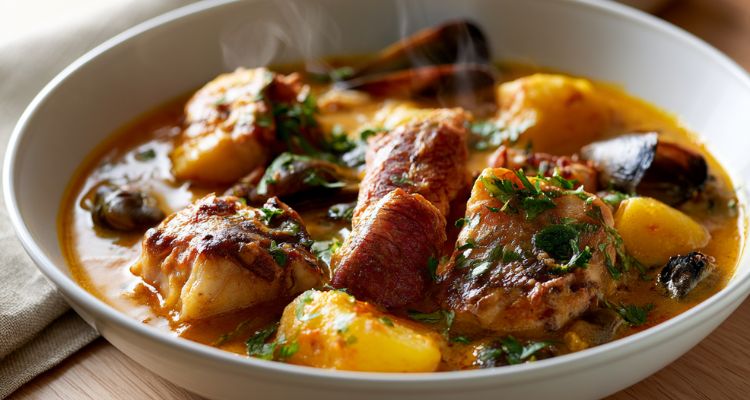

Gordon Ramsay’s seafood bisque is a rich, saffron-scented shellfish soup made with fennel, star anise, brandy, white wine, and fish stock, simmered for an hour then blended smooth and loaded with monkfish, red mullet, and mussels. It takes about 1 hour 30 minutes, though most of that is hands-off simmering.
This recipe appears as “Seafood Bisque” in Gordon Ramsay’s Make It Easy, listed in his “Cooking for a Crowd” chapter. In Gordon Ramsay’s Secrets, he describes bisque as “light and delicate with an intense shellfish flavour” and shares a chef’s secret: “Noilly Prat is one of my secret flavourings. This classic vermouth with its hint of sweet aniseed is perfect for enhancing fish and shellfish.”
The technique that sets this apart: he reduces the wine down to a “syrupy consistency” before the stock goes in, then simmers the whole base for a full hour. Most home bisque recipes simmer for 20 minutes and wonder why the result tastes thin. That long, slow extraction draws every bit of flavour from the vegetables, tomatoes, and aromatics into the liquid before it ever meets the seafood.
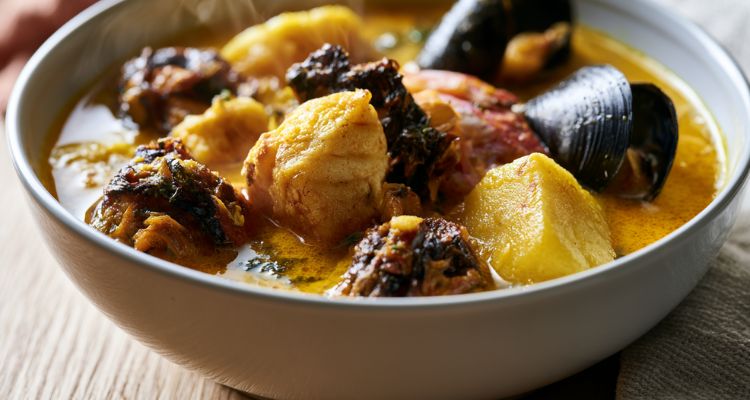
Gordon Ramsay Seafood Bisque Recipe
Course: SoupsCuisine: British, AmericanDifficulty: Medium4
20
minutes1
15
minutes310
1
hour35
A saffron and brandy shellfish soup from the “Cooking for a Crowd” chapter in Gordon Ramsay’s Make It Easy, scaled down to 4 servings. The bisque base simmers for a full hour before being blended and strained through a fine sieve, then finished with separately poached monkfish, red mullet, and steamed mussels.
Ingredients
- For the bisque base:
1 1/2 tbsp olive oil
1 shallot, finely chopped
1 fennel bulb, trimmed and finely sliced
2 celery sticks, sliced
1 carrot, chopped
1 star anise
1 tsp cayenne pepper
Generous pinch of saffron threads, plus extra for the potatoes
3 beef tomatoes, deseeded and chopped
3 tbsp brandy
1 cup (200ml) dry white wine
5 cups (1.2 litres) fish stock
Sea salt and freshly ground black pepper
- For the seafood and potatoes:
14 oz (400g) fresh mussels
2 medium potatoes, peeled and diced
7 oz (200g) monkfish fillet, cut into chunks
7 oz (200g) red mullet fillets, cut into 1 inch (3cm) pieces
Directions
- Build the aromatic base: Heat the olive oil in a large saucepan. Add the shallot, fennel, celery, carrot, star anise, cayenne, and a generous pinch of saffron threads. Cook, stirring, over a medium heat for a few minutes until the vegetables start to soften and the saffron colours the oil.
- Add the tomatoes: Lower the heat, add the chopped beef tomatoes, and cook for 5 minutes until they start to break down. The tomatoes provide acidity and body that stops the bisque tasting one-dimensional.
- Flambe and reduce: Add the brandy and let it bubble to reduce. Pour in the white wine and cook until the liquor has reduced down to a syrupy consistency. Don’t rush this stage because reducing the wine concentrates all the flavour before the stock dilutes it.
- Simmer the base: Stir in the fish stock and bring to a simmer. Cook gently for 1 hour with the lid slightly ajar. This long simmer is what gives the bisque its depth. A quick 20-minute simmer will taste like flavoured fish stock rather than bisque.
- Clean the mussels: While the base simmers, scrub the mussels thoroughly in cold water and pull away the beards. Discard any mussels that are open and don’t close when tapped.
- Cook the potatoes: Boil the diced potatoes in salted water with a few saffron threads for about 10 minutes until just tender, then drain. The saffron turns the potatoes golden and adds another layer of flavour.
- Blend and strain: Blitz the bisque base with a stick blender until smooth, then pass it through a fine sieve into a clean pan, pressing firmly with the back of a ladle to extract every drop of flavour. Discard the solids. Set the strained bisque aside.
- Steam the mussels: Heat a third of the remaining fish stock in a large pan, add the mussels, cover tightly, and cook for 3 to 5 minutes until they open. Discard any that stay closed.
- Poach the fish: Poach the monkfish and red mullet in the rest of the stock in a shallow pan for about 2 to 3 minutes until just cooked through. Don’t overcook the fish because it continues to cook in the hot bisque once assembled.
- Assemble and serve: Add the saffron potatoes to the strained bisque and reheat gently. Add the poached fish and mussels, then check the seasoning. Ladle into warmed bowls and serve with crusty bread.
FAQs
Why does Ramsay reduce the wine to a syrup before adding stock?
Alcohol carries flavour compounds that water can’t, so the wine extracts different things from the vegetables and aromatics than the stock does later. Reducing it down to a syrupy consistency before the stock goes in concentrates those compounds into a thick, intensely flavoured base.
If you add stock and wine at the same time, the wine flavour gets diluted immediately and you lose that concentration. The syrup stage takes about 10 to 15 minutes and you’ll smell the kitchen change as the alcohol cooks off and the sweetness of the wine comes forward. That sweetness balances the cayenne and saffron in the finished bisque.
Why poach the seafood separately instead of cooking it in the bisque?
The bisque base simmers for a full hour, and monkfish needs only 2 to 3 minutes. Cooking the fish directly in the base would turn it to mush long before the bisque develops its flavour.
Ramsay poaches each protein at the right time for its texture. Mussels steam separately in stock for 3 to 5 minutes, and the fish poaches in a shallow pan for just 2 to 3 minutes. Everything meets the bisque only at the very end, which means the broth has full depth and the seafood is perfectly tender. This is the same approach restaurant kitchens use: build the sauce first, cook the protein last.
Why use both star anise and saffron in a bisque?
Star anise brings a warm, liquorice-like depth that works with shellfish the same way it works in Chinese and Vietnamese broths. Saffron adds a floral, honey-like sweetness and that distinctive golden colour. Together they create a more complex flavour than either spice alone.
Ramsay uses this combination specifically in the Make It Easy version. His Lobster Bisque in Secrets takes a different direction with lemongrass and Cognac instead, proving there’s no single “right” spice profile for bisque. The star anise and saffron pairing leans French-Mediterranean, while the lemongrass version has a Southeast Asian edge. If you enjoy how saffron works with seafood, his leek and potato soup uses a similarly subtle spice approach with nutmeg.
How is this different from his Lobster Bisque in Secrets?
The Secrets version is a completely different beast. It’s made from lobster shells and heads chopped fine and sautéed until their flavour is extracted, then deglazed with Cognac and Noilly Prat instead of brandy and wine. He adds lemongrass for a fragrant edge and uses tomato purée alongside fresh tomatoes for a deeper colour.
The biggest difference is the straining. The Secrets bisque gets pressed hard through a sieve to crush every bit of flavour out of the shells, then reduced down to just 500ml for an intensely concentrated result. The Make It Easy version is more generous in volume and more approachable because it doesn’t require lobster shells. It builds its richness from a long simmer instead of shell extraction, making it far more practical for a weeknight.
Why does Ramsay pass the bisque through a fine sieve?
A blender can break down soft vegetables but it can’t produce the silky, restaurant-quality texture that defines a proper bisque. Passing the blended liquid through a fine sieve catches any fibrous bits of fennel, celery strings, or tomato skin that the blender missed.
Ramsay uses this technique in both his Make It Easy and Secrets bisques. In Secrets he specifically says to press the solids “with the back of a ladle to extract as much flavour as possible.” That pressing step is important because the pulp trapped in the sieve still holds flavour. Push hard, scrape the underside of the sieve, and you’ll get a richer bisque than if you just let it drip through. For another of his soups where straining makes the difference, his mushroom soup uses the same press-and-strain method for a velvety finish.
Can the bisque base be made ahead?
The base actually improves overnight. Make it through step 7, let it cool completely, and refrigerate for up to two days. The flavours continue to develop as the bisque sits, and any fat from the olive oil will solidify on top, making it easy to skim off for a cleaner finish.
When you’re ready to serve, bring the base back to a gentle simmer, then cook the potatoes, mussels, and fish fresh. The seafood should never be reheated because mussels turn rubbery and fish falls apart on the second round. Ramsay takes the same make-ahead approach in Secrets, where he notes that lobster shells can be frozen until you’re ready to make the bisque. Splitting the work across two days turns a 90-minute recipe into two manageable 45-minute sessions.

Zaytouna Studio Team is the kitchen team behind Chef Ramsay Recipes. We cook Gordon Ramsay’s recipes from his cookbooks and videos in a home kitchen and write them up for yours, with US and metric measurements.