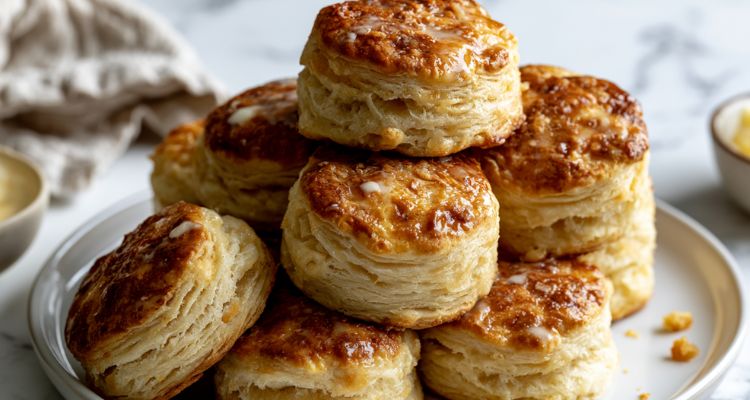

Gordon Ramsay biscuits recipe makes tall, flaky buttermilk biscuits with frozen grated butter, all-purpose flour (plain flour), and cold buttermilk in about 25 minutes. The high-heat bake and laminated dough give them layers that steam apart like puff pastry.
This recipe is adapted from Ramsay’s Sausage and Cheddar Buttermilk Biscuit on gordonramsay.com, stripped back to a plain biscuit base. No exact plain biscuit recipe appears in his published cookbooks, so we’ve removed the sausage, cheddar, and hot honey glaze while keeping his core dough technique intact.
The move that makes these different from most recipes: Ramsay grates frozen butter on a box grater directly into the flour. Grating coats every thin shred in flour before it can soften, so you get dozens of distinct fat layers through the dough that puff and separate in the oven.
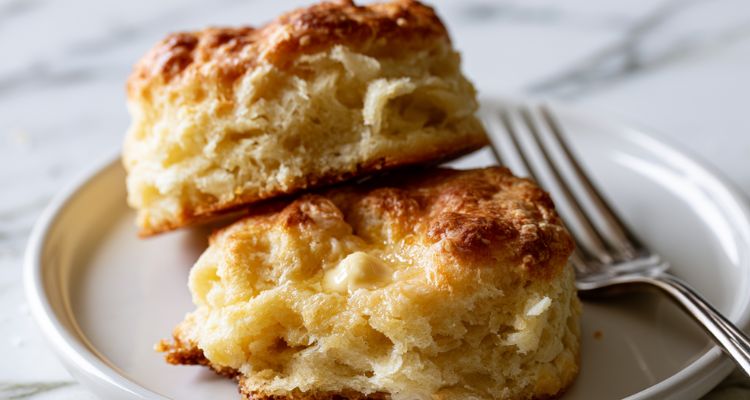
Gordon Ramsay Biscuits Recipe
Course: BreakfastCuisine: BritishDifficulty: Easy8
10
minutes15
220
kcalFlaky buttermilk biscuits adapted from Ramsay’s gordonramsay.com buttermilk biscuit method, with the sausage and cheddar removed to create a versatile plain base. His scone topping technique in Gordon Ramsay’s Ultimate Home Cooking uses the same principle of cold fat rubbed into flour and stamped into rounds.
Ingredients
2 cups (250g) all-purpose flour (plain flour)
1 tbsp baking powder
1/2 tsp baking soda (bicarbonate of soda)
1 tsp fine salt
1/2 tbsp granulated sugar
8 tbsp (115g) unsalted butter, frozen solid
3/4 cup (180ml) cold buttermilk, plus extra for brushing
1 tbsp melted butter, for finishing
Directions
- Preheat and prep: Set your oven to 425F (220C). Line a baking sheet with parchment paper.
- Mix the dry ingredients: Whisk the flour, baking powder, baking soda, salt, and sugar together in a large bowl until evenly combined.
- Grate the butter: Using the large holes of a box grater, grate the frozen butter directly into the flour mixture. Toss gently with a fork to coat every shred in flour. Work quickly so the butter stays cold.
- Add buttermilk: Pour in the cold buttermilk and stir with a spatula until the mixture just comes together into a shaggy dough. Stop as soon as there’s no dry flour left. Overmixing builds gluten, which makes biscuits tough instead of tender.
- Fold for layers: Turn the dough onto a lightly floured surface and pat it into a rectangle about 2.5cm (1 inch) thick. Fold the top third down and the bottom third up, like a letter. Rotate 90 degrees and repeat this fold two more times. This creates the laminated layers that separate in the oven.
- Bake: Place the biscuits on the lined baking sheet close together so their sides touch. Brush tops with a little extra buttermilk. Bake for 12 to 15 minutes until golden brown and puffed tall.
- Cut the biscuits: Pat the dough to about 2.5cm (1 inch) thick. Use a floured 6cm (2.5-inch) round cutter and press straight down without twisting. Re-roll scraps once if needed, though second-roll biscuits won’t rise quite as high.
- Finish and serve: Brush the hot biscuits with melted butter the moment they come out of the oven. Serve warm.
FAQs
Why does Ramsay grate frozen butter instead of cutting it in?
A pastry cutter creates uneven chunks, and your hands warm the butter as you work. Grating on a box grater produces thin, uniform shreds that get coated in flour instantly, so they stay cold longer and create more consistent layers through the dough. This is the same technique he uses in his cheese biscuits recipe on gordonramsay.com.
Why fold the dough like a letter instead of kneading it?
Each fold creates a new layer of butter between sheets of dough, similar to how puff pastry works but much faster. Three folds gives you roughly a dozen layers, which is enough to get visible flaking without making the dough too tight. Kneading would blend the butter into the flour evenly, which gives you a cakey crumb instead of flaky layers.
Why press the cutter straight down and never twist?
Twisting the cutter seals the edges of the dough by pressing the layers together, which stops them from separating during baking. A clean downward cut leaves the layers open so steam can push them apart. This is why re-rolled scraps never rise as tall: the layers have already been compressed.
Can you make these without buttermilk?
Buttermilk reacts with the baking soda to create extra lift, and its acidity keeps the gluten tender. If you don’t have buttermilk, add 1 tablespoon of white vinegar or lemon juice to 3/4 cup (180ml) of whole milk and let it sit for 10 minutes before using. The results are close, though the flavour is slightly less complex.
Why do the biscuits go on the baking sheet touching each other?
When biscuits press against each other as they rise, they push upward instead of spreading sideways. This gives you taller biscuits with soft sides. Ramsay uses the same principle with his Irish soda bread recipe, where the shaped loaf bakes in a contained skillet for a similar upward lift.
What should you serve these with?
These work as a breakfast side with scrambled eggs or alongside a hearty stew as a bread replacement. They’re also perfect split and loaded with sausage gravy. For brunch, serve them warm alongside American pancakes for a full spread.

Zaytouna Studio Team is the kitchen team behind Chef Ramsay Recipes. We cook Gordon Ramsay’s recipes from his cookbooks and videos in a home kitchen and write them up for yours, with US and metric measurements.