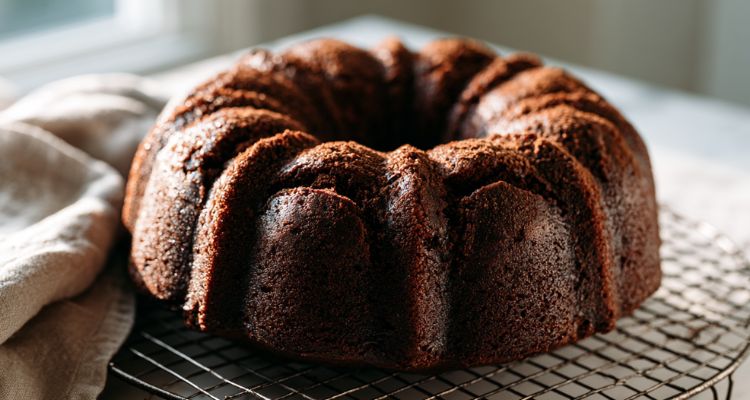

Gordon Ramsay’s chocolate cream cheese pound cake is a rich, dense cake made with dark chocolate, cream cheese (full-fat soft cheese), cocoa powder, butter and eggs. It takes about 1 hour 30 minutes from bowl to sliced loaf, with most of that time hands-off in the oven.
This recipe is adapted from Ramsay’s chocolate baking techniques across Ultimate Home Cooking and Bread Street Kitchen. His brownie recipe in Bread Street Kitchen calls for melting chocolate over “gently simmering water” with the bowl set snugly on top, and his banana upside-down cake in the same book demonstrates the creaming method that gives pound cakes their tight, velvety crumb. No exact pound cake appears in his published cookbooks, so this adaptation combines his proven methods with a classic cream cheese pound cake structure.
The technique that pulls this together: melting the chocolate separately and cooling it before folding into the batter. Ramsay does this in both his brownie and his flourless chocolate cake because hot chocolate seizes when it hits cold eggs or cream cheese, creating lumps instead of a smooth batter.
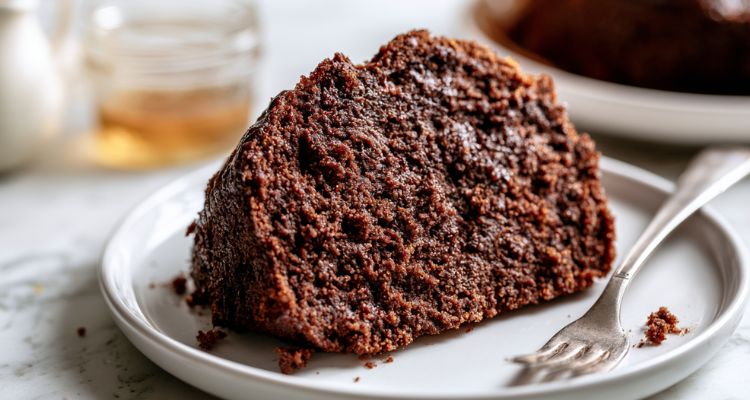
Gordon Ramsay Chocolate Cream Cheese Pound Cake
Course: DessertsCuisine: BritishDifficulty: Easy12
20
minutes1
10
minutes610
Adapted from Gordon Ramsay’s chocolate melting and creaming techniques in Bread Street Kitchen and Ultimate Home Cooking. The cream cheese adds moisture and tang that balances the dark chocolate, while Ramsay’s method of folding sifted dry ingredients in two batches keeps the crumb dense without turning it heavy.
Ingredients
1 cup (225g) unsalted butter, at room temperature, plus extra for greasing
8 oz (225g) cream cheese (full-fat soft cheese), at room temperature
3 cups (375g) all-purpose (plain) flour
1/2 cup (50g) unsweetened cocoa powder (preferably 70%)
1/2 tsp baking powder
1/2 tsp fine sea salt
3 cups (600g) granulated sugar
5 large eggs, at room temperature
4 oz (115g) dark chocolate (70% cocoa solids), broken into pieces
1 tbsp vanilla extract
1 cup (240ml) buttermilk, at room temperature
Directions
- Melt the chocolate: Place the dark chocolate in a heatproof bowl set over a pan of gently simmering water. The bowl must not touch the water underneath. Stir occasionally until fully melted and smooth, then remove from the heat and set aside to cool slightly. Ramsay uses this double-boiler method in both his brownie and flourless cake because it melts chocolate gently without scorching it.
- Prepare the tin: Preheat the oven to 325F (160C). Grease a 10-inch (25cm) bundt tin or two 9×5-inch (23x13cm) loaf tins with butter and dust with cocoa powder, tapping out the excess. Line the base of loaf tins with baking parchment.
- Sift the dry ingredients: Sift the flour, cocoa powder, baking powder and salt together into a bowl. Sifting is non-negotiable here because cocoa powder clumps badly, and those lumps won’t dissolve during baking.
- Cream the butter and sugar: Place the butter and sugar in a large mixing bowl and beat together until pale and creamy, about 4-5 minutes. This step builds the structure of the cake, so don’t rush it. The mixture should look noticeably lighter in colour before you move on.
- Add the cream cheese: Beat in the cream cheese until fully combined and smooth, scraping down the sides of the bowl. The cream cheese needs to be at room temperature or it will leave lumps in the batter that no amount of mixing will fix.
- Add the eggs: Add the eggs one at a time, beating well after each addition. This is the same method Ramsay uses in his Bread Street Kitchen banana cake because adding them all at once can split the batter.
- Combine wet ingredients: Stir the vanilla extract into the cooled melted chocolate, then beat this into the butter mixture until evenly combined. The chocolate must be cool enough that you can comfortably touch the bowl, otherwise it will start cooking the eggs.
- Fold in the flour: Add the sifted dry ingredients in three additions, alternating with the buttermilk in two additions, starting and ending with flour. Fold gently with a large metal spoon after each addition until just combined. Overmixing at this stage develops gluten, which turns a pound cake tough and chewy instead of tender.
- Bake the cake: Pour the batter into the prepared tin, smoothing the top with a spatula. Bake for 65-75 minutes, until a skewer inserted into the centre comes out clean. If the top browns too quickly, lay a loose piece of foil over it for the last 15-20 minutes.
- Cool and turn out: Cool in the tin for 15 minutes, then loosen the sides with a small knife and carefully invert onto a wire rack to cool completely. Pound cake slices best when fully cooled because the crumb is still setting as it cools down.
FAQs
Why melt the chocolate separately instead of adding cocoa powder alone?
Cocoa powder gives you chocolate flavour, but melted dark chocolate gives you both flavour and fat. The cocoa butter in the bar chocolate coats the flour proteins, which keeps the crumb tender and moist for days after baking.
This recipe uses both because they do different jobs. The cocoa powder deepens the colour and adds a slightly bitter edge, while the melted chocolate brings richness and that fudgy density you want in a pound cake. Ramsay takes the same approach in his Ultimate Home Cooking flourless chocolate cake, where he melts 250g of dark chocolate with butter as the base of the entire batter.
Why does cream cheese work in a pound cake?
Cream cheese adds moisture without thinning the batter the way extra milk or cream would. Its acidity also reacts with the baking powder to give the cake a subtle lift, so you get a dense crumb that isn’t heavy.
The tang from cream cheese balances dark chocolate in the same way Ramsay uses crème fraîche and yoghurt in other recipes to cut through richness. If you’ve ever had a chocolate cake that tastes flat and one-note, it’s usually missing that acidic contrast.
Why does Ramsay insist on the double-boiler method for melting chocolate?
Direct heat is the fastest way to ruin chocolate. It scorches on the bottom while staying solid on top, and once chocolate seizes into a grainy mess, there’s no saving it. The double-boiler keeps the temperature gentle and even.
Ramsay specifies this method in both Bread Street Kitchen and Ultimate Home Cooking, always with the same instruction: “the bowl must not touch the water underneath.” The steam does the work, not boiling water, so the chocolate melts gradually without any hot spots.
How is this different from a regular chocolate pound cake?
Most chocolate pound cakes rely on cocoa powder and butter for all the chocolate flavour. This version adds melted dark chocolate on top of the cocoa, which gives it a much more intense, almost brownie-like richness.
The cream cheese is the other difference. Traditional pound cakes use equal parts butter, sugar, eggs and flour. Replacing some of the butter with cream cheese changes the texture from crumbly to velvety, and the slight tang stops the sweetness from becoming overwhelming. If you enjoy Ramsay’s approach to rich chocolate baking, his dark chocolate brownies use the same melting technique with results that are just as dense and fudgy.
Why add eggs one at a time instead of all at once?
Ramsay adds eggs one at a time in his Bread Street Kitchen banana upside-down cake, beating well after each addition. The reason is emulsification: each egg needs to fully incorporate into the fat before the next one goes in.
If you dump all five eggs in at once, the batter splits. It looks curdled and grainy, and while the finished cake will still be edible, the crumb ends up coarse and uneven instead of tight and smooth. Taking an extra two minutes with the eggs is the easiest way to guarantee a better texture.
Can I use milk chocolate instead of dark?
You can, but the cake will taste sweeter and less intensely chocolatey. Ramsay specifies 70% cocoa solids in both his brownie and his flourless chocolate cake because higher cocoa content means more chocolate flavour and less sugar competing with the other ingredients.
If you do swap to milk chocolate, reduce the granulated sugar by about 1/4 cup (50g) to compensate. Milk chocolate already contains more sugar than dark, so keeping the recipe sugar the same will push the cake from rich into cloying.

Zaytouna Studio Team is the kitchen team behind Chef Ramsay Recipes. We cook Gordon Ramsay’s recipes from his cookbooks and videos in a home kitchen and write them up for yours, with US and metric measurements.