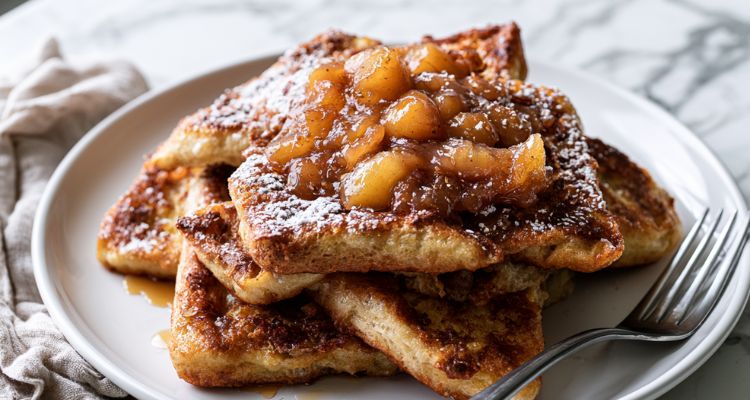
Gordon Ramsay’s eggy bread with apples is cinnamon-spiced French toast made from stale white bread, dipped in an egg and milk custard, and served with quick stewed apples. It comes together in about 25 minutes from fridge to plate.
This recipe appears as “Cinnamon Eggy Bread with Quick Stewed Apple” in Gordon Ramsay’s Ultimate Home Cooking, where he calls it a way of using up bread that’s “knocking around” the kitchen, the same way he treats bread and butter pudding. He pairs it with apples stewed in caramelised sugar for the perfect accompaniment.
The technique that sets it apart: the cinnamon and sugar go into the egg mixture itself, not sprinkled on after cooking. Mixing them in lets the sugar caramelise slightly as the bread fries, building flavour into the crust instead of just dusting it on top.
Gordon Ramsay Eggy Bread With Apples Recipe
Course: BreakfastCuisine: BritishDifficulty: Easy4
10
minutes15
400
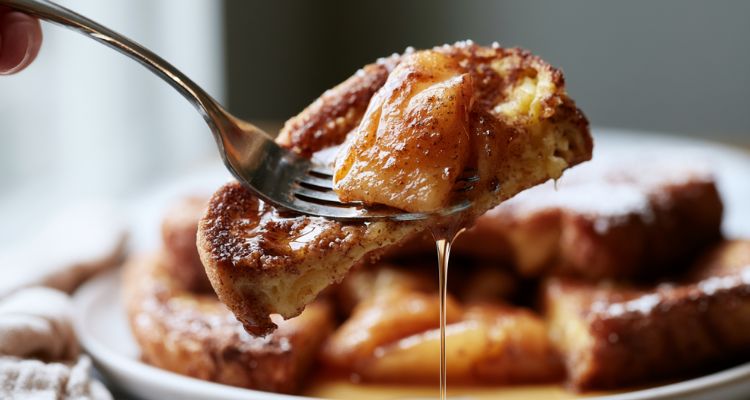
kcalStale white bread soaked in a cinnamon custard, pan-fried until crisp, and plated with apples melted down in caramelised sugar and butter. From Gordon Ramsay’s Ultimate Home Cooking, where it sits alongside his Eggs Benedict and baked porridge in the breakfast chapter.
Ingredients
- For the stewed apple:
2 tbsp (25g) caster sugar
14 oz (400g) eating apples, such as Braeburn, cored and chopped into chunks
1 oz (25g) butter
- For the eggy bread:
3 free-range eggs, beaten
4 tbsp whole milk
1 tsp ground cinnamon, plus extra for dusting
2 tbsp (25g) caster sugar
4 thick slices slightly stale white bread, halved into triangles
Butter, for frying
Icing sugar (powdered sugar), for dusting
Directions
- Melt the sugar: Melt the caster sugar in a small saucepan or sauté pan over low heat, swirling the pan to help it dissolve evenly. Don’t stir it, just swirl, or the sugar can seize and turn grainy.
- Stew the apples: Once the sugar has melted, add the apples and butter and cook for 2 minutes. Pour in a couple of tablespoons of water, bring to a simmer, and cook for 5-8 minutes over low heat, stirring now and then, until the apple begins to collapse but a few tender chunks remain. Set aside.
- Mix the custard: While the apples cook, whisk the eggs, milk, cinnamon, and sugar together in a bowl until combined.
- Soak the bread: Dip the bread triangles into the egg mixture, turning to coat, until saturated on both sides.
- Fry until golden: Heat a large frying pan over medium heat and add a knob of butter. Cook the eggy bread on each side until crisp and golden.
- Serve: Plate the eggy bread with the warm stewed apple alongside, dusted with a little icing sugar.
FAQs
Why does he mix the cinnamon and sugar into the egg custard instead of sprinkling it on top?
Most eggy bread recipes treat cinnamon sugar as a finishing touch, dusted over the cooked toast right before serving. Ramsay folds both into the egg and milk mixture before the bread ever touches the pan.
That changes what happens in the pan. As the coated bread fries, the sugar in the custard starts to caramelise against the hot butter, building a slightly crisp, spiced crust instead of leaving a dry powder sitting on a soft surface. The cinnamon also seasons the bread all the way through rather than just the top layer.
Why swirl the sugar instead of stirring it when starting the stewed apple?
Stirring melting sugar introduces air and can cause it to crystallise into a grainy, seized mess rather than a smooth liquid. Swirling the pan moves the sugar around evenly without disturbing the structure as it melts.
This matters because the apples go straight into that melted sugar. A smooth base means the fruit cooks in an even caramel rather than fighting through clumps of hardened sugar that never fully dissolve.
Why use eating apples like Braeburn instead of a cooking apple like Bramley?
Bramleys are bred to break down almost completely into a fluffy puree, which works for a classic apple sauce but turns to mush here. Braeburns and other eating apples hold their shape better under heat.
Ramsay’s method calls for the apple to “begin to collapse” while some chunks stay tender, not for it to disintegrate. An eating apple gives you that texture contrast: soft edges with a bit of bite still left in the centre of each piece.
Why does Ramsay specify “slightly stale” bread rather than fresh?
Fresh bread is soft and full of air pockets that collapse the moment they meet liquid, so the slices fall apart in the egg mixture before they reach the pan. Slightly stale bread has firmed up and dried out a little, giving it the structure to soak up the custard without disintegrating.
It’s also a practical, no-waste call. Ramsay frames this recipe as a way to use up bread that’s already going stale in the house, the same logic behind his bread and butter pudding, so there’s no need to buy bread specially for it.
What would pair well with this if I’m serving a full brunch spread?
If you want a savoury dish to round out the table, Ramsay’s scrambled eggs with smoked salmon gives you a contrast of textures and a protein hit alongside the sweetness of the eggy bread. For something else built around fruit, his apple tarte tatin uses the same caramelised-sugar approach to apples if you want to lean further into that flavour for dessert later in the day.
Zaytouna Studio Team is the kitchen team behind Chef Ramsay Recipes. We cook Gordon Ramsay’s recipes from his cookbooks and videos in a home kitchen and write them up for yours, with US and metric measurements.