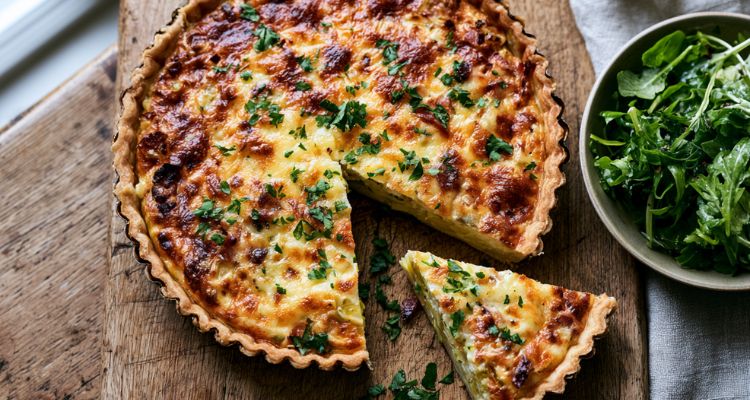
Gordon Ramsay’s quiche is a leek and pancetta quiche with Gruyère cheese and homemade shortcrust pastry, ready in about an hour. The filling is rich without being heavy because the ratio of vegetables to custard keeps every slice packed with flavour.
This recipe comes from Gordon Ramsay’s Ultimate Cookery Course, where he writes that quiche “is a really versatile dish that you can take in any direction you like,” as long as you keep the filling generous: “about two-thirds flavouring ingredients to one-third custard.” He also notes that quiches are often better the next day, once the custard sets and the flavours mingle.
The technique that separates this from a soggy pub quiche: he blind bakes the pastry twice, first with baking beans, then empty to dry out the base. That double bake creates a shell that stays crisp even under a wet custard filling, so the bottom never goes soft.
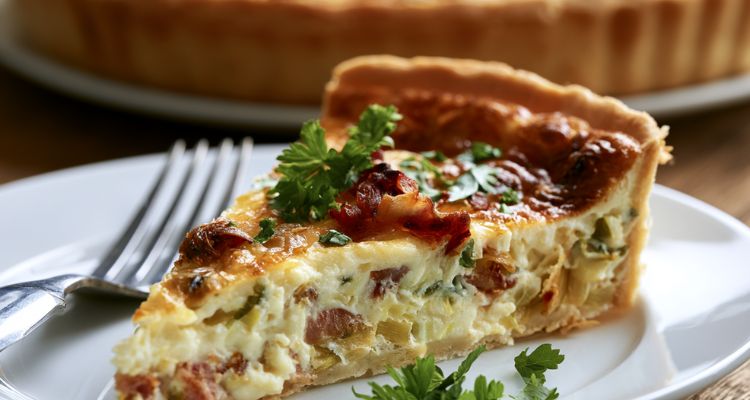
Gordon Ramsay Quiche Recipe
Course: BreakfastCuisine: BritishDifficulty: Easy2
30
minutes45
480
kcal1
15
minutesLeek and pancetta quiche from Gordon Ramsay’s Ultimate Cookery Course with homemade shortcrust pastry, Gruyère custard, and a two-stage blind bake. His Great British Pub Food features several savoury tarts using the same custard technique with different fillings, from asparagus to smoked salmon.
Ingredients
- For the shortcrust pastry:
1 2/3 cups (200g) plain flour (all-purpose flour), plus extra for dusting
Pinch of salt
7 tbsp (100g) butter, at room temperature, cubed
- For the filling:
7 oz (200g) pancetta lardons
Olive oil, for frying
2 leeks, trimmed and finely chopped
4 large eggs
4 tbsp heavy cream (double cream)
3.5 oz (100g) Gruyère cheese, finely grated
2 tbsp chopped flat leaf parsley
Sea salt and freshly ground black pepper
Directions
- Make the pastry: Sift the flour and salt into a mixing bowl. Using your fingertips, rub the butter into the flour, lifting the mixture up and dropping it back into the bowl. You want to keep the mixture light and airy. When it resembles fine breadcrumbs, mix in 2-3 tablespoons of cold water. Bring the pastry together, then knead lightly on a floured work surface to create a smooth, solid ball. Wrap in cling film (plastic wrap) and chill for 20 minutes.
- Blind bake: Line the chilled pastry case with greaseproof paper (parchment paper) and fill with ceramic baking beans or uncooked rice. Bake for 10-15 minutes. Remove the paper and beans, then bake for a further 5-8 minutes until golden. This second bake without the beans dries out the base so it stays crisp under the custard. Trim off the excess pastry with a sharp knife, then set the case aside.
- Cook the filling: Fry the pancetta in a large oiled frying pan over medium heat for 3-4 minutes until coloured and almost crisp. Add the leeks and sauté for 3-4 minutes until soft and completely cooked through. Drain to remove excess oil if necessary.
- Mix the custard: Beat the eggs and cream together in a bowl. Season with a pinch of salt and pepper. Add three-quarters of the Gruyère and stir in the leek and pancetta mixture. Mix well, then add the parsley. Taste and adjust the seasoning.
- Fill and bake: Pour the mixture into the cooked pastry case. Sprinkle the top with the remaining Gruyère. Cook in the oven for 15-20 minutes until golden and set.
- Rest before serving: Remove the quiche and allow to cool slightly before serving. The custard firms up as it rests, so cutting it straight from the oven will give you a runny slice.
FAQs
Why does Ramsay blind bake the pastry twice?
Most quiche recipes blind bake once with beans, pull them out, and pour the filling straight in. Ramsay adds a second bake of 5-8 minutes with the tin empty, which dries out the base completely before the wet custard goes in.
That extra step is what stops the dreaded soggy bottom. The pastry sets firm and golden on its own, creating a barrier that the egg mixture can’t soak through. If you skip it, the base absorbs moisture from the custard and turns pale and soft.
Why two-thirds filling to one-third custard?
Ramsay’s ratio is the opposite of what most recipes do. A typical quiche recipe loads up on eggs and cream with a scattering of filling on top, which gives you a wobbly egg pie that tastes bland in the middle.
His approach packs the case with leeks, pancetta, and cheese first, then pours just enough custard to bind everything together. Every bite has something in it. The custard becomes the glue, not the main event.
Why Gruyère instead of cheddar?
Gruyère melts smoother than cheddar and doesn’t release as much oil when heated. It turns silky in the custard rather than going stringy or greasy, which keeps the filling creamy instead of heavy.
The flavour is nuttier and more complex than cheddar too. Ramsay uses the same cheese in his Great British Pub Food asparagus tart, where he pairs it with spring onions and cream for a similar custard base. If you enjoy this quiche, his rocket salad makes a sharp, peppery side that cuts through the richness.
Why cook the pancetta until almost crisp before adding it?
Raw pancetta dropped into a custard filling steams rather than fries, so it stays soft and chewy. Cooking it first until almost crisp gives it a caramelised edge that holds up during the second bake in the oven.
The rendered fat from the pancetta also coats the leeks as they sauté in the same pan, so the leeks pick up that salty, smoky flavour without needing extra seasoning. Draining the excess oil afterwards stops the filling from being greasy.
Is this quiche better served hot or the next day?
Ramsay says quiches “are often better the next day, once the custard has had a chance to set properly and the flavours to mingle.” That’s not just a storage tip, it’s how he recommends eating it.
A freshly baked quiche is soft and delicate, which makes it hard to slice cleanly. After a night in the fridge, the custard firms up completely and the leek and pancetta flavours develop into something deeper. Bring it back to room temperature before serving rather than reheating it, because blasting it in the oven dries out the filling. A Caesar salad alongside turns it into a full lunch.
How does this compare to his savoury tarts in Great British Pub Food?
The Great British Pub Food chapter on pies and savoury tarts uses the same custard technique across four different tarts: asparagus and spring onion, smoked salmon and watercress, Bosworth goat’s cheese, and tomato with goat’s cheese and herbs.
The key difference is the pastry. His Pub Food tarts use a pre-made shortcrust recipe from the book, while the Ultimate Cookery Course quiche teaches you to make it from scratch by rubbing butter into flour by hand. The filling ratios stay consistent though, always generous with ingredients and light on custard, which means the two-thirds rule works no matter what you put inside.
Zaytouna Studio Team is the kitchen team behind Chef Ramsay Recipes. We cook Gordon Ramsay’s recipes from his cookbooks and videos in a home kitchen and write them up for yours, with US and metric measurements.