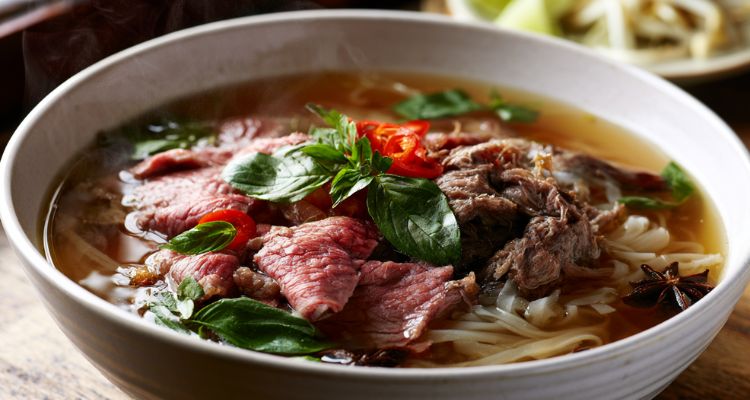

Gordon Ramsay’s Vietnamese noodle soup is a traditional beef pho built on a slow-simmered oxtail broth infused with star anise, cinnamon, and lemongrass, served over rice noodles with thinly sliced raw beef. It takes about 4 hours from start to bowl, though most of that is hands-off simmering.
This recipe appears as “Beef pho” in Gordon’s Great Escape: Southeast Asia, where Ramsay writes that he “met people who will travel great distances for a good bowl of Pho, although in Hanoi locals argued that the best version could be eaten there.” He recommends making the broth a day ahead so the fat can be skimmed cleanly.
What sets his version apart is roasting the oxtail bones before building the broth. That caramelisation adds a deeper, more complex base than simply boiling everything raw, which is how most home recipes shortcut pho.
Gordon Ramsay Vietnamese Noodle Soup Recipe
Course: SoupsCuisine: BritishDifficulty: Medium4
30
minutes3
366
kcalA traditional beef pho from Gordon’s Great Escape: Southeast Asia, built on roasted oxtail bones and dry-roasted whole spices simmered for 2 to 3 hours. The broth is best made a day ahead for cleaner flavour. His Healthy Appetite version swaps in pre-made beef stock for a quicker 30-minute weeknight take.
Ingredients
- Broth
4 1/2 lbs (2kg) oxtail, jointed and cut into pieces
3 onions, peeled and quartered
3-inch (7.5cm) knob of ginger, skin on, roughly chopped
3 carrots, peeled and roughly chopped
2 celery stalks, roughly chopped
2 tbsp vegetable oil
6 star anise
6 cloves
3-inch (7.5cm) cinnamon stick
1 tsp fennel seeds
1 tsp black peppercorns
2 kaffir lime leaves
1 lemongrass stalk, trimmed and bruised
3 bay leaves
3 tbsp fish sauce, plus extra to serve
3 tbsp palm sugar, plus extra to serve
- To serve
5 oz (150g) beef sirloin or fillet
5-7 oz (150-200g) small flat rice noodles
4 spring onions (scallions), finely sliced
1 small red chilli (chile), thinly sliced
Small handful of Thai basil leaves
Small handful of cilantro (coriander) leaves
3 1/2 oz (100g) beansprouts
2 limes, halved
Small handful of chive flowers (optional)
Directions
- Roast the bones: Preheat the oven to 425F (220C). Spread the oxtail pieces in a large roasting tin with the onions, ginger, carrots, and celery. Drizzle with a little vegetable oil to coat. Roast for 45 minutes to 1 hour, turning the bones over halfway, until evenly browned. Be careful not to let the onions and ginger burn, you just want them browned. Pick through the onion and ginger, discarding any burnt bits if necessary.
- Toast the spices: Place a large stockpot over medium heat. Toss in all the spices and peppercorns and dry-roast for 1 to 2 minutes until fragrant. Add the roasted oxtail bones and vegetables and mix well. Pour in 4 3/4 quarts (4.5 litres) of water or enough so the bones are fully submerged.
- Simmer the broth: Add the lime leaves, lemongrass, bay leaves, fish sauce, and palm sugar. Mix well. Simmer with the lid on for 2 to 3 hours, occasionally skimming off any excess grease and oils with a spoon. When ready, let it stand for a few minutes before gently passing through a fine sieve or cheesecloth. Shred the oxtail meat off the bones to serve with the soup. Discard everything else.
- Chill overnight: Leave the broth to cool, preferably overnight in the fridge, allowing the fat to separate and rise to the top. Once the fat has settled and cooled, remove it and discard. This step prevents the broth from becoming oily.
- Slice the beef: Cover the beef in cling film and place in the freezer for 30 minutes. This firms it up so you can slice it thinly against the grain. Remove, unwrap, and cut into thin strips.
- Cook the noodles: Soak the rice noodles in hot water for 20 minutes or according to the packet instructions. Drain, then cook for 1 minute in lightly salted boiling water. Drain again. Don’t let the noodles overcook, you still want them slightly firm.
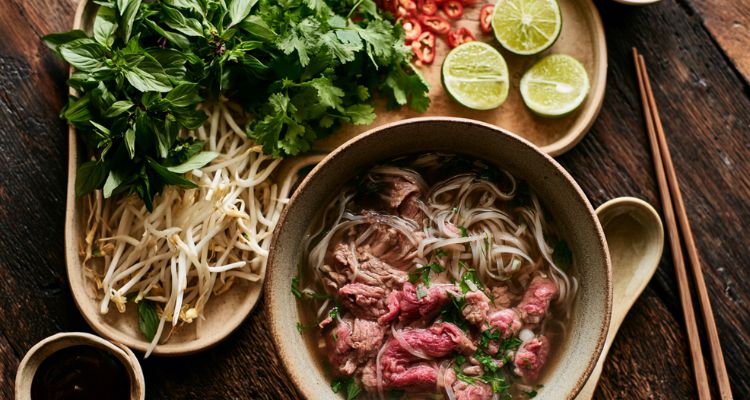
- Arrange the garnishes: On a plate or platter, carefully arrange the spring onions, chilli, Thai basil, cilantro (coriander), beansprouts, lime wedges, and chive flowers if using. This goes to the table so everyone picks their own.
- Assemble and serve: Reheat the broth and bring to a boil. Taste and add more fish sauce or palm sugar if necessary. Place a heap of noodles in large soup bowls and carefully place slices of the raw beef and the shredded oxtail meat on top. Ladle the boiling hot broth over the beef. The heat of the broth will cook the raw beef slices through. Serve immediately with the garnish platter alongside.
FAQs
Why does Ramsay roast the oxtail bones before simmering?
Roasting the bones at 425F (220C) for up to an hour does something that boiling alone can’t. The high heat caramelises the surface of the bones and the vegetables, which creates hundreds of new flavour compounds through the Maillard reaction.
When those browned bones go into the stockpot, all that concentrated flavour dissolves into the liquid as it simmers. Skip the roasting step and the broth tastes cleaner but thinner, more like a stock than the deep, savoury base that makes pho worth the effort.
Why does he dry-roast the spices separately?
Ramsay toasts the star anise, cloves, cinnamon, fennel seeds, and peppercorns in the dry stockpot before adding any liquid. Heat activates the volatile oils in whole spices, which is why you can smell them almost immediately.
Pre-ground spices from a jar have already lost most of those oils through oxidation. Using whole spices and toasting them yourself means the cinnamon and star anise come through clearly in the finished broth rather than sitting in the background. If you’ve ever wondered why restaurant pho tastes more aromatic than homemade, this step is usually the difference.
Why make the broth a full day ahead?
Ramsay specifically says to cool the broth overnight so the fat separates and rises to the top. Once chilled, it solidifies into a firm layer you can lift off in one piece.
This matters because pho broth should be clean and clear. If you serve it straight from the pot, dissolved fat makes it greasy and cloudy, which dulls the flavour of the spices. The overnight rest also lets the aromatics continue to develop, so the broth tastes more rounded the next day. If you’re short on time, you can chill it for a few hours and skim with a spoon, but the results won’t be as clean.
Why freeze the beef before slicing it?
Ramsay wraps the beef in cling film and freezes it for 30 minutes before slicing. This firms up the muscle fibres just enough to cut paper-thin slices against the grain, which is nearly impossible with room-temperature meat.
Thin slicing is essential because the raw beef cooks entirely from the heat of the boiling broth poured over it at the table. Thick slices won’t cook through, so you’d end up with raw centres. If you’re using sirloin rather than fillet, the 30-minute freeze also makes it easier to trim away any sinew.
How is this different from his Healthy Appetite version?
His Healthy Appetite version takes a completely different approach to the broth. Instead of roasting oxtail and simmering for hours, it starts with 6 1/3 cups (1.5 litres) of pre-made beef stock infused with star anise, cloves, cinnamon, cardamom, fish sauce, and sugar for just 30 minutes. You could have it on the table in under an hour.
The beef treatment differs too. The Healthy Appetite version marinates beef fillet with grated ginger, garlic, and sesame oil, then simmers it in the broth for just 30 seconds. The Great Escape version uses raw beef sliced thin and cooked by the boiling broth as it’s ladled over. Both work, but the from-scratch broth has noticeably more depth because of those roasted bones. If you want a solid pho on a weeknight, his Healthy Appetite approach is the way to go. For the weekend version that fills the whole house with spice, it’s this one.
Why serve the garnishes on a separate platter?
Ramsay notes that “in Vietnam they serve this alongside a platter of garnishes” and calls it “a really great idea.” The reason is both practical and cultural. Thai basil, cilantro (coriander), beansprouts, chilli, and lime wedges all react differently to heat. Basil wilts and loses its anise flavour within seconds in hot broth, while beansprouts go limp if they sit too long. Serving them separately lets each person add what they want, when they want, so every bite stays fresh. It also means you can make one pot of pho for a group and everyone customises their own bowl. If you’re serving this for your Tom Kha Gai and noodle soup night, the garnish platter setup works across both dishes.

Zaytouna Studio Team is the kitchen team behind Chef Ramsay Recipes. We cook Gordon Ramsay’s recipes from his cookbooks and videos in a home kitchen and write them up for yours, with US and metric measurements.