

Gordon Ramsay’s lobster bisque is a light, smooth soup made from the heads and shells of two lobsters, simmered with Noilly Prat, tomatoes and herbs, strained and finished with cream. It uses no lobster meat at all, takes about an hour and a half and serves two or three as a starter.
The real work is the chopping. A heavy knife or cleaver breaks the shells into small pieces, since the finer they are, the more flavor they give up, he explains. The soft parts in the heads stay in too, for the same reason.
Pressing the shells hard against the sieve with a ladle squeezes out the last of that flavor. What’s left is a thin broth that boils down and takes some cream, so salt and cautious pinches of cayenne go in only at the very end.
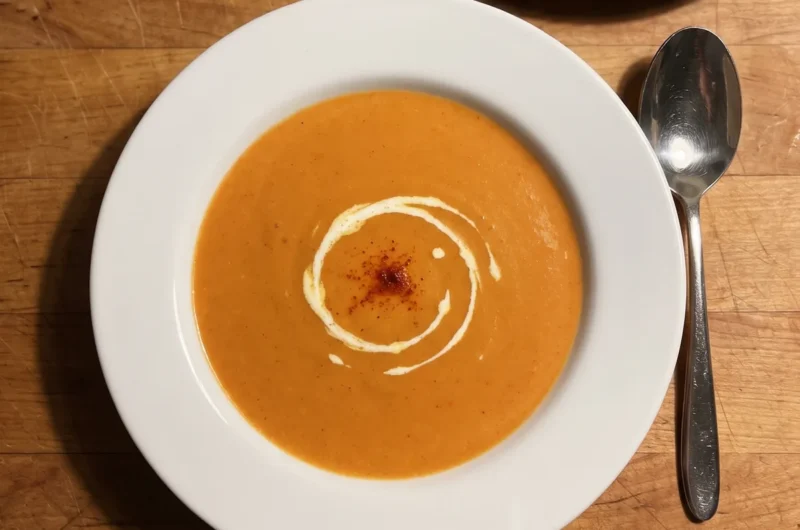
Gordon Ramsay’s Lobster Bisque
Course: SoupsCuisine: FrenchDifficulty: Medium3
20
minutes1
5
minutes450
An intense shellfish broth of lobster shells, Noilly Prat and tomato, strained smooth and finished with cream.
Ingredients
- For the bisque:
shells and heads of 2 lobsters, cooked or raw
6 tablespoons olive oil
1 medium onion, finely chopped
2 carrots, finely chopped
1 celery rib or ½ fennel bulb, chopped
1 fat garlic clove, chopped
2 lemongrass stalks, chopped
a generous pinch of saffron threads (optional)
2 teaspoons Cognac
¾ cup plus 1 tablespoon (200 ml) Noilly Prat or dry vermouth
4¼ cups (1 liter) fish stock
3 plum (Roma) tomatoes, chopped
1 tablespoon tomato paste
1 large sprig each of basil, tarragon and parsley
1 bay leaf
⅓ cup plus 1 tablespoon (100 ml) heavy cream
up to a generous pinch of cayenne pepper, to taste
sea salt and freshly ground black pepper
Directions
- Chop: Chop the lobster shells and heads into small pieces with a large heavy knife or cleaver, keeping the soft tissue inside the heads.
- Fry: Heat half the oil in a large saucepan over medium-high heat and fry the shells and heads for about 5 minutes, stirring, until they smell toasty. Lift them out with a slotted spoon.
- Soften: Heat the rest of the oil in the pan, add the onion, carrots, celery or fennel, garlic and lemongrass and cook for about 5 minutes, until softened. Sprinkle in the saffron, if using, and cook for 30 seconds.
- Deglaze: Add the Cognac, then the Noilly Prat, and let it bubble until reduced by half. Return the shells to the pan with the stock, tomatoes, tomato paste and herbs, and season with pepper only.
- Simmer: Bring to a boil, lower the heat and simmer uncovered for 20 minutes.
- Strain: Pour everything through a large fine-mesh sieve into another pan, pressing hard on the shells with the back of a ladle.
- Reduce: Boil the strained liquid for about 15 minutes, until it’s down to about 2 cups (500 ml). Stir in the cream and simmer gently for 4 to 5 minutes.
- Season: Taste, then add salt and the cayenne a pinch at a time. Serve hot.
Notes
- It makes about 2½ cups, enough for 2 or 3 small bowls as a starter. To serve 4 to 6, double everything, allowing longer for the reducing.
- Cooked lobster shells keep in the freezer for up to 3 months, so freeze them whenever you serve lobster.
- Choose a low-salt boxed fish or seafood stock, since the salt only goes in at the end.
- Brandy works in place of the Cognac. Use the fennel instead of celery if you want a stronger aniseed note.
- The strained broth keeps for 2 days in the fridge or 3 months in the freezer before the cream goes in.
FAQs
Can I use crab or langoustine shells instead?
Yes, langoustine and crab shells are suitable too, he says, and a mix works if you’re short of lobster. Freeze whatever shells you collect until you have about two lobsters’ worth.
What can I use instead of Noilly Prat?
Any dry white vermouth, which is the swap the recipe gives. Noilly Prat is one of his secret flavorings, a French vermouth with a hint of sweet aniseed that suits fish and shellfish.
He often uses it with a little Cognac, and keeps an open bottle in the pantry because it’s fortified like sherry, though it stays fresher in the fridge.
Dry white wine works at a pinch, but you lose that aniseed note.
What do I do with the lobster meat?
If you’re cooking whole lobsters for this, make his poached lobster with potato and arugula salad. In Secrets that recipe sends the heads straight to this bisque, and it’s one of the salads on our lobster salad page.
To get every bit out of the claws, knuckles and tail, follow his lobster meat video.
Is this the bisque on his restaurants’ website?
No, that one is his Lobster and Cornish Crab Bisque, a big restaurant recipe that’s covered on our seafood bisque page. It’s made with crab bodies as well as lobster heads, flambéed with brandy and served with a brandy butter.
This one is lighter, built on Noilly Prat and lemongrass, with under half a cup of cream for 2 or 3 bowls.
Can I serve lobster bisque cold?
Yes, though he does it with a different recipe. His lobster soup with summer vegetables in Passion for Flavour (1996) is served chilled.
He calls it a very different style of lobster bisque, almost a main meal, which he first saw in the French Mediterranean. Its lobster stock is reduced, steeped with cream, tarragon and basil, then strained and chilled.
Small whole lobsters of 12 to 16 ounces are poached and sliced into each bowl with baby vegetables and chanterelles.

Zaytouna Studio Team is the kitchen team behind Chef Ramsay Recipes. We cook Gordon Ramsay’s recipes from his cookbooks and videos in a home kitchen and write them up for yours, with US and metric measurements.