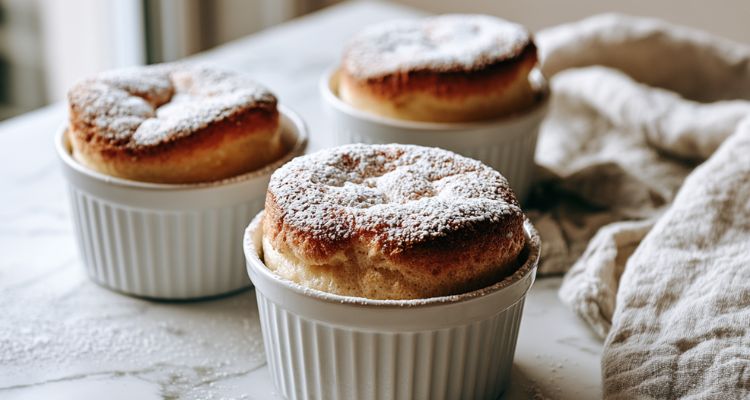

Gordon Ramsay passion fruit soufflé recipe is a light, risen dessert built on a crème pâtissière base with fresh passion fruit and banana, baked at 375F (190C) for just 10 to 12 minutes. It makes 6 to 8 individual soufflés and works as a showstopping finish to any dinner.
The recipe comes from Gordon Ramsay’s Sunday Lunch, where he credits it to Angela Hartnett at the Connaught, calling it “amazingly good.” He notes that “the banana and passion fruit marry perfectly, giving the soufflé an extraordinary, delicate and subtle flavour.”
The technique that sets this apart is the crème pâtissière base instead of a simple fruit purée. Most home soufflé recipes fold fruit directly into whipped whites, which collapses fast. A thick pastry cream base gives the meringue something stable to grip, so the soufflé holds its rise longer at the table.
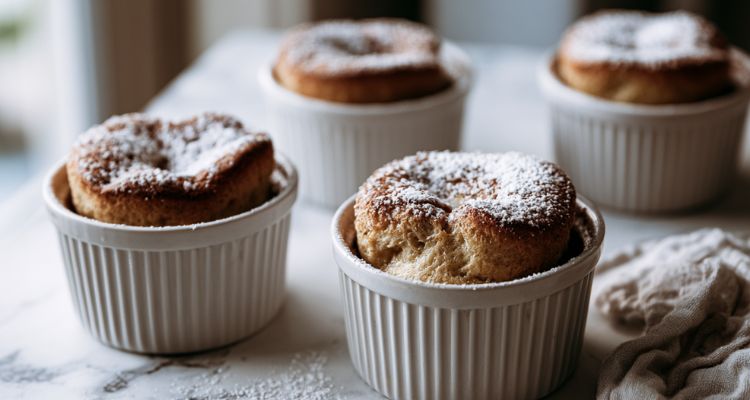
Gordon Ramsay Passion Fruit Souffle Recipe
Course: DessertsCuisine: BritishDifficulty: Easy6-8
30
minutes10
195
kcalA crème pâtissière-based soufflé from Gordon Ramsay’s Sunday Lunch, combining passion fruit and banana into a single base before folding through meringue. Ramsay’s Teaches Cooking II MasterClass covers his “double varnish” butter technique and sugar timing for whipping whites, both applied here.
Ingredients
- Crème pâtissière base:
2/3 cup (150ml) whole milk
scant 1/2 cup (100ml) heavy cream (double cream)
2 tbsp (15g) all-purpose flour (plain flour)
1 tbsp (10g) cornstarch (cornflour)
3 large egg yolks
1/4 cup (50g) caster sugar (superfine sugar)
- Soufflé:
4 ripe passion fruit
1 banana, about 3.5 oz (100g), peeled
Squeeze of lemon juice
2 tbsp banana liqueur (optional)
About 3/4 oz (20g) butter, melted, for brushing
1/4 cup (50g) caster sugar, plus extra for dusting
2 large egg whites
Icing sugar (powdered sugar), for dusting
Directions
- Make the crème pâtissière: Heat the milk and cream in a heavy saucepan until almost boiling. Sift the flour and cornstarch together. Beat the egg yolks and sugar in a large bowl, then mix in the flour. Add a splash of hot creamy milk and whisk until smooth, then gradually whisk in the rest. Pour back into the pan and whisk over medium-low heat for 3 to 5 minutes until thickened and smooth. Transfer to a bowl, cover, and cool to room temperature, stirring occasionally to stop a skin forming.
- Prepare the fruit base: Halve the passion fruit and scoop the seeds and juice into a sieve set over a bowl. Press to extract the juice, then pour into a blender. Break the banana into pieces and add with the lemon juice and liqueur if using. Blitz until smooth, then stir this mixture into the cooled crème pâtissière.
- Prep the ramekins: Brush 6 to 8 deep ramekins with a generous layer of melted butter using upward vertical strokes. This helps the soufflé climb the sides as it rises. Dust the insides with caster sugar or grated chocolate, then chill to set.
- Preheat the oven: Set it to 375F (190C). Don’t open the door once the soufflés go in until they’re almost ready, or they may collapse.
- Whip and fold: Whisk the egg whites in a clean bowl to firm peaks. Wait until you’re about two-thirds through whipping before gradually adding the 1/4 cup caster sugar, a spoonful at a time, to make a firm, glossy meringue. Whisk a third of the meringue into the crème pâtissière base to loosen it, then very carefully fold in the rest using a large metal spoon. Don’t stir, because you’ll knock out the air that makes it rise.
- Fill and bake: Divide the soufflé mix among the prepared ramekins. Tap them on the work surface to level the mixture, smooth the tops with a palette knife, then run the knife around the inside edge. This clean rim helps the soufflés rise evenly. Sit the ramekins on a wide baking tray and bake for 10 to 12 minutes until well risen and lightly golden on top. They should wobble gently in the middle when ready.
- Serve immediately: Dust with icing sugar and bring straight to the table. Soufflés wait for nobody.
FAQs
Why does Ramsay use a crème pâtissière base instead of just folding fruit into egg whites?
A plain fruit purée is thin and wet, so it weighs down the meringue and makes the soufflé collapse almost immediately after leaving the oven. Crème pâtissière is thick and stable, which gives the whipped whites something to hold onto as they set during baking.
The other advantage is flavour. A pastry cream base carries egg yolks, sugar, and dairy, so the soufflé tastes rich rather than just fruity. You get the passion fruit sharpness layered over a custard-like backdrop, which is why this version holds up against something like Ramsay’s crème brûlée as a dinner party closer.
Why does he brush butter upward instead of just greasing the ramekins?
Vertical brush strokes create tiny grooves that run from bottom to top inside the ramekin. As the soufflé batter heats and expands, it grips those grooves and climbs the sides evenly instead of sliding or sticking in random spots.
In his MasterClass, Ramsay calls this a “double varnish” and applies two coats. He also runs a clean finger around the top rim after filling to create a small channel, which stops the mixture from catching on the edge and helps form those crisp “love handles” that spill over the top.
Why is the banana in this recipe and not optional?
The banana isn’t a supporting player here. Passion fruit juice on its own is very sharp and acidic, so it would make the soufflé taste sour and one-dimensional. The banana provides natural sweetness and body that rounds out the tartness without needing extra sugar.
Ramsay specifically says the two fruits “marry perfectly.” If you remove the banana, you’d need to rebalance the sugar and the base would be thinner, which changes the texture of the finished soufflé entirely.
When should you add sugar to the egg whites?
Wait until you’re roughly two-thirds through whipping before adding sugar. If you add it too early, the weight of the sugar stops the whites from reaching their full volume and the soufflé won’t rise properly.
In his MasterClass, Ramsay taps the sugar dish gently so only a small sprinkle falls into the whites at a time. This gradual approach dissolves the sugar into the foam rather than deflating it. The same principle applies when making white chocolate mousse, where overworked or poorly timed egg whites ruin the texture completely.
Can the crème pâtissière base be made ahead?
Yes, and Ramsay builds his Sunday Lunch timeline around this. The base can be made earlier in the day and kept at room temperature, or refrigerated for up to three days. Bring it back to room temperature before folding in the meringue, because a cold base will deflate the whites on contact.
This means the only last-minute work is whipping the egg whites and folding. From the moment you start whisking to pulling them from the oven is about 15 minutes, which is manageable even when you’re hosting.
How do you know when the soufflé is done without opening the oven?
Watch through the glass door. The soufflés should have risen well above the rim, turned lightly golden on top, and have a gentle wobble in the centre when the tray is nudged. A firm centre means it’s overbaked and the inside will be dry instead of creamy.
Ramsay’s rule is simple: don’t open the door until they’re almost ready. A blast of cold air drops the oven temperature and can collapse a soufflé that’s still setting. If you don’t have an oven window, check at the 10-minute mark quickly and close the door within two seconds. Pair these with something simpler like a chocolate tart for guests who want a less dramatic option.

Zaytouna Studio Team is the kitchen team behind Chef Ramsay Recipes. We cook Gordon Ramsay’s recipes from his cookbooks and videos in a home kitchen and write them up for yours, with US and metric measurements.