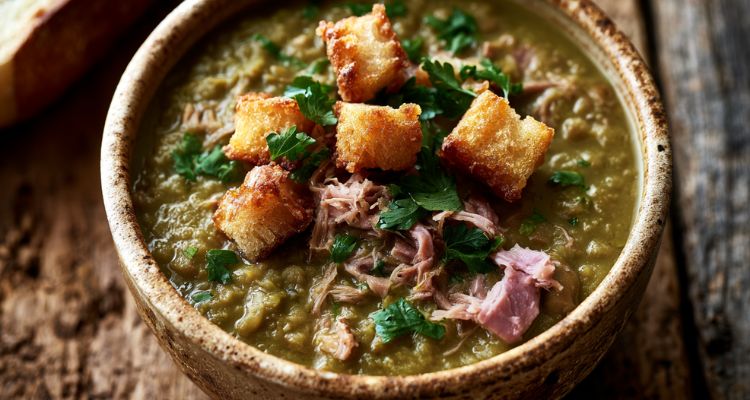
Gordon Ramsay’s split pea soup is a thick, smoky soup built on dried green split peas simmered in smoked ham hock stock, finished with shredded ham and butter-fried croutons. It takes about 5 hours total, though most of that time is hands-off.
Called “London Particular” in Gordon Ramsay’s Great British Pub Food, he writes that “London was often blanketed in a thick heavy fog, referred to as a ‘pea souper,’ and this is how this soup acquired its name.” He prefers smoked ham hock over the traditional unsmoked gammon for a more intense, smoky base.
The technique that makes this version work: Ramsay cooks the split peas directly in the ham hock poaching liquid instead of plain water. The peas absorb that smoky, meaty stock as they break down, so the ham flavour runs through every spoonful rather than sitting on top as a garnish.
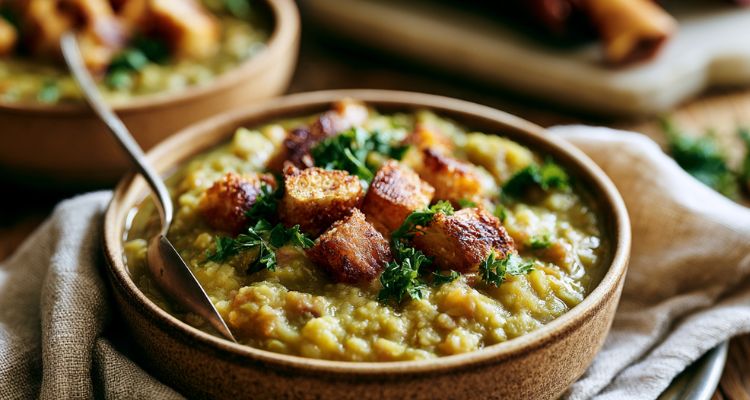
Gordon Ramsay Split Pea Soup Recipe
Course: SoupsCuisine: BritishDifficulty: Easy4-6
20
minutes4
30
minutes255
4
hours50
A classic British “London Particular” from Gordon Ramsay’s Great British Pub Food, blended smooth and finished with shredded ham stirred back through. The same book’s pease pudding recipe even tells you to save leftover poaching stock specifically to make this soup.
Ingredients
1 smoked ham hock, about 2.2 lbs (1kg), soaked overnight in plenty of cold water
1 large onion, peeled and halved
1 large carrot, peeled and cut into 3 pieces
1 celery stick, trimmed and cut into 3 pieces
1 tsp white peppercorns
1 bouquet garni (1 bay leaf, a few thyme or parsley sprigs, tied together)
6 1/3 to 8 1/2 cups (1.5–2 litres) water
1 2/3 cups (300g) dried split green peas, soaked overnight in cold water
Sea salt and black pepper
- Croutons
1 day-old thin French stick (baguette)
4 tbsp olive oil
2 tbsp (30g) butter
- Garnish
Flat-leaf parsley leaves
Directions
- Simmer the hock: Drain and rinse the soaked ham hock, then place it in a large pan. Add the onion, carrot, celery, white peppercorns and bouquet garni, then pour in enough cold water to cover. Bring to a simmer and skim off the scum and froth that rises to the surface. Simmer gently for 2 1/2 to 3 hours, topping up with boiling water as necessary, until the meat is tender and comes away from the bone easily.
- Shred the ham: Lift the ham hock out and set aside to cool slightly. Strain the stock and return it to the pan. When the hock is cool enough to handle, shred the meat into pieces and discard the bone and skin.
- Cook the peas: Drain the soaked split peas and add them to the pan of ham stock. Bring to a simmer and cook for 1 1/2 to 2 hours until the peas are completely soft.
- Blend the soup: Puree using a hand-held stick blender or regular blender until smooth. Return to the pan to reheat. If the soup is too thick, add a little boiling water to thin it out. If it’s not thick enough, simmer until reduced to the consistency you want. Taste and adjust the seasoning, then stir the shredded ham back through and reheat.
- Fry the croutons: Cut the French stick into small bite-sized pieces. Heat the olive oil and butter in a small frying pan. When hot, add the bread pieces and toss in the foaming butter and oil for about 3 minutes until golden brown and crisp. Remove with a slotted spoon and drain well on kitchen paper.
- Serve the soup: Ladle into warm bowls and scatter a few croutons and parsley leaves on top. Hand the rest of the croutons round separately.
FAQs
Why does Ramsay use smoked ham hock instead of unsmoked gammon?
He addresses this directly in the headnote. Traditional London Particular recipes call for boiled unsmoked gammon, but Ramsay says they prefer smoked ham hock because it gives the soup “an intense and smoky base flavour.”
The smoking process adds a layer of depth that unsmoked meat can’t match. Since the split peas cook in that same poaching liquid, the smokiness carries through the entire bowl rather than just the meat.
Why cook the split peas in the ham stock instead of water?
This is the key move in the whole recipe. Dried split peas are like sponges: they absorb whatever liquid they cook in as they break down. Cooking them in plain water gives you a bland pea puree that needs heavy seasoning after the fact.
By simmering them in stock that’s already spent 3 hours extracting flavour from ham hock, vegetables and aromatics, every pea soaks up that smoky, savoury base. The flavour is built in, not added on.
How is this different from a pea and ham soup made with fresh peas?
Completely different dish. A pea and ham soup made with fresh or frozen peas is bright green, light bodied, and comes together in under an hour. The peas keep their fresh, sweet flavour.
Split pea soup is earthy, dense, and khaki-coloured. The dried peas break down completely during the long simmer, creating a thick, porridge-like texture that coats a spoon. It’s a winter warmer where the other is a spring soup.
Why does Ramsay soak both the ham hock and split peas overnight?
The ham hock soak draws out excess salt from the curing process. Skip it and the soup can end up unpleasantly salty, which is why Ramsay specifies soaking in “plenty of cold water.” You can’t fix over-salted split pea soup because the peas have already absorbed the salt as they cooked.
The split peas soak for a different reason: it cuts their cooking time roughly in half and helps them break down more evenly. Unsoaked peas can take 3 to 4 hours and often cook unevenly, with some mushy and others still firm.
Can you use yellow split peas instead of green?
You can, though the result will taste different. Ramsay uses yellow split peas in his Tadka Dal from Gordon Ramsay’s Great Escape, where he notes they’re milder and slightly sweeter than green ones.
Green split peas have a more earthy, robust flavour that stands up better to the smoky ham. Yellow split peas would give you a lighter, more delicate soup. For a traditional London Particular, green is the right call.
Why fry the croutons in both butter and oil?
The butter gives flavour and browning. The oil raises the smoke point so the butter doesn’t burn before the bread crisps up. It’s a classic French technique Ramsay uses across his books, and it works because you get that nutty, toasted butter taste without the black, bitter bits.
He also specifies a day-old French stick because slightly stale bread absorbs less fat and stays crunchier. Fresh bread soaks up the oil like a sponge and goes limp within minutes.
Zaytouna Studio Team is the kitchen team behind Chef Ramsay Recipes. We cook Gordon Ramsay’s recipes from his cookbooks and videos in a home kitchen and write them up for yours, with US and metric measurements.