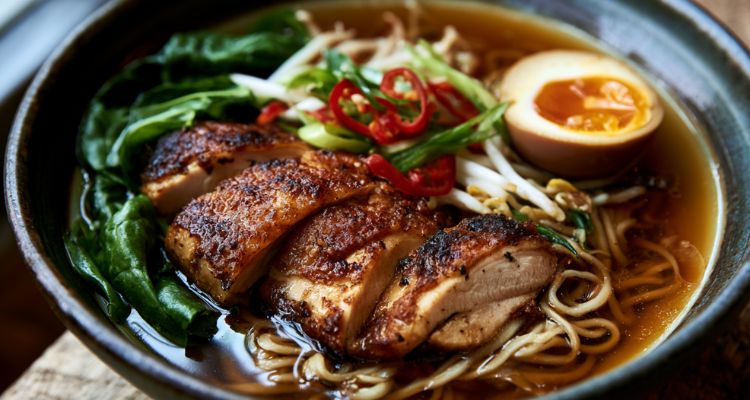

Gordon Ramsay’s miso soup is a rich Japanese-style broth made with white miso paste, dashi powder, chicken stock, garlic, ginger, and saké, served over ramen noodles with pan-seared chicken, soft-boiled eggs, and fresh spinach. It comes together in about 25 minutes.
This recipe appears as “Chicken Ramen” in Gordon Ramsay: Quick and Delicious, where he writes that “originally an import from China, the Japanese have made this noodle soup their own by flavouring the broth with ingredients such as miso, kombu and katsuobushi (dried tuna flakes).” He uses miso paste and dashi powder together as a shortcut for building that authentic depth.
The technique that makes his version work: he cooks the garlic and ginger in the chicken pan with saké, then pours those pan juices directly into the broth. That step carries all the caramelised chicken fat, toasted garlic, and ginger flavour into the soup, so the miso broth tastes layered rather than one-note.
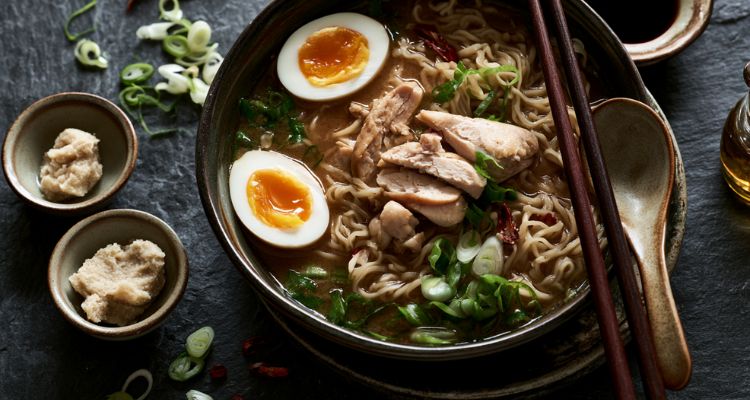
Gordon Ramsay Miso Soup Recipe
Course: SoupsCuisine: BritishDifficulty: Easy2
10
minutes15
344
kcal25
A Japanese-style miso broth with ramen noodles from Gordon Ramsay: Quick and Delicious, built on chicken stock enriched with white miso paste and dashi powder. The broth gets an extra layer of flavour from pan juices deglazed with saké. His Ramsay in 10 version swaps chicken for a vegan shiitake and tofu base.
Ingredients
2 eggs
2 tbsp vegetable oil
2 chicken breasts, skin on
3 1/2 oz (100g) ramen noodles
2 large handfuls of baby spinach
2 large handfuls of beansprouts
4 1/4 cups (1 litre) chicken stock
1 tbsp white miso paste
2 tsp dashi powder
2 tbsp soy sauce
3 garlic cloves, peeled and finely sliced
1 1/2-inch (4cm) piece of fresh ginger, peeled and julienned
2 tbsp saké (Japanese rice wine)
1 long red chilli (chile), deseeded for milder heat, finely sliced at an angle
2 spring onions (scallions), trimmed and finely sliced at an angle
1 tsp furikake seasoning
Sea salt and ground white pepper
Sesame oil, to serve
Directions
- Boil the eggs: Bring a kettle of water to the boil, pour into a saucepan and bring back to the boil over high heat. Gently lower the eggs into it and cook for 5 to 6 minutes for a slightly runny yolk. Transfer the eggs to a bowl of cold water using a slotted spoon to stop them cooking.
- Sear the chicken: Meanwhile, put the vegetable oil in a non-stick frying pan over high heat. Season the chicken breasts with salt and a little white pepper. Place in the pan skin side down and cook over medium heat for 4 to 5 minutes on one side. Don’t move them while the skin crisps.
- Cook the noodles: Add some salt to the egg water and bring back to the boil. Add the ramen noodles and cook for 3 to 4 minutes until just tender. Drain and divide between two serving bowls. Add a handful of baby spinach and a handful of beansprouts to each bowl.
- Build the broth: Pour the chicken stock into a saucepan, add the miso paste, dashi powder, and soy sauce, then place over medium heat. Stir to dissolve the miso completely.
- Finish the chicken: Turn the chicken breasts over and add the garlic and ginger to the pan. Cook for another 2 to 3 minutes, stirring the garlic and ginger often so they don’t burn. Add the saké and cook for another 2 minutes. The saké deglazes the pan and lifts all the flavour off the bottom.
- Combine the broth: When the chicken is cooked, remove it from the pan to rest. Add the pan juices along with the garlic and ginger to the chicken stock and stir well. This is where the broth picks up all the depth from the seared chicken.
- Peel the eggs: Carefully peel the eggs and cut them in half lengthways. The yolks should be jammy, not fully set.
- Assemble and serve: Slice the chicken and place on top of the noodles. Ladle over the hot broth and garnish with the chilli, spring onions, and furikake seasoning. Add the halved eggs to the bowls, drizzle with a little sesame oil, and serve immediately.
FAQs
Why does Ramsay use both miso paste and dashi powder together?
Miso and dashi do different things. Dashi is a Japanese stock traditionally made from kombu seaweed and dried tuna flakes, and it provides a clean, savoury base that Ramsay describes as essential for “that authentic taste.” Miso paste adds a fermented saltiness and body that rounds the broth out.
Using one without the other falls flat. Miso alone in chicken stock tastes muddy. Dashi alone tastes thin. Together they create the layered umami backbone that makes Japanese soups taste like Japanese soups. Both are available in most supermarkets now, so there’s no reason to skip either.
Why does he pour the chicken pan juices into the broth?
This is the step that separates his version from a standard miso soup. When the chicken sears skin-down, rendered fat and caramelised proteins collect in the pan. The garlic and ginger toast in that fat, and the saké lifts everything off the bottom.
Pouring all of that into the miso broth means the soup carries flavour from three sources: the stock itself, the miso and dashi, and the seared chicken pan. Most miso soup recipes treat the broth as a standalone thing. Ramsay connects it to the protein, which is why his version tastes richer without adding cream or butter.
Why white miso instead of red or dark miso?
In his Teaches Cooking II masterclass, Ramsay explains that he uses white miso because it’s “sweeter and more mellow than darker misos.” White miso (shiro miso) is fermented for a shorter time, so it has a lighter, less aggressive flavour that works well with chicken and delicate vegetables like spinach.
Dark miso (aka miso) ferments for up to a year and has a much stronger, almost funky intensity that can overpower everything else in the bowl. For this recipe, where the broth also carries garlic, ginger, and saké, white miso lets those flavours come through. If you used dark miso at the same quantity, you’d taste mostly miso and nothing else.
How is this different from his vegan miso ramen in Ramsay in 10?
The Ramsay in 10 version takes a completely different approach. Instead of chicken stock, it builds the broth from dried shiitake mushrooms infused in water for 8 minutes, then finishes with a much larger amount of white miso paste, about 2 3/4 oz (80g) compared to 1 tablespoon here.
That heavier miso hit compensates for the absence of chicken fat and dashi. The toppings change too: sesame-fried grated cauliflower, diced tofu, and toasted sesame seeds replace the chicken and eggs. Ramsay calls the shiitake stock “packed with umami” and says it gives “an amazing intensity in no time at all.” If you want the miso soup experience without meat, that’s the version to try, and it’s genuinely faster since there’s no chicken to sear.
Can you make the broth ahead?
The broth itself holds well for a day or two in the fridge. Build it through step 4 with the stock, miso, dashi, and soy sauce, then cool and refrigerate. The miso flavour actually mellows slightly overnight, which some people prefer.
What you can’t do ahead is add the chicken pan juices and garlic-ginger saké mixture. Those need to go in fresh or the garlic turns bitter and the ginger loses its sharpness. So make the base broth ahead, then sear the chicken and deglaze with saké just before serving. The noodles, eggs, and spinach should always be done fresh, because reheated noodles go stodgy and overcooked spinach turns grey. For a weeknight, the whole thing takes 25 minutes from cold pan to bowl, so the make-ahead benefit is marginal anyway.
Why does he use white pepper instead of black?
White pepper shows up across Ramsay’s Asian recipes, including his Tom Kha Gai and his chicken noodle soup. In Japanese cooking, white pepper is standard because it blends into light-coloured broths without leaving visible black specks.
The flavour is different too. White pepper has a sharper, more immediate heat that sits at the front of the tongue, while black pepper has a slower, more aromatic burn. In a clean miso broth where you want every flavour to be precise, white pepper gives you heat without muddying the taste. It’s a small detail, but it’s the kind of thing that makes the difference between a soup that tastes homemade and one that tastes like it came from a ramen shop.

Zaytouna Studio Team is the kitchen team behind Chef Ramsay Recipes. We cook Gordon Ramsay’s recipes from his cookbooks and videos in a home kitchen and write them up for yours, with US and metric measurements.